40 Fun Things to Do in School And Class When You’re Bored
Everyone gets bored in school sometimes. You might think, “What can I do when I’m bored in class?” These slow moments can make it hard to pay attention. But you can turn boring times into fun learning chances. This guide shows you fun things to do in class when bored. You’ll find classroom activities, educational games, and learning games. These ideas boost student engagement and motivation. They’re perfect boredom busters for school.
Want to talk with friends? Try small talk questions during breaks. Now let’s explore why boredom happens and how to fix it with fun activities, classroom games, and brain teasers.
Why Boredom Happens in School and How to Understand It
Boredom in school happens to everyone. Sometimes lessons feel too easy. Other times they seem too hard. Sitting for long periods can make your brain tired. Some topics just don’t interest you. Understanding why helps you find better ways to stay focused.
Boredom isn’t always bad. It can push you to try new things. When class feels dull, you can suggest fun activities. Tools like Kahoot, Quizlet, or Jeopardy make learning exciting. These educational activities improve your learning experience. If you’re often bored, talk to your teacher. They can help you stay engaged in class.
To prevent boredom, get enough sleep. Eat a good breakfast. Join class discussions. Ask questions. Share your ideas. Sit near the front. Connect lessons to your hobbies. For example, use sports examples in math class. These steps work great as boredom solutions.
Useful Things to Do When Bored in Class to Help You Learn More

When you feel yourself zoning out, try these productive ideas. They turn slow class time into useful moments. These fun activities help you build good habits. They can even improve your grades. So, No Friends at School? No Problem!
Fix and Organize Your Notes for Clearer Understanding
Take time to organize your notes during boring moments. Rewrite messy parts so you can read them later. Use different colors to highlight main ideas and important details. Make short lists of key points at the bottom of each page. Draw arrows connecting related ideas. Add small symbols like stars for test material or question marks for things you don’t understand. This helps your brain remember information better. It makes studying much easier when exams come around. It’s a simple way to stay engaged without disturbing anyone.
Build Flashcards to Get Ready for Tests
Make flashcards with questions on one side and answers on the other. Use index cards or small pieces of paper. Write clear, simple questions about key facts, dates, or formulas. On the back, write complete answers that make sense to you. Use them for subjects like history, science, or vocabulary. Review them quietly in class by covering the answer side and testing yourself. At home, shuffle them and go through the whole stack. This is one of the best learning games for quick study. It turns boring class time into useful test preparation.
Plan Your Homework Step by Step
Write down all your homework assignments in a planner or notebook. List them by subject and due date. Next to each assignment, estimate how much time it will take. Decide which tasks are most important or urgent. Plan when you’ll do each one – right after school, after dinner, or in study hall. Break big projects into smaller steps. For example, “research” could become “find 3 sources” and “take notes.” This reduces stress after school and helps you use your time better. It’s a smart way to use boring class time productively.
Set Goals for School Success
Think about what you want to achieve in school this week, month, or semester. Write specific goals like “raise my science grade from B to A” or “finish all homework before 8 PM.” Make sure your goals are realistic but challenging. Break big goals into smaller steps. For example, to improve your science grade, you might set steps like “review notes for 10 minutes daily” or “ask one question in each class.” Track your progress by checking off completed steps. Goals give you something to work toward and make school feel more meaningful. They boost your motivation and help you see improvement.
Review Old Lessons to Connect Ideas
Look back at notes from previous classes or chapters. See how they connect to what you’re learning now. For example, if you’re learning about fractions in math, think about how they relate to the decimals you learned last month. Draw lines or arrows between related ideas in your notes. Write small notes in the margins explaining these connections. This strengthens your understanding and helps you see the big picture. Even five minutes of review during a boring class can make a big difference. It’s an easy educational activity that fights boredom while improving your grades.
Try apps like Quizlet for digital flashcards. They make reviews fun and interactive with games and progress tracking.
Creative Ideas for Fun Things to Do in Class When Bored
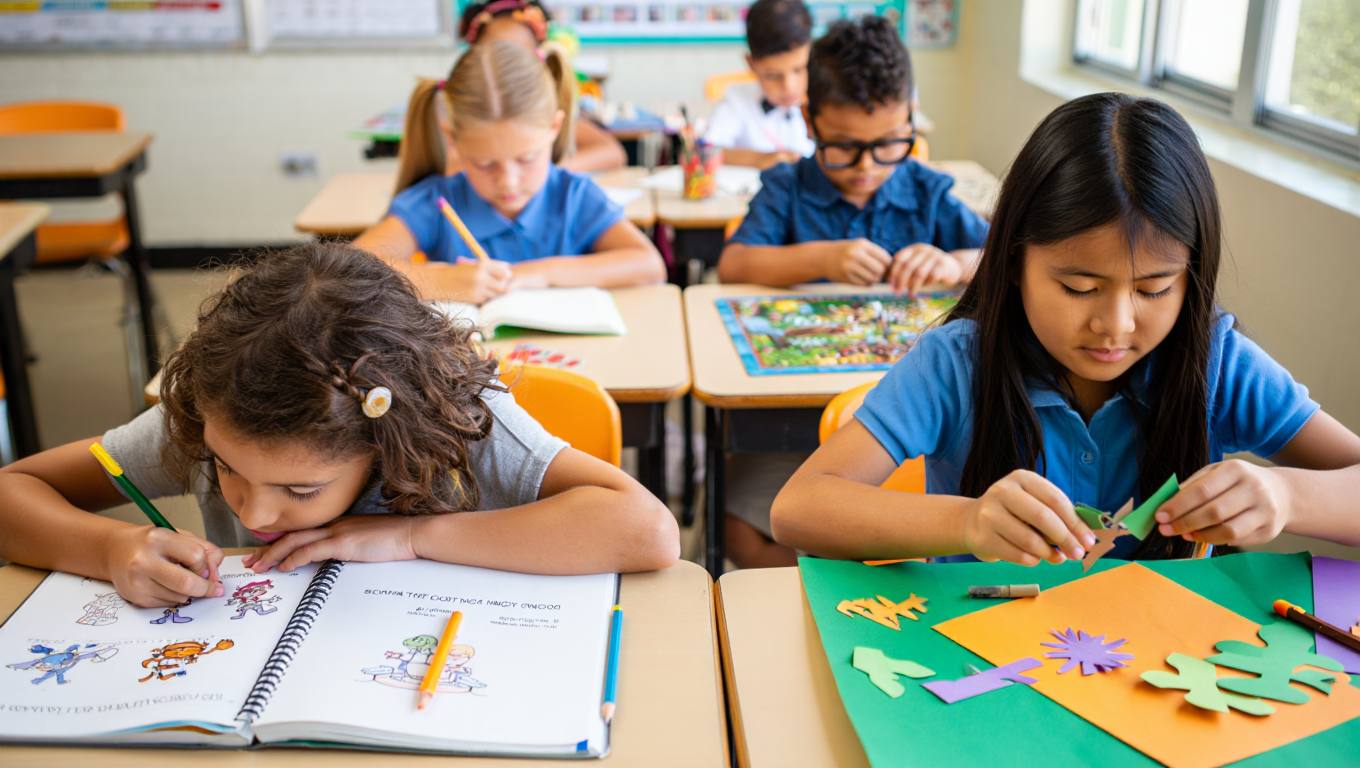
Get your imagination going with these activities. They let you be creative while staying focused on class. These fun learning activities help with problem-solving. They make school more enjoyable.
Doodle with a Purpose to Help Focus
Draw pictures related to the lesson while you listen. In biology class, sketch cells or animals you’re learning about. In geography, draw maps and label them. In history, doodle important events or people. Your drawings don’t need to be perfect – simple sketches work fine. Research shows that doodling can actually help you pay better attention and remember more information. It keeps your hands busy while your brain stays focused on the lesson. It’s a quiet, creative way to cure boredom without distracting others or missing important information.
Write Short Stories Inspired by Class Topics
Start a short story in your notebook using ideas from your lessons. If you’re learning about ancient Egypt, write a story about a young pharaoh. In English class, create a new ending for the book you’re reading. Keep your stories short – just a paragraph or two – so you can finish them later. This activity builds your writing skills and creativity while keeping your mind engaged with the class material. It’s one of the best fun things to do in class when bored alone. You might even discover you enjoy creative writing!
Make Comic Strips from Your Notes
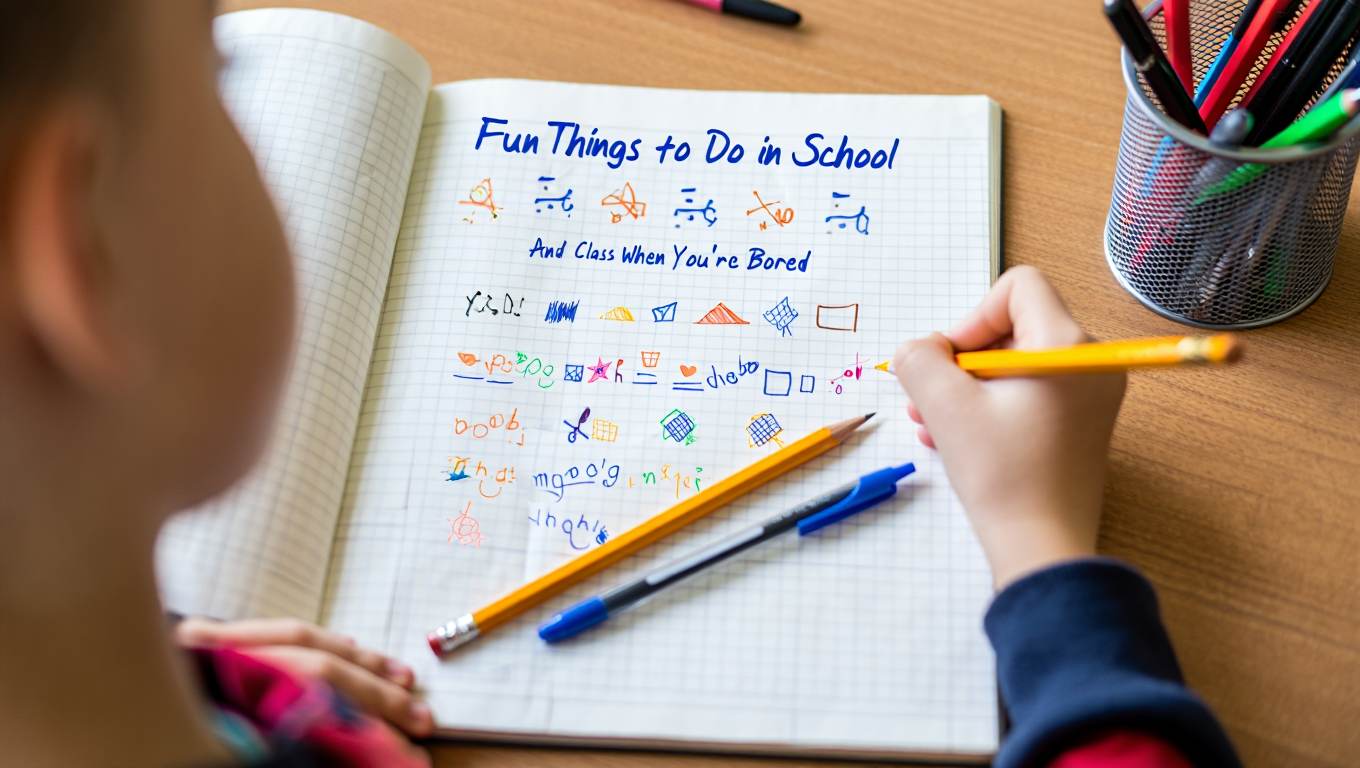
Turn your notes into simple comic strips. Draw boxes for each panel. Create characters that explain the ideas you’re learning. For example, in science class, draw atoms having a conversation about chemical bonds. Use speech bubbles to write key facts and explanations. This makes difficult topics easier to understand and remember. The visual format helps your brain process information differently. If your teacher allows, share your comics with friends to help them understand too. It’s like creating your own educational puzzles that make learning fun.
Dream Up Inventions to Solve Problems
Think about everyday problems you or your classmates face. Maybe it’s forgetting homework, losing pens, or carrying heavy books. Design an invention to solve one of these problems. Draw a sketch of your invention and label its parts. Write a short explanation of how it would work. For example, you might design a backpack with built-in organization pockets or a pen that reminds you about assignments. This activity sparks creativity and critical thinking. Some of your ideas might even be possible to build someday. It’s a brain teaser that turns boredom into innovation.
Turn Lessons into Poems or Songs
Take facts from your lessons and turn them into rhymes or songs. For math class, create a rhyme about the order of operations. In science, write a song about the water cycle. Keep it simple and catchy so you can remember it easily. Sing it quietly in your head during class. This technique helps your brain remember information through rhythm and repetition. It’s especially helpful for memorizing lists, steps, or sequences. Try using your poems or songs when studying for tests – they’re great learning games that make studying more enjoyable.
For poems, try rhyming “mitosis” with “cell division process.” These creative classroom activities keep you engaged while helping you learn.
Brain Exercises and Mental Games to Keep Sharp
Try these mental challenges to build your thinking skills. They’re discreet and help with concentration. These brain teasers and word games are perfect for student engagement.
Create Lists to Challenge Your Memory
Make lists in your head or on paper to exercise your memory. List all 50 states, types of animals, or words starting with “A.” Try to list them in alphabetical order. Make it harder by timing yourself or trying to beat your previous record. Create themed lists based on your classes – list all the presidents in history class or elements in science class. This keeps your brain active and improves your memory skills. It’s a quiet activity you can do anywhere, anytime. Challenge yourself to make longer lists each time. It’s like a workout for your brain that fights boredom.
Practice Math Problems in Your Mind
Do math calculations in your head without paper or calculator. Start with simple addition and subtraction. Then move to multiplication and division. Try problems like 47 + 38 or 12 × 15. Make it more challenging by working with larger numbers or multiple steps. For example, calculate what you would pay for three items costing $4.99 each. This mental math practice sharpens your arithmetic skills and number sense. It’s especially useful for math class but helps in everyday life too. The more you practice, the faster and more accurate you’ll become. It’s a simple educational game that makes you smarter.

Play Memory Games with Lesson Details
Test your memory by recalling what the teacher said during class. Try to list the main points in order. Remember specific examples, dates, or facts mentioned. Write them down and check your notes later to see how well you did. This game improves your listening skills and helps you pay better attention in class. It also trains your brain to remember important information. Make it a habit to do this for a few minutes each class. You’ll be surprised how much your memory improves. It’s great practice for student participation and class discussions.
Think of “What If” Questions for Deep Thinking
Ask yourself “what if” questions about the topics you’re learning. What if gravity suddenly disappeared? What if animals could talk? What if history had happened differently? Explore these questions in your mind or write down your thoughts. This activity encourages creative and critical thinking. It helps you look at subjects from new angles and understand them more deeply. You might come up with interesting ideas to share in class discussions. It’s a fun way to connect different ideas and keep your brain engaged during boring moments.
Plan Projects for Future Fun
Use boring class time to plan future projects or activities. Outline a school project or hobby. List the steps you need to take and materials you’ll need. Plan a hobby project like building a model, starting a garden, or learning a new skill. Break big projects into small, manageable tasks. Set deadlines for each step. This turns boredom into productive planning time. Having a clear plan makes big projects less overwhelming and more likely to succeed. It’s motivating to see how you can use your time now to make future tasks easier and more fun.
Try word searches or puzzles in your mind. Think of synonyms for words you hear. These are easy word games that keep your brain active.
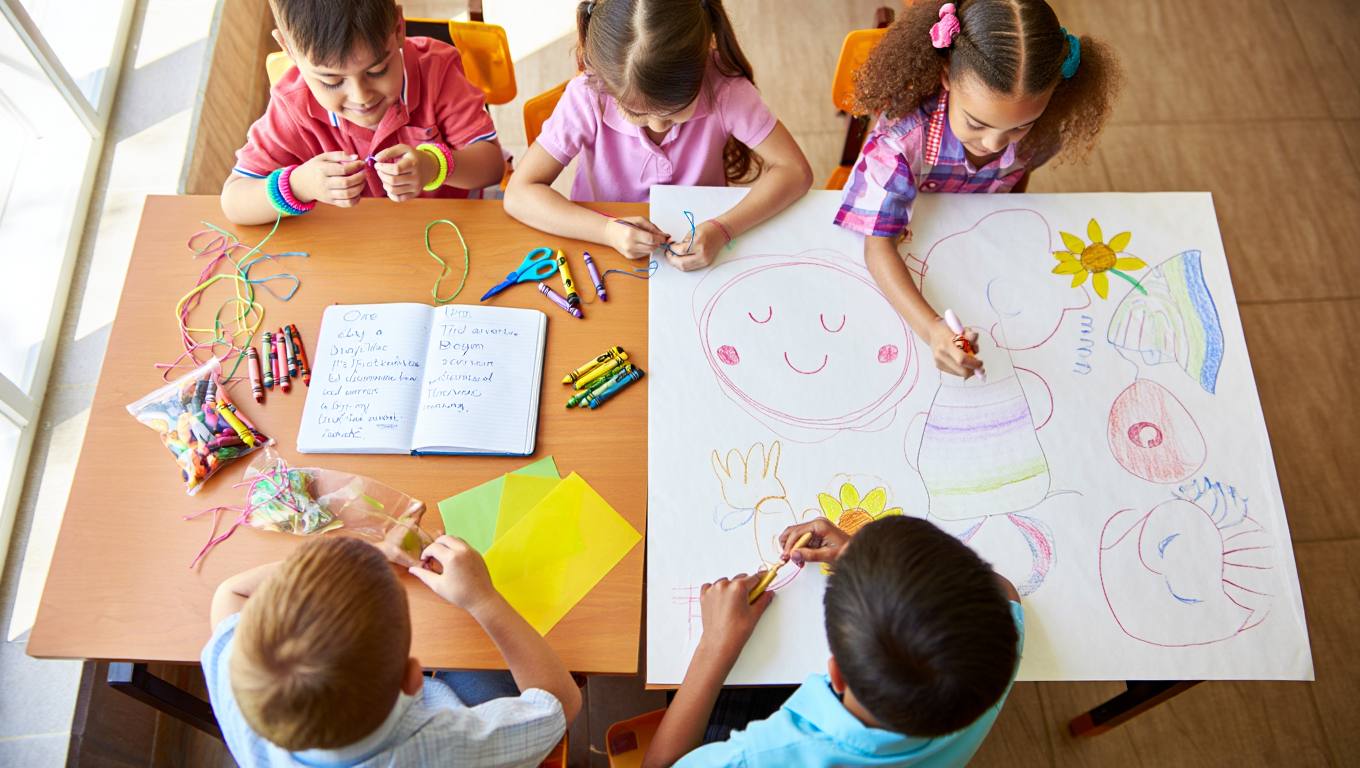
Social Ways to Connect: Fun Things to Do in Class with Friends
Build friendships with these ideas. They’re quiet and follow class rules. These activities help with social skills. They make school better.
Write Notes to Share After Class
Write short, friendly notes to your friends during boring moments. Include jokes, questions about weekend plans, or encouraging messages. Keep them positive and appropriate for school. Save them to share during breaks, lunch, or after class. This helps you stay connected with friends without disrupting the lesson. It’s a quiet way to socialize and strengthen friendships. You might even start a note-passing tradition that makes school more fun. Just make sure to follow your teacher’s rules about when and how to share notes.
Plan Study Groups with Classmates
Think about which classmates would be good to study with. Consider who is serious about learning but also fun to work with. Decide what subjects or topics you want to study together. Pick a good time and place to meet, like after school in the library or during study hall. Write down your plan so you don’t forget. Study groups help you learn better by explaining ideas to each other and quizzing one another. They also make studying more social and enjoyable. Planning during boring class time ensures your study sessions actually happen.
Prepare for Club Meetings
Get ready for your next club meeting during boring classes. Make a list of topics you want to discuss. Write down questions for club officers or advisors. Think of fun activities your club could try at future meetings. Prepare any reports or updates you need to share with the group. If you have a leadership role, plan what you’ll say. This helps you contribute more to your club and makes meetings more productive. You’ll feel proud of being prepared and engaged. It’s a great way to use boring time to make your extracurricular activities more meaningful and fun.
Come Up with Talk Starters
Create a list of conversation starters in your notebook. Think of questions like “What did you do this weekend?” or “Have you seen any good movies lately?” Write down funny stories or interesting facts you could share. Think about current events or school activities everyone might know about. Prepare questions about sports, music, or hobbies. Having ready talk starters makes social time much easier and less awkward. It helps you start conversations with new people and keep chats going with friends. You’ll never run out of things to say, which makes school more social and enjoyable.
Organize Parts for Group Work
When you have group projects coming up, use boring class time to plan your role. Think about what skills you have to offer the team. Decide which parts of the project interest you most. Plan how you’ll contribute to research, writing, or presentation. Think about how you can help the group work well together. Write down your ideas so you’re ready when the group meets. Good preparation makes group work smoother and more successful. It also shows your teacher and classmates that you’re responsible and engaged. Being organized reduces stress and helps everyone enjoy the project more.
Try quiet charades during breaks. Or share doodles with friends. These are fun things to do in class with friends.
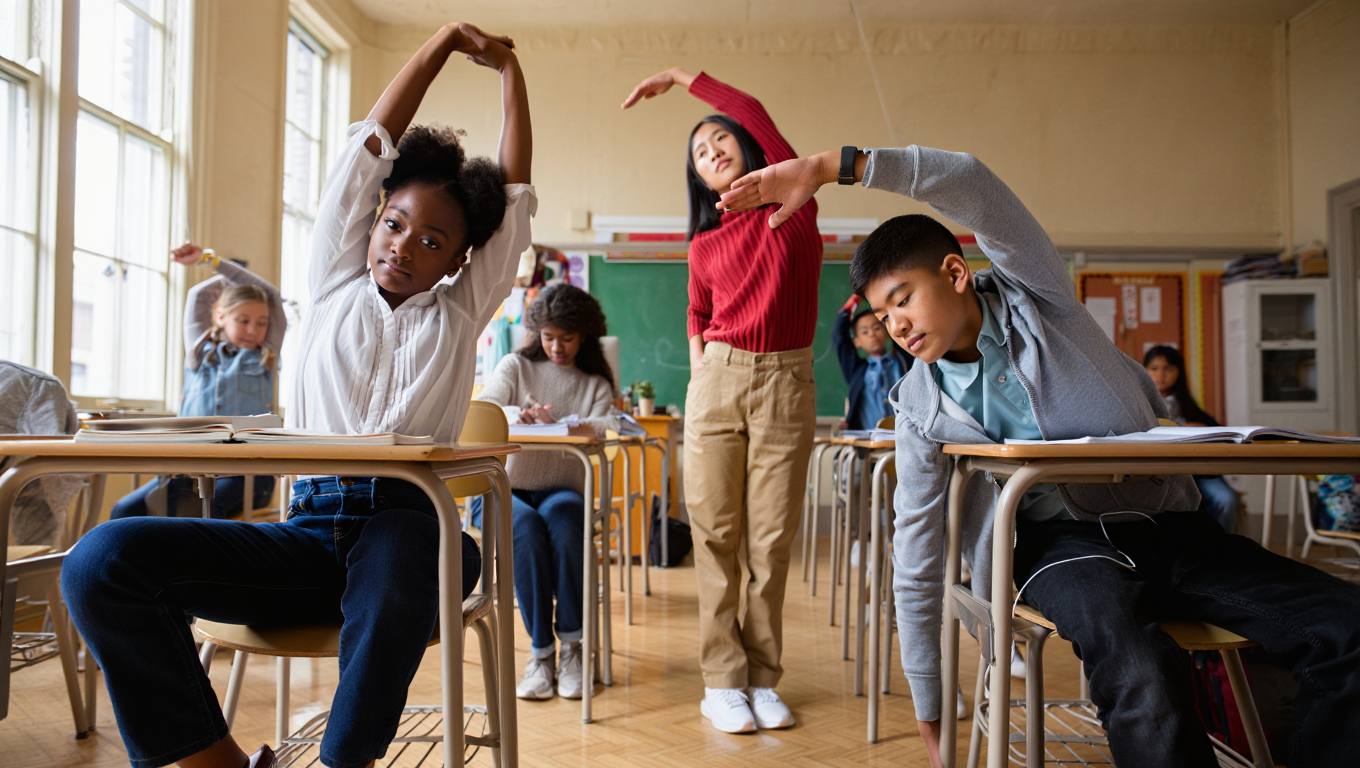
Quiet Physical Moves to Wake Up Your Body
Sitting for long can make you restless. Try these hidden exercises to feel better.
Stretch in Your Seat Without Notice
Stretch your body discreetly while sitting at your desk. Point your toes and flex your feet to stretch your calves. Slowly roll your ankles in circles. Stretch your legs by extending them under the desk and pointing your toes. Reach both arms up toward the ceiling, then slowly lower them. Roll your shoulders forward and back to release tension. Gently tilt your head from side to side, stretching your neck muscles. These small movements wake up your body and improve blood flow. No one will notice you’re stretching, but you’ll feel more alert and comfortable. It’s a perfect way to fight tiredness and restlessness during long classes.
Work on Sitting Straight
Practice good posture while sitting in class. Keep your back straight and shoulders back. Align your ears over your shoulders and your shoulders over your hips. Place both feet flat on the floor. Avoid slouching or leaning to one side. Good posture helps you stay alert and focused. It prevents back pain and improves breathing. When you sit up straight, you’re more likely to pay attention and participate in class. It also makes you look more confident and engaged. Practice maintaining good posture throughout the day. It becomes easier with time and makes a big difference in how you feel and learn.
Tense Muscles Then Relax
Try progressive muscle relaxation right at your desk. Start with your toes – tighten them for 5 seconds, then completely relax. Move up to your calves, then thighs, tensing and relaxing each muscle group. Do the same with your hands, arms, shoulders, and face. This technique helps release physical tension and stress. It’s especially helpful during long, boring classes when you feel restless. The contrast between tension and relaxation helps you become more aware of your body. It can calm your mind and improve focus. No one will notice what you’re doing, but you’ll feel more relaxed and refreshed afterward.
Do Hand and Finger Exercises
Keep your hands active with simple exercises. Tap each finger to your thumb in sequence, like you’re playing a piano. Stretch your fingers wide apart, then make a tight fist and release. Roll your wrists in circles. Squeeze a stress ball if you have one, or just squeeze and release your hand muscles. These exercises improve finger dexterity and hand strength. They’re especially helpful if you do a lot of writing or typing. They can prevent hand cramps and fatigue. Plus, keeping your hands busy can help you stay focused during boring lessons. These small movements are quiet and won’t disturb anyone around you.
Breathe Deep for Calm
Practice deep breathing to calm your mind and sharpen your focus. Breathe in slowly through your nose for 4 counts. Hold your breath for 4 counts. Then breathe out slowly through your mouth for 6 counts. Repeat this 4-5 times. Deep breathing sends more oxygen to your brain and helps you feel more alert. It also reduces stress and anxiety. This technique is perfect during tests or when you feel overwhelmed. No one will notice you’re doing it, but you’ll feel more relaxed and ready to learn. It’s a simple tool you can use anytime, anywhere to feel better and focus better.
Try these during long lectures. They help overcome boredom by refreshing you.
Solo Educational Games and Learning Games for Fun
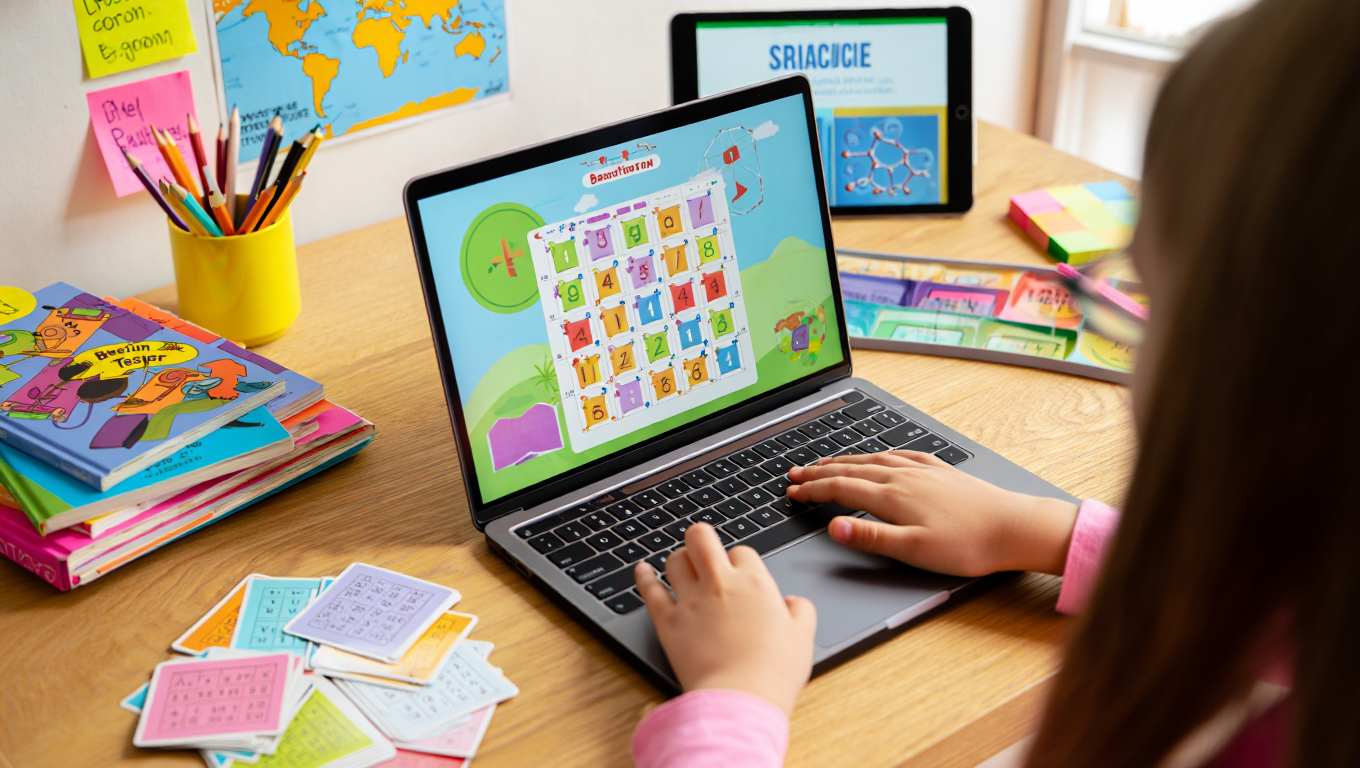
Play these alone at your desk. They reinforce lessons and are entertaining.
Build Words and Vocabulary
Learn new words from your lessons and practice using them. When you hear an unfamiliar word, write it down. Look up its meaning if you can, or guess from context. Write a sentence using the new word. Try to use it again later in class or in your writing. Make a game of seeing how many new words you can learn each week. This word game grows your vocabulary and improves your communication skills. It helps you understand your textbooks better and express yourself more clearly. Having a strong vocabulary makes you a better reader, writer, and speaker. It’s a quiet game that makes you smarter with every new word you learn.
Check Facts You Hear
Be a fact detective during class. When the teacher shares interesting information, write it down. Later, check if it’s true by looking it up or asking questions. This builds your critical thinking skills and teaches you to verify information. For example, if your teacher says “the human body has 206 bones,” you might wonder if that’s true for everyone. This curiosity leads to deeper learning. It also prepares you for research projects and helps you become a more informed student. Checking facts turns passive listening into active investigation, making boring classes much more interesting.
Make Memory Helpers
Create memory aids called mnemonics to help remember lists or sequences. Make acronyms where each letter stands for something you need to remember. For example, HOMES helps remember the Great Lakes: Huron, Ontario, Michigan, Erie, Superior. Create silly sentences or rhymes that stick in your mind. Draw pictures that represent information in a visual way. These memory helpers make studying easier and more effective. They’re especially useful for tests where you need to recall specific facts. Creating your own mnemonics also helps you understand the material better because you have to think about how to organize it.
Link Subjects Together
Look for connections between different subjects you’re studying. See how math relates to music through patterns and rhythm. Connect history to literature by understanding the time period when a book was written. Link science to art through colors, light, and perspective. Write down these connections in your notes. This approach makes learning feel more unified and meaningful. It helps you see how knowledge fits together in the real world. Making these connections also improves your memory because you’re creating multiple pathways to recall information. It turns isolated facts into a web of understanding that makes sense.
Guess What Comes Next
Be an active listener by predicting what the teacher will say next. Based on what you’ve learned so far in the lesson, what point comes next? What example might the teacher share? What question might they ask? This keeps you engaged and thinking ahead. It helps you follow the lesson more closely and understand how ideas connect. If your guess is wrong, that’s okay – it means you’re learning something new. If you’re right, it shows you’re understanding the material. This simple game turns passive listening into active participation, making any class more interesting and helping you learn better.
Use tools like Kahoot for solo quizzes if you have a device. Quizlet works great for flashcards. Try Jeopardy-style questions in your head too.
Make Breaks and Lunch Time Count
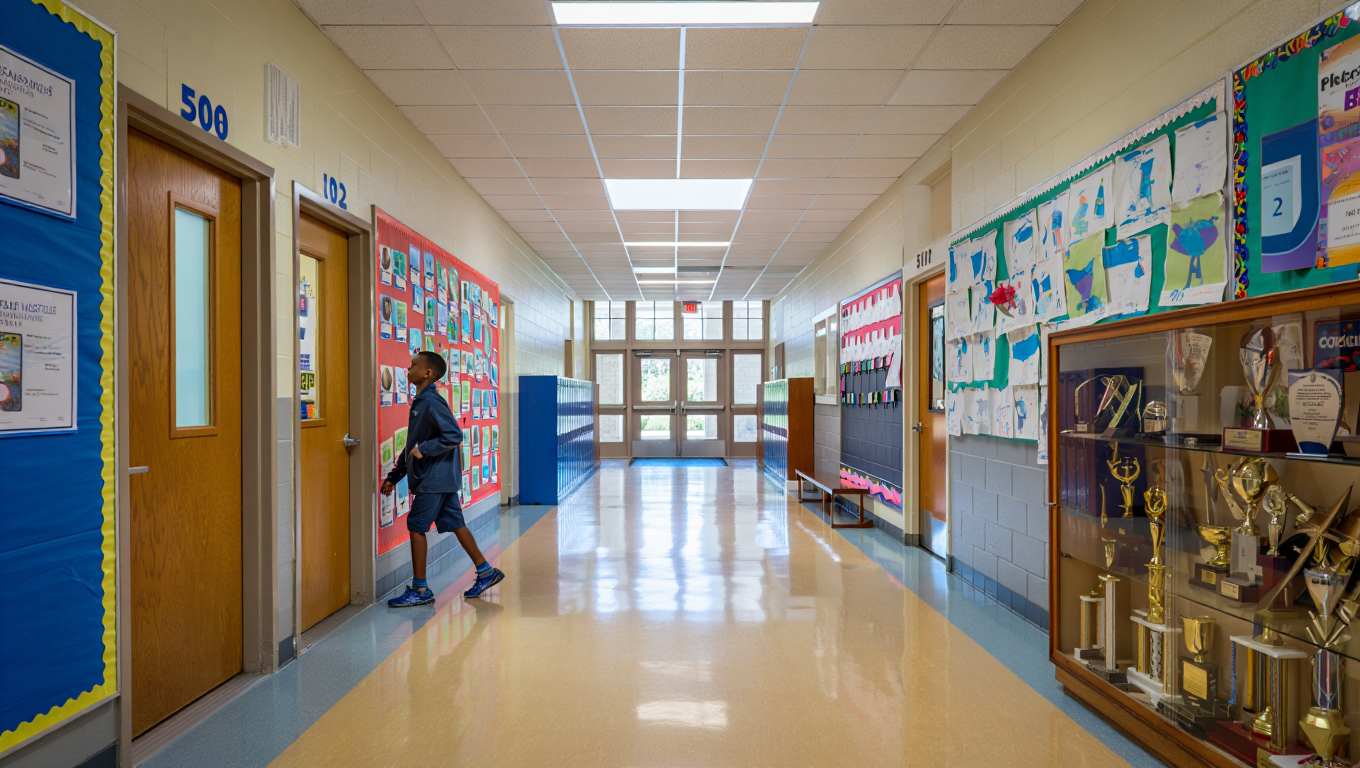
Use free time to relax or learn. These ideas will recharge you.
Explore Your School Building
Use breaks to discover new areas of your school. Walk through hallways you don’t normally use. Visit the library and find a quiet corner to read. Check out the gym when it’s empty. Look at the artwork displayed in the halls. Find the best spots to study or relax between classes. Knowing your school well helps you feel more comfortable and at home there. You might discover resources you didn’t know about, like a computer lab or tutoring center. Exploring also gives you exercise and a change of scenery, which helps refresh your brain for the next class.
Start Chats with Groups
Join group conversations during breaks and lunch. Listen to what people are talking about, then add a related comment or question. Share something interesting you learned in class. Ask others about their classes or weekend plans. Use the talk starters you prepared earlier. Being part of group conversations helps you make friends and feel connected to your school community. It also improves your social skills and confidence. Don’t worry if you’re shy – just listening and nodding shows you’re interested. Over time, you’ll feel more comfortable joining in and expressing yourself.
Read Books You Like
Bring a book you enjoy to read during free time. It could be a novel, comic book, magazine, or nonfiction book about something you’re interested in. Reading for pleasure improves your vocabulary, comprehension, and concentration. It’s also a great way to relax and escape into a different world. If you don’t have a book, visit the school library to find one. Many libraries have comfortable reading areas where you can spend break time. Regular reading makes you a better student in all subjects and gives you interesting things to talk about with others.
Play Easy Games with Others
Play simple games with friends during lunch or breaks. Bring a deck of cards for games like Go Fish or Crazy Eights. Do crossword puzzles or word searches together. Play tic-tac-toe or dots and boxes on napkins. These games are fun and help develop thinking skills. They also give you something to do with friends that doesn’t require phones or screens. Playing games builds friendships and teaches important skills like taking turns, following rules, and being a good sport. Plus, they’re just plain fun and make school breaks more enjoyable.
Join Clubs or Start One
Find clubs that match your interests, like art, music, sports, or academic subjects. Attend a meeting to see if you like it. If you can’t find a club you like, consider starting your own. Talk to a teacher or administrator about how to begin. Clubs are great for making friends with similar interests. They also look good on college and job applications. Being part of a club gives you something to look forward to at school and helps you feel more connected. You might discover new talents or develop leadership skills through club activities.
Eat healthy snacks during lunch to keep your energy up.
Use Tech Smartly for Learning
If allowed, use devices for good. These digital ideas help without distracting you.
Try Apps for Education
Use educational apps on your phone or tablet during appropriate times. Try language learning apps like Duolingo to practice Spanish or French. Use math apps like Khan Academy for extra practice. Download science apps that let you explore concepts interactively. Many of these apps feel like games but teach important skills. Set goals for yourself, like completing one lesson each day. Using apps makes learning feel modern and fun. They often give immediate feedback, which helps you learn faster. Just make sure to follow your school’s rules about when and where you can use your devices.
Listen to Podcasts on Topics
Find podcasts related to subjects you’re studying or interested in. Listen to them during study hall or appropriate free time. There are podcasts about history, science, literature, and almost any topic you can imagine. Hearing information presented in a different way can help you understand it better. Podcasts often include interviews with experts or interesting stories that make learning more engaging. They’re great for auditory learners who remember information better when they hear it. Plus, you can listen while doing other things, like walking between classes or eating lunch.
Research What Interests You
Use free time to look up questions that interest you. If you’re curious about something mentioned in class, take a few minutes to learn more about it. Use reliable sources like educational websites or online encyclopedias. This self-directed learning helps you follow your natural curiosity and discover new passions. It also teaches valuable research skills that will help you in future projects. When you research topics you care about, learning feels exciting rather than boring. You might even find information to share with your class that makes lessons more interesting for everyone.
Organize Notes on Your Device
If you use a device for taking notes, keep them organized. Create folders for each subject. Use clear file names so you can find notes easily. Add tags or labels to help group related topics. Use apps that let you search your notes so you can find information quickly. Well-organized digital notes are much easier to study from than messy ones. You can also add photos, diagrams, or links to your notes to make them more complete. Taking a few minutes to organize regularly saves you time and stress when you need to study for tests or complete assignments.
Plan Tech Projects
Think about how you could use technology for school projects. Plan a video presentation instead of a written report. Design a website or blog about a topic you’re studying. Create a digital slideshow with animations and graphics. Outline your project step by step, thinking about what tools you’ll need and how much time each part will take. Planning tech projects helps you develop valuable digital skills that will be useful in college and future jobs. It also makes learning more creative and engaging. When you’re excited about how you’ll present your knowledge, you’re more motivated to learn the material.
Check online courses on Coursera, Udemy, or edX. They teach how to stay engaged in class.
Safe Things to Do When Bored in Class Without Getting in Trouble
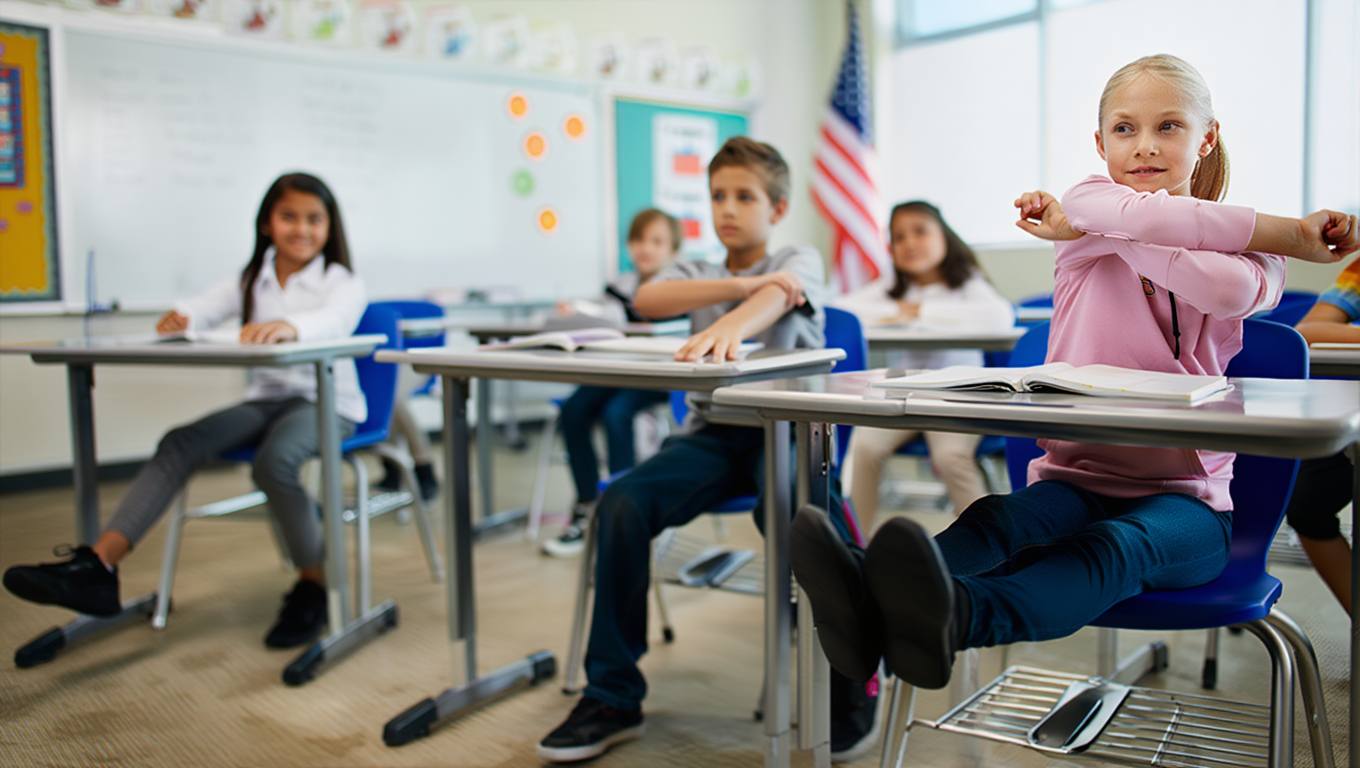
When you feel bored in class, you can do many things that won’t get you in trouble. These activities help you learn and stay focused. Here are some safe things to try:
Take Better Notes
Instead of just writing down what the teacher says, try taking notes in a new way. Use different colors for main ideas and details. Draw small pictures that help you remember. Make bullet points instead of long sentences. Better notes help you learn more and give your brain something to do.
Ask Good Questions
Think of questions about what you’re learning. Write them down and ask when it’s the right time. Good questions show you’re paying attention. They also help you understand the lesson better. Questions like “How does this connect to what we learned yesterday?” are great for staying engaged.
Review What You Know
Look back at your notes from earlier in the class or from previous days. See how they connect to what you’re learning now. This helps strengthen your memory. It also shows you how much you’ve already learned. Reviewing is a quiet way to use your time well.
Make a Learning Game
Turn the lesson into a game in your mind. Try to remember all the key points the teacher mentions. Count how many times they use certain words. See if you can predict what they’ll say next. These mental games keep your brain active without disturbing anyone.
Practice Your Handwriting
Use boring moments to improve your handwriting. Write down what the teacher is saying as neatly as you can. Practice forming your letters better. This simple activity helps you focus on the lesson while developing a useful skill.
Create a Word Search
Make a word search using vocabulary words from the lesson. Write the words in a grid and fill in the extra letters. Later, you can solve your own puzzle or share it with friends. This helps you remember important terms while staying quiet in class.
Draw Diagrams
Draw pictures or diagrams that explain what you’re learning. In science, sketch the water cycle or a cell. In history, draw a timeline or map. In math, draw shapes or graphs. Visual learning helps many students understand and remember information better.
Write a Summary
At the end of a lesson, write a short summary in your own words. Try to include the main points without looking at your notes. This helps you process what you learned and shows you what you need to study more.
Think of Real-Life Examples
Connect what you’re learning to your own life. If you’re studying fractions, think about slicing a pizza. If you’re learning about forces, think about riding a bike. Making these connections helps you understand and remember the material better.
Plan Your Study Time
Use boring moments to plan when and how you’ll study for upcoming tests. Write down which subjects need more time. Decide what study methods work best for you. Good planning helps you feel less stressed later and improves your grades.
Count and Breathe
If you can’t focus on anything else, try a simple breathing exercise. Breathe in slowly while counting to four, hold for four, then breathe out while counting to six. This calms your mind and helps you refocus on the lesson.
Practice Mental Math
Do math problems in your head. Add up numbers you see around the room. Multiply the date by the number of students in class. Calculate how many minutes until lunch. Mental math keeps your brain sharp and ready for math class.
Make a List of Questions
Write down things you wonder about related to the lesson. If you’re learning about space, list questions you have about planets. If you’re reading a story, write questions about what might happen next. This keeps your mind curious and engaged.
Organize Your Binder
If you have a few extra minutes, organize your papers. Put them in the right order. Make sure each subject has its own section. Throw away papers you no longer need. Being organized helps you find things later and reduces stress.
Set Small Goals
Set tiny goals for yourself during class. Decide to pay attention for the next ten minutes. Try to answer one question. Plan to write down three important points. Small goals make big improvements over time.
These safe activities help you beat boredom while improving your learning. They show your teacher you’re engaged, even when the material feels slow. Try different ones to see what works best for you!
What to Avoid When Feeling Bored
When you feel bored in class, you might want to do things that could get you in trouble. Instead, try positive actions that help you learn. Here’s what to avoid:
Don’t Talk Loudly
Talking to friends when you should listen distracts everyone. It interrupts the teacher and makes it hard for others to learn. If you need to talk, wait for break time. Write down your thoughts to share later instead. This way, you won’t miss important information.
Don’t Use Your Phone
Checking your phone might seem fun when bored, but it makes things worse. Phones distract you from learning and can get you in trouble. Most schools don’t allow phones in class. Put your phone away and try one of the fun activities in this guide instead. Your games and social media will still be there after school.
Don’t Sleep in Class
Falling asleep means you’ll miss important information. It’s also disrespectful to your teacher who worked hard on the lesson. If you’re tired, try sitting up straight, stretching quietly, or drinking water. These small actions can help you stay awake. If you’re always tired, focus on getting better sleep at night.
Don’t Pass Notes
Passing notes might seem harmless, but it distracts you and others from learning. Notes can get lost or read by the wrong person. If you need to share something with a friend, write it down and save it for break time. This way, you won’t miss any important parts of the lesson.
Don’t Do Work for Other Classes
Working on homework for another class might seem smart, but it means you’re missing what’s being taught right now. Each class builds on previous lessons, so skipping information can cause problems later. If you finish your work early, ask your teacher for extra activities or review your notes.
Don’t Ignore the Teacher
Tuning out the teacher is one of the worst things you can do when bored. Even if a topic seems boring, there might be important information you need. Try to find at least one thing that interests you about the lesson. Ask questions to stay engaged. Teachers notice when students aren’t paying attention.
Don’t Doodle Randomly
While doodling about the lesson can help you learn, random doodling is just another distraction. If you’re going to draw, make it related to what you’re learning. Sketch diagrams, characters from stories, or maps that connect to the lesson.
Don’t Stare Out the Window
Daydreaming means you’re missing important information. If you catch yourself staring into space, bring your attention back to class. Try taking notes, asking a question, or doing one of the focus activities in this guide.
Remember, the goal is to turn boring moments into learning chances. By avoiding these behaviors and choosing positive actions, you’ll get more out of your school day and might even enjoy class more.
Ways to Stop Boredom Before It Starts
The best way to deal with boredom is to stop it before it happens. By building good habits, you can stay interested in your classes. Here are some ways to prevent boredom:
Get Enough Sleep
Sleep 8-10 hours each night to keep your brain alert and ready to learn. When you’re tired, everything seems more boring. Create a bedtime routine that helps you relax, like reading a book or listening to calm music. Avoid screens before bed, as they can make it harder to fall asleep. Go to bed and wake up at the same time each day. Well-rested students pay better attention and remember more.
Eat Healthy Meals and Snacks
What you eat affects how you feel and learn. Start your day with a good breakfast that includes protein and whole grains. This gives your brain the fuel it needs. Avoid sugary foods that cause energy crashes later. Pack healthy snacks like nuts, fruit, or yogurt for school. When you’re hungry, it’s hard to concentrate. Drink enough water too – even mild dehydration can make you feel tired.
Join Class Discussions
Participating in class makes learning more active and fun. When you join discussions, you’re not just sitting and listening – you’re thinking and responding. Do your homework and reading before class so you have something to contribute. Even asking questions counts as participation. It shows you’re thinking about the material. Teachers notice students who participate and often make class more engaging for everyone.
Connect Lessons to Your Interests
Find ways to link what you’re learning to things you already enjoy. If you like sports, look for connections to math (statistics), science (how things move), or history (sports history). If you love art, notice how it connects to history, math (shapes), and science (colors). When you see how subjects relate to your life, they become more meaningful and less boring. Teachers can help you make these connections if you ask.
Come to Class Prepared
Being ready for class helps you stay engaged. Complete your homework before class so you understand the background. Bring all necessary supplies – pens, paper, calculator, or whatever you need. When you’re prepared, you can follow along more easily and participate in activities. Being unprepared makes you feel lost and more likely to zone out.
Sit in a Good Spot
Where you sit can affect how engaged you feel. Try sitting near the front and center of the room. This makes it easier to see and hear the teacher. It also reduces distractions from other students. If you have trouble focusing, avoid sitting by friends who might tempt you to talk. Find a spot where you can concentrate best.
Set Learning Goals
Before each class, set specific goals for what you want to learn. Instead of just “get through math class,” try “understand how to solve equations with two variables.” Having clear goals gives you a purpose and helps you stay focused. Write your goals down and track your progress. When you achieve a goal, celebrate it! This makes learning more rewarding.
Take Care of Your Body
Regular exercise helps your brain work better and improves your mood. Even a short walk or some stretching can boost your energy and focus. Try to move for at least 30 minutes each day. Also, take short movement breaks during long study sessions. Stand up, stretch, or walk around for a few minutes. This helps refresh your brain and prevents mental fatigue.
By building these habits, you create a strong foundation for engaged learning. Prevention is the best cure for boredom – when you’re prepared, rested, and connected to your learning, you’re much less likely to feel bored in class.
Common Questions About Boredom in School
Is it okay to feel bored sometimes?
Yes, it’s normal to feel bored in school sometimes. Everyone gets bored – even teachers. Boredom happens when your brain needs something new or challenging. It doesn’t mean you’re not smart. It just means you need a different way to learn.
Boredom can actually help you. It tells you to try new things. You can use boredom as a sign to change how you study. Try some of the fun ideas in this guide when you feel bored.
Remember, boring moments pass. Even your favorite subjects can have dull parts. What matters is how you handle those feelings.
Do activities help learning?
Yes, activities help a lot when they connect to your lessons. Your brain learns better when you do things instead of just listening. When you doodle notes or make flashcards, you use more of your brain. This helps you remember things better.
For example, drawing a comic about the water cycle helps you remember it more than just reading about it. Writing a short story about history makes facts stick in your mind.
Activities also make learning fun. When you enjoy learning, your brain pays attention better. You remember more when you’re having fun. The activities in this guide work because they keep your brain busy with the lesson in new ways.
What if the teacher sees?
If your teacher sees you doing these activities, don’t worry. Most teachers like it when students find good ways to stay focused. If you’re doodling about the lesson or making study cards, your teacher will see you’re trying to learn.
If your teacher asks what you’re doing, tell the truth. Say “I’m drawing to help remember the science lesson” or “I’m organizing my notes to study better.” Most teachers will be happy you’re taking charge of your learning.
But if your teacher says to stop, listen to them. They might need your full attention for something important. You can try again later or ask when it’s okay to use these study tricks.
The goal is to help your learning, not hurt it. As long as you’re quiet, focused on class, and not bothering others, teachers usually won’t mind.
Should you tell a teacher about boredom?
Yes, you should tell a teacher if you’re bored, but be nice about it. Don’t just say “I’m bored” in class. That sounds like you don’t care about learning. Instead, talk to your teacher after class or during free time.
Say something like “I have trouble focusing during long talks. Can I take more notes to help?” or “I already get this. Can you give me harder work to do?”
This shows you care about learning and want to fix the problem. Teachers like students who try to solve their own problems. They might have ideas you haven’t thought of.
If you’re bored because work is too easy, ask for harder stuff. If it’s too hard, ask for help. Teachers want you to learn and pay attention, but they can’t help if they don’t know there’s a problem.
What are safe things to do when bored in school?
Some activities are always okay in class because they help you learn and don’t bother others. These include:
- Listening carefully: Paying attention to the teacher and thinking about what they say. This is the most important part of learning.
- Taking notes: Writing down key points and organizing your notes. This helps you remember and shows you’re paying attention.
- Asking questions: Raising your hand to ask about the lesson. This helps you understand better and shows you’re thinking.
- Making connections: Thinking about how the lesson relates to other things you know. This helps you understand more deeply.
- Practicing quietly: If you finish your work, practicing problems or reviewing ideas in your head. This uses your time well without disturbing others.
These activities are safe because they help you learn, respect the class, and show your teacher you care about school. They work in any class and won’t get you in trouble.
Final Thoughts
Boredom in school doesn’t have to win. With these ideas, you can make class time more interesting. From fun things to do when bored to educational games, you have lots of options. Use them to boost your engagement and beat boredom. If boredom continues, talk to someone about it. School can be fun if you make it that way. Try one of these ideas next time you’re bored. See the difference it makes!