
199+ Quotes About Trust and Broken Promises: When Words Lose Their Power
Trust forms the foundation of every meaningful relationship we have. Whether it’s with our family, friends, romantic partners, or coworkers, trust acts like invisible glue that holds our connections together. But what happens when that trust gets broken? When promises turn into empty words that drift away like smoke?
We’ve all been there. Someone we care about makes a promise they don’t keep. They say they’ll be there for us, but they disappear when we need them most. These moments hurt because they shake the very ground we stand on in our relationships. The pain of broken promises cuts deep because it’s not just about the specific thing they didn’t do – it’s about realizing that their word might not mean what we thought it did.
This collection of over 199 quotes explores the complex world of trust and broken promises. You’ll find words from famous authors, everyday people, and timeless wisdom that speaks to anyone who has felt the sting of betrayal. These quotes don’t just highlight the pain – they also show us paths toward healing, rebuilding, and learning to trust again.
What Makes Trust So Important in Our Lives?
Trust is the invisible thread that weaves through every relationship we have. It’s what lets us sleep peacefully at night, knowing our loved ones care about us. It’s what makes us feel safe sharing our deepest secrets with a friend. Trust is what transforms a group of strangers into a team that can accomplish amazing things together.
Research from the National Center for Biotechnology Information shows that people who live in high-trust environments experience less stress and better mental health. When we trust others and feel trusted in return, our brains release oxytocin – often called the “bonding hormone” – which makes us feel good and strengthens our connections.
Here are some powerful quotes about why trust matters so much:
- Trust is like a paper – once it’s crumpled, it can’t be perfect again.
- The best way to find out if you can trust somebody is to trust them. – Ernest Hemingway
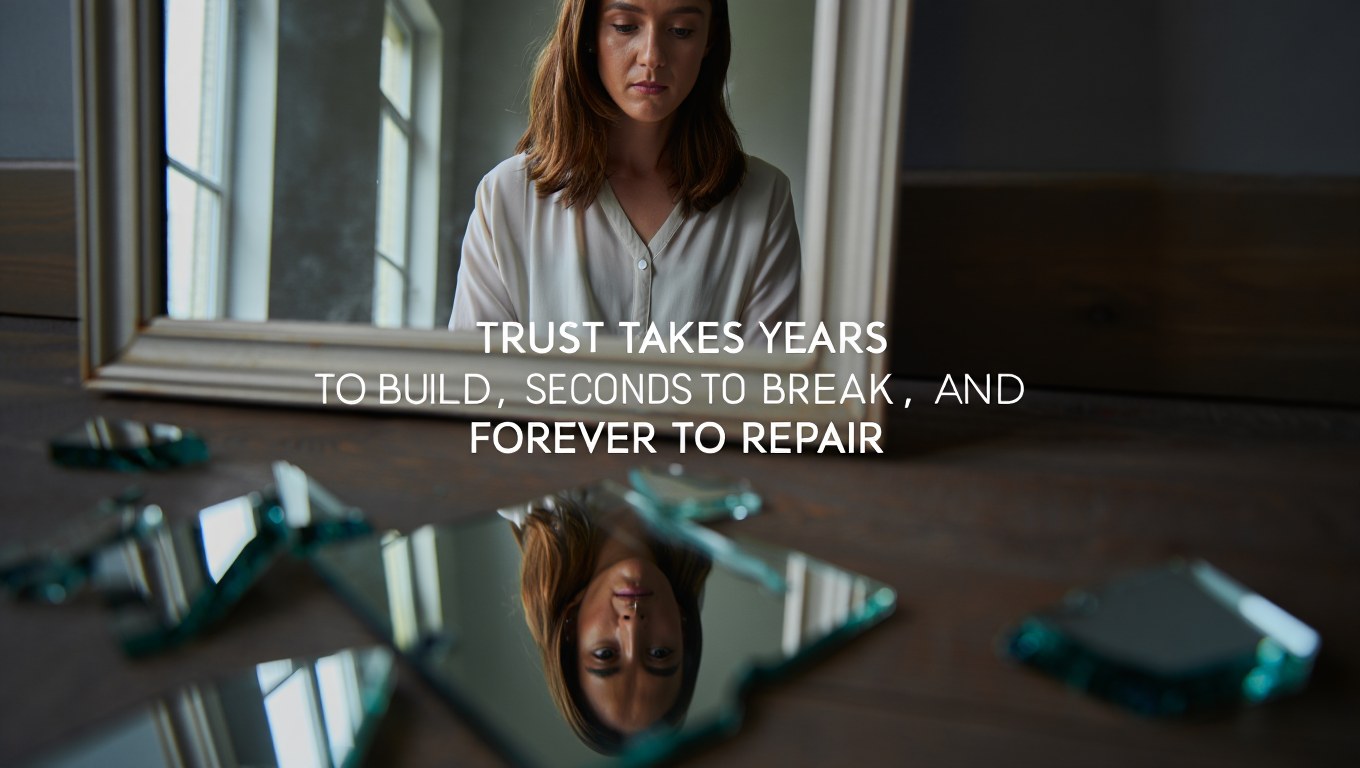
- Trust takes years to build, seconds to break, and forever to repair.
- When someone shows you who they are, believe them the first time. – Maya Angelou
- Trust is earned when actions meet words.
- Without trust, words become the hollow echo of promises broken.
- Trust isn’t given because it’s deserved. It’s given because it’s believed.
- The foundation of any relationship is trust. Without it, you have nothing.
- Trust is the first step to love, and the last step to forgiveness.
- When trust is broken, it doesn’t matter how sorry you are. The damage is done.
Trust isn’t just a nice feeling – it’s practical. It makes everything in life work better. Teams with high trust levels perform 76% better than teams without it, according to workplace psychology studies. In our personal lives, trust in relationships determines whether our connections grow stronger or slowly fall apart.
How Do Broken Promises Damage Our Relationships?
Broken promises hurt in ways that are hard to describe. It’s not just disappointment – it’s the feeling that someone has changed the rules of the game without telling us. When people break their promises, they’re not just failing to do something specific. They’re sending a message that their comfort matters more than our trust.
The psychology behind broken promises shows us why they hurt so much. Our brains are wired to expect consistency from people we care about. When someone breaks a promise, it creates what psychologists call “cognitive dissonance” – the uncomfortable feeling we get when reality doesn’t match our expectations.
- A promise means everything, but once it’s broken, sorry means nothing.
- I don’t need your sorry. I need you to keep your word next time.
- The worst thing about being lied to is knowing you weren’t worth the truth.
- Actions speak louder than words, but broken promises scream the loudest.
- Your words become meaningless when your actions prove otherwise.
- When you break a promise, you don’t just disappoint me – you teach me not to believe you.
- Empty promises are like rain clouds that never deliver water to thirsty ground.
- The pain of a broken promise cuts deeper than any physical wound.
- Promises are like hearts – easy to break, hard to repair.
- When someone consistently breaks promises, they’re showing you exactly who they are.
Studies show that it takes an average of 12 positive interactions to make up for one negative experience in a relationship. That means when someone breaks a promise, it takes a lot of good behavior to repair the damage. This is why disappointment in relationships can feel so overwhelming.
The ripple effects of broken promises spread far beyond the immediate disappointment. They plant seeds of doubt that can grow into bigger trust issues. When someone breaks a promise to us, we start wondering what else they might not follow through on.
What Are the Different Types of Trust Betrayal?
Not all broken promises are created equal. Some hurt more than others, and understanding the different types can help us process our feelings and decide how to move forward.
Casual Promise Breaking
These are the smaller promises that people break without thinking much about it. Things like saying they’ll call but not following through, promising to show up on time but always being late, or agreeing to help with something, then backing out.
- Small promises broken lead to big trust issues.
- Even little lies create big cracks in trust.
- Reliability isn’t about big gestures – it’s about keeping your word in small moments.
- When you can’t trust someone with small promises, how can you trust them with big ones?
- The little promises matter just as much as the big ones to people who value honesty.
- Breaking small promises is like taking tiny hammers to the foundation of trust.
- If you can’t keep your word about little things, your big promises mean nothing.
- Consistency in small promises builds confidence in bigger commitments.
- The person who breaks small promises will break big ones too.
- Your character shows up in how you handle the promises nobody else is watching.
Emotional Promise Breaking
This happens when someone promises emotional support but fails to provide it. Things like saying they’ll be there when you need them but disappearing during tough times, promising to listen but always making conversations about themselves, or agreeing to work on relationship issues but not putting in effort.
- The promises that hurt most are the ones made to our hearts.
- When you promise emotional support and don’t deliver, you don’t just break trust – you break hearts.
- I needed your presence, not your promises.
- Emotional promises are sacred because they involve our deepest needs.
- When someone promises to be there emotionally and isn’t, it feels like abandonment.
- The worst betrayal is when someone promises to support you emotionally, then leaves you alone in your pain.
- Empty emotional promises hurt more than honest boundaries would.
- When you promise someone your heart will be there for them, keep that promise sacred.
- Emotional availability can’t be promised if it can’t be delivered.
- The people who promise emotional support then disappear cause the deepest wounds.
Understanding these patterns helps us recognize when disappointment about people canceling plans is really about deeper trust issues.
Major Life Promise Breaking
These are the big ones that can end relationships. Promises about fidelity in romantic relationships, commitments about major life decisions like moving or career changes, or promises about being there for major life events.
- Some promises are so big that breaking them changes everything.
- When you break a major promise, you don’t just lose trust – you lose the person.
- The biggest promises require the strongest character to keep.
- Life-changing promises should never be made lightly or broken easily.
- Major promises broken leave permanent scars on relationships.
- When someone breaks a life-altering promise, they’re choosing their convenience over your trust.
- The promises that shape our future deserve the most protection.
- Breaking major promises doesn’t just hurt – it devastates.
- Some promises are so important that breaking them ends the story.
- Major promises broken teach us that some people aren’t meant to be in our life story.
How Can Quotes Help Us Process Broken Trust?
Words have power. When we’re dealing with the pain of broken promises, sometimes the right quote can help us feel less alone. It reminds us that others have walked this path before us and found ways to heal.
Quotes work like emotional mirrors – they reflect our feelings back to us in ways that help us understand what we’re going through. When someone else puts our pain into words, it validates our experience and makes us feel less isolated.
- Reading about others’ pain with broken trust reminds us we’re not alone in this struggle.
- Sometimes the words we need to hear come from people who felt what we feel.
- Quotes about betrayal don’t fix the pain, but they help us name it.
- When we can’t find words for our hurt, other people’s quotes speak for us.
- The right quote at the right time can be like a friend holding your hand through the pain.
- Wisdom from others who survived broken trust gives us hope we’ll survive too.
- Quotes help us understand that trust issues are part of being human.
- Sometimes a stranger’s words about broken promises heal better than a friend’s advice.
- Reading quotes about trust reminds us that our feelings are valid and normal.
- The power of quotes lies in making us feel understood when we feel most alone.
The process of healing from broken trust takes time, and these quotes can serve as companions along the way. They remind us that feeling hurt by broken promises doesn’t make us weak – it makes us human. When we’re struggling with disappointment and encouragement, these words can help us find strength.
What Do Famous People Say About Trust and Betrayal?
Throughout history, writers, leaders, and thinkers have shared their wisdom about trust and broken promises. Their words resonate because they speak to universal human experiences that cross all boundaries of time, culture, and background.
Quotes from Historical Figures
- Trust, but verify. – Ronald Reagan
- The trust of the innocent is the liar’s most useful tool. – Stephen King
- Love all, trust a few, do wrong to none. – William Shakespeare
- To be trusted is a greater compliment than being loved. – George MacDonald
- Trust is the highest form of human motivation. – Stephen Covey
- The best proof of love is trust. – Joyce Brothers
- Trust yourself. You know more than you think you do. – Benjamin Spock
- In matters of trust, no one should be trusted. – Winston Churchill
- Trust takes time to build and seconds to destroy. – Unknown
- The currency of real networking is not greed but generosity. – Keith Ferrazzi
Quotes from Modern Thinkers
- Trust is built with consistency. – Lincoln Chafee
- Trust is something you build day by day. It’s something that comes from consistency. – Trevor Jackson
- When trust is broken, sorry means nothing. – Unknown
- Trust is like blood pressure. It’s silent, vital to good health, and if abused, it can be deadly. – Frank Sonnenberg
- Trust is the fruit of a relationship in which you know you are loved. – William Paul Young
- The glue that holds all relationships together is trust, and trust is based on integrity. – Brian Tracy
- Trust is earned, respect is given, and loyalty is demonstrated. – Unknown
- Building trust begins with an appreciation and understanding of trust, but it also requires practice and practices. – Robert C. Solomon
- Trust is a fragile thing. Easy to break, easy to lose and one of the hardest things to ever get back. – Unknown
- You may be deceived if you trust too much, but you will live in torment if you don’t trust enough. – Frank Crane
These voices from different eras all point to the same truth: trust is precious, fragile, and essential for human connection. When we look at inspirational quotes for encouragement, we often find that the most powerful ones acknowledge both the pain of betrayal and the possibility of healing.
How Do We Recognize Trustworthy People?
Learning to spot trustworthy people becomes crucial after we’ve been hurt by broken promises. While there’s no foolproof method, certain patterns and behaviors can give us clues about who deserves our trust.
Signs of Trustworthy People
Trustworthy people show consistency between their words and actions. They do what they say they’ll do, even when it’s inconvenient. They admit their mistakes instead of making excuses. They respect boundaries and don’t pressure you to trust them faster than feel comfortable.
- Trustworthy people don’t demand trust – they earn it through consistent actions.
- The people worth trusting are the ones who understand why you have trust issues.
- Someone who gets angry when you don’t trust them immediately isn’t trustworthy.
- Trustworthy people prove themselves through small actions before asking for big trust.
- The most trustworthy people are those who have been hurt by broken trust themselves.
- People who keep secrets from others will keep secrets for you too.
- Trustworthy people don’t make promises they can’t keep, and they keep the promises they make.
- The people worth your trust are patient with your healing process.
- Trustworthy people understand that trust is earned in drops and lost in buckets.
- Someone who respects your boundaries is showing you they can be trusted with bigger things.
Red Flags in Trust
Some behaviors serve as warning signs that someone might not be trustworthy. These include making grand promises early in relationships, getting defensive when questioned about inconsistencies, or having a pattern of blaming others for their broken commitments.
- When someone makes big promises too early, they’re usually making empty ones.
- People who blame others for their broken promises will blame you too.
- If someone gets angry when you ask for clarification, they’re probably hiding something.
- Someone who gossips to you will gossip about you.
- People who don’t respect your ‘no’ don’t respect you.
- When someone’s words and actions don’t match, believe their actions.
- People who pressure you to trust them quickly usually aren’t worth trusting.
- If someone has broken trust with multiple people, they’ll probably break it with you too.
- Someone who doesn’t take responsibility for past broken promises won’t take responsibility for future ones.
- When people show you their character through broken promises, believe them.
Learning these patterns helps us make better choices about who gets access to our trust. It’s not about becoming cynical – it’s about becoming wise. When we’re dealing with fake friends and their behavior, these insights become especially valuable.
What Does Broken Trust Feel Like?
The emotional impact of broken promises runs deep. Understanding and naming these feelings can help us process them more effectively and begin healing.
The Initial Shock
When someone first breaks an important promise, the immediate reaction is often shock and disbelief. We replay conversations in our minds, looking for signs we missed or hoping we misunderstood something.
- The moment you realize someone broke their promise feels like falling through thin ice.
- Broken promises create a kind of emotional whiplash that takes time to recover from.
- The shock of a broken promise is your heart refusing to believe what your mind knows is true.
- When someone breaks a promise, the first casualty is your ability to believe it really happened.
- The hardest part about broken promises is the moment you realize they were never real to begin with.
- Broken promises feel like waking up from a beautiful dream into a harsh reality.
- The shock of betrayal makes you question everything you thought you knew about someone.
- When trust breaks, the first emotion is often confusion rather than anger.
- Broken promises leave you wondering if you imagined the commitment they made.
- The disbelief that follows a broken promise is your heart protecting itself from the truth.
The Growing Anger
After the initial shock wears off, anger often follows. This anger can be directed at the person who broke the promise, at yourself for trusting them, or at the situation in general.
- The anger that comes after broken promises burns hotter because it’s mixed with disappointment.
- When someone breaks their word, the anger isn’t just about what they didn’t do – it’s about feeling foolish for believing them.
- Broken promises create a special kind of rage that comes from feeling betrayed by someone you cared about.
- The anger at broken promises is your self-respect fighting back.
- When people break promises, the anger is often at yourself for trusting them in the first place.
- Broken promises make you angry at your own hope and optimism.
- The rage that follows betrayal is your heart’s way of protecting itself from future hurt.
- Anger at broken promises is often anger at your own vulnerability.
- The fury that comes with broken trust is proportional to how much the promise meant to you.
- When someone breaks a promise, your anger is really grief in disguise.
This anger is a normal part of processing betrayal. Understanding that these feelings are natural can help us work through them more effectively. Sometimes, looking at quotes about dealing with difficult people can provide additional perspective during these angry phases.
The Deep Sadness
Beneath the anger often lies a profound sadness. This sadness comes from losing not just the specific thing that was promised, but also the trust and connection you had with that person.
- The sadness from broken promises isn’t just about what didn’t happen – it’s about what you’ve lost.
- Betrayal leaves a kind of grief that’s hard to explain to people who haven’t felt it.
- The deepest sadness from broken promises comes from realizing someone you cared about didn’t care enough to keep their word.
- When trust breaks, you’re not just sad about the promise – you’re mourning the relationship you thought you had.
- The sadness that follows broken promises is like losing someone who’s still alive.
- Betrayal creates a unique kind of loneliness because you lose someone you thought would always be there.
- The grief from broken promises is complicated because you have to mourn someone who chose to hurt you.
- When someone breaks an important promise, you end up grieving both the promise and the person.
- The sadness from betrayal is your heart slowly accepting that someone you trusted isn’t who you thought they were.
- Broken promises create a hollow feeling that’s hard to fill because it’s shaped like trust.
How Can We Start Rebuilding After Broken Trust?
Healing from broken promises doesn’t happen overnight, but it is possible. The journey involves several stages, and understanding these can help us be patient with ourselves as we work through the process.
Acknowledging the Pain
The first step in healing is honestly acknowledging how much the broken promise hurt. Many people try to skip this step and jump straight to forgiveness or moving on, but this usually backfires.
- You can’t heal from broken trust until you admit how much it really hurts.
- Acknowledging the pain of betrayal isn’t dwelling – it’s the first step in healing.
- The people who heal best from broken promises are those who feel their feelings fully first.
- You have to honor your pain before you can release it.
- Admitting that broken promises hurt doesn’t make you weak – it makes you honest.
- The path to healing starts with giving yourself permission to feel everything.
- You can’t skip the pain of betrayal and jump straight to healing.
- Acknowledging hurt from broken promises is like cleaning a wound – it sting,s but it’s necessary.
- The people who pretend broken promises don’t hurt usually hurt the longest.
- Healing begins when you stop minimizing the impact of broken trust.
Setting New Boundaries
After broken trust, it’s important to establish new boundaries to protect yourself while you heal. This might mean requiring more proof of commitment from people or being more selective about who gets your trust.
- Broken promises teach us that we need better boundaries, not bigger hearts.
- After betrayal, setting boundaries isn’t mean – it’s necessary self-care.
- The people who respect your new boundaries after broken trust are the ones worth keeping.
- Healthy boundaries after betrayal aren’t walls – they’re gates with better locks.
- Setting boundaries after broken promises protects your healing, not just your hurt.
- The right people will understand why you need stronger boundaries after being hurt.
- Boundaries after betrayal aren’t about punishment – they’re about protection.
- When someone breaks your trust, requiring them to earn it back isn’t cruel – it’s wise.
- Good boundaries after broken promises help you trust yourself again.
- The people who get angry at your boundaries after betrayal tell you everything you need to know.
Learning to set healthy boundaries is crucial for recovery. Sometimes understanding signs of toxic behavior in relationships can help us identify what boundaries we need to establish.
Learning to Trust Again
Eventually, most people want to learn how to trust again. This doesn’t mean trusting blindly or trusting the same people who hurt you. It means gradually opening your heart to worthy people who prove themselves through consistent actions.
- Learning to trust again after betrayal isn’t about forgetting the past – it’s about choosing hope for the future.
- The goal isn’t to trust everyone again – it’s to trust the right people.
- You don’t have to trust the person who broke your trust, but you can learn to trust again.
- Healing from broken promises means trusting your ability to recognize trustworthy people.
- The strongest people aren’t those who never get their trust broken – they’re those who learn to trust again wisely.
- Trusting again after betrayal requires courage, not naivety.
- The people worth learning to trust again are those who understand why you’re cautious.
- Learning to trust again is like learning to walk after an injury – you start slowly and build strength.
- You haven’t fully healed from broken trust until you can open your heart to someone worthy.
- The goal of healing isn’t to become untrusting – it’s to become better at choosing who deserves your trust.

What About Forgiving Those Who Broke Their Promises?
Forgiveness is one of the most complicated aspects of dealing with broken promises. Many people feel pressure to forgive quickly, but true forgiveness is a process that can’t be rushed.
Understanding What Forgiveness Really Means
Forgiveness doesn’t mean pretending the betrayal didn’t happen or that it didn’t hurt. It doesn’t mean you have to trust the person again or continue the relationship. Forgiveness is primarily about freeing yourself from the burden of carrying anger and resentment.
- Forgiveness isn’t about them deserving it – it’s about you deserving peace.
- You can forgive someone for breaking a promise without trusting them to keep future ones.
- Forgiveness doesn’t require reconciliation, especially when someone shows no remorse for broken promises.
- Forgiving broken promises is something you do for yourself, not for the person who hurt you.
- Real forgiveness comes when you can think about the broken promise without feeling rage.
- Forgiveness doesn’t mean forgetting – it means choosing not to let the hurt control your life.
- You don’t have to forgive someone for breaking promises if you’re not ready, and that’s okay.
- Forgiveness is a gift you give yourself, not a favor you do for someone else.
- True forgiveness means accepting what happened without needing to make them pay for it.
- Forgiveness doesn’t excuse their behavior – it frees you from carrying the weight of their choices.
When Forgiveness Feels Impossible
Sometimes the hurt from broken promises feels too deep for forgiveness. This is especially true when the betrayal was severe or when the person shows no remorse. It’s important to know that struggling with forgiveness doesn’t make you a bad person.
- Some broken promises cut so deep that forgiveness feels impossible, and that’s a valid feeling.
- You’re not required to forgive someone who broke important promises, especially if they’re not sorry.
- The timeline for forgiving broken promises is yours alone – no one else gets to decide when you’re ready.
- Sometimes, the most loving thing you can do for yourself is to not forgive someone who shows no remorse.
- Forgiveness can’t be forced, and trying to rush it often makes the healing process longer.
- You don’t owe forgiveness to someone who broke promises and shows no intention of changing.
- It’s okay to work on releasing anger without working on forgiveness – they’re not the same thing.
- Some people don’t deserve forgiveness for broken promises, and it’s wise to recognize that.
- Protecting yourself from someone who repeatedly breaks promises isn’t unforgiveness – it’s wisdom.
- You can choose peace without choosing forgiveness, and both are valid paths to healing.
Understanding that forgiveness is optional and personal can be liberating. Sometimes we need to focus on personal growth and healing before we’re even ready to consider forgiveness.
How Do Broken Promises Affect Different Types of Relationships?
The impact of broken promises varies depending on the type of relationship and the nature of the commitment that was broken. Understanding these differences can help us process our feelings and decide how to move forward.
Broken Promises in Romantic Relationships
When romantic partners break promises, the impact can be especially devastating because these relationships often involve our deepest emotional investments and most vulnerable sharing.
- Broken promises in love don’t just hurt your heart – they make you question your judgment.
- When your partner breaks promises, you’re not just losing trust in them – you’re losing faith in the relationship.
- The promises that lovers make and break shape our ability to believe in love itself.
- Romantic relationships can survive many things, but repeated broken promises usually aren’t one of them.
- When someone who claimed to love you breaks important promises, it makes you wonder if they ever really did.
- The promises made in love should be sacred, because breaking them breaks more than trust – it breaks hearts.
- In romantic relationships, broken promises often reveal that you weren’t as important to them as they were to you.
- Love promises that get broken teach us painful lessons about the difference between words and commitment.
- When your romantic partner consistently breaks promises, they’re showing you that their comfort matters more than your security.
- The hardest broken promises to forgive are the ones made by people who claimed to love you most.
Broken Promises in Friendships
Friendships operate on different expectations than romantic relationships, but broken promises can still cause significant damage, especially in close friendships where trust has been built over time.
- Friends who break promises show you that your friendship isn’t as important to them as theirs is to you.
- The promises friends make and break reveal the true depth of the friendship.
- A friend who consistently breaks small promises will eventually break big ones too.
- When friends break promises, it’s often because they take the friendship for granted.
- The friends worth keeping are those who treat their promises to you as seriously as they’d want you to treat yours to them.
- Broken promises between friends hurt because friendships are supposed to be safe spaces.
- Friends who break promises and then act like it’s no big deal don’t understand the value of friendship.
- The strongest friendships are built on promises kept, not words spoken.
- When a friend breaks an important promise, you learn whether they see you as a convenience or a priority.
- Friends who respect their promises to you are showing you they respect the friendship itself.
Understanding how broken promises affect different relationships helps us set appropriate expectations and boundaries. When dealing with friendship betrayal and disappointment, these insights become particularly valuable.
How Can We Become Better at Keeping Our Own Promises?
Learning from the pain of broken promises means not just protecting ourselves from others’ betrayals, but also becoming more reliable in our own commitments. When we understand how much broken promises hurt, we become more motivated to keep our word.
Making Realistic Promises
One of the biggest reasons people break promises is that they make commitments they can’t realistically keep. This often happens when we want to please people or when we underestimate what’s required to follow through.
- The best way to avoid breaking promises is to only make ones you’re confident you can keep.
- It’s better to under-promise and over-deliver than to over-promise and disappoint.
- Before making a promise, ask yourself if you’re willing to keep it even when it becomes inconvenient.
- Realistic promises kept are worth more than grand promises broken.
- The people who never break promises are usually those who think carefully before making them.
When we make promises thoughtfully, we’re less likely to create the disappointment that comes with broken commitments. This connects to the broader theme of building trust in relationships through consistent, reliable behavior.
FAQ Section
Can a relationship survive broken promises?
Yes, relationships can survive broken promises, but it depends on several factors. The severity of the broken promise, whether the person shows genuine remorse, and their willingness to rebuild trust all matter. However, relationships require both people to work on rebuilding, and it takes time to repair the damage that broken promises create.
How long does it take to rebuild trust after broken promises?
No, there’s no set timeline for rebuilding trust after broken promises. It can take anywhere from months to years, depending on the severity of the betrayal and how much effort both people put into the healing process. The person who broke the trust needs to consistently demonstrate changed behavior, while the hurt person needs time to process their feelings and gradually open up again.
Should you give someone a second chance after they break a promise?
No, you’re not obligated to give someone a second chance after they break a promise. However, if you choose to, consider factors like whether they take responsibility for breaking the promise, show genuine remorse, and demonstrate concrete changes in their behavior. People deserve second chances when they’ve earned them through their actions, not just their words.
What’s the difference between a mistake and a pattern of broken promises?
Yes, there’s a significant difference between someone who occasionally breaks a promise due to unforeseen circumstances and someone who regularly breaks commitments. Patterns of broken promises usually indicate deeper character issues or a lack of respect for others, while isolated incidents might be genuine mistakes that can be forgiven and worked through.
How can you tell if someone is truly sorry for breaking a promise?
Yes, genuine remorse shows up in specific ways. Truly sorry, people take full responsibility without making excuses, understand why their broken promise hurt you, and make concrete changes to prevent it from happening again. They’re patient with your healing process and prove their commitment through consistent actions over time, not just apologies.
Is it normal to have trust issues after someone breaks important promises?
Yes, it’s completely normal to develop trust issues after experiencing broken promises, especially important ones. Your brain naturally becomes more cautious to protect you from future hurt. These trust issues often fade as you heal and encounter trustworthy people who prove themselves through consistent actions.
Can you rebuild trust with someone who repeatedly breaks promises?
No, it’s extremely difficult to rebuild trust with someone who repeatedly breaks promises. While not impossible, it requires the person to demonstrate fundamental changes in their character and behavior over a sustained period. Many relationship experts suggest that patterns of broken promises indicate deeper compatibility issues that may not be resolvable.
How do you stop being hurt by broken promises?
Yes, you can learn to be less affected by broken promises, but it’s a gradual process. It involves setting better boundaries, learning to recognize trustworthy people, and building your self-worth so that others’ broken promises don’t define your value. Working on your own reliability also helps you understand what real commitment looks like.
This comprehensive guide to quotes about trust and broken promises offers both validation for those who have been hurt and wisdom for moving forward. Remember that healing from betrayal takes time, and it’s okay to protect your heart while you work through the process. The right people will understand your caution and prove themselves worthy of your trust through their consistent actions over time.
Whether you’re dealing with disappointment in family relationships or working through trust issues that affect your daily life, remember that your feelings are valid and your healing journey is your own. These quotes serve as reminders that others have walked this path before you and found ways to rebuild their capacity for trust and connection.


