What Does OTW Mean in Text? Meaning, Origin, and Real Examples
So What Does OTW Actually Mean? OTW means “On The Way.” If someone sends you a text that just says “OTW” — that is their way of telling you they are already moving, already heading toward you, already in motion. It is short, it is fast, and it saves the five seconds it would take to type the full phrase. In a world where people are always moving and always messaging, OTW became one of the most practical and widely used texting shortcuts out there.
But here is what most quick-definition pages miss: OTW is more than just a location update. The way people actually use it in real conversations has layers. It shows up as a commitment. It shows up as reassurance. It shows up as a casual promise. And depending on the platform, the relationship, and the context, it carries slightly different emotional weight every single time.
What you will get from this article is a full, honest breakdown of OTW — where it came from, exactly how to use it, every meaning it carries, real conversation examples, how it compares to similar acronyms like OMW, and when you should absolutely not use it. If you have ever second-guessed what someone meant when they sent you “OTW,” or wondered whether to use it yourself, you are going to walk away from this with total clarity.
What Is the Full Form of OTW?
The full form of OTW is “On The Way.” It is a three-letter acronym where each letter directly maps to a word in the phrase. O stands for On. T stands for The. W stands for Way. Simple, clean, and impossible to misread once you know what it stands for.
According to Dictionary.com, OTW is a textspeak acronym for “on the way” — and that primary definition has remained consistent and stable across years of evolving internet slang. While other acronyms shift and mutate in meaning, OTW has stayed remarkably clear and reliable in its core definition.
What makes OTW slightly more interesting than it looks on the surface is what “on the way” actually implies. It does not just mean “I left.” It means “I am actively in motion, moving toward you right now, and you should expect me soon.” That is a lot of meaning packed into three letters.
Where Did OTW Come From?

OTW grew out of texting and early smartphone culture, where brevity was everything. In the early days of SMS messaging, every character counted — literally, because carriers charged by the message length. Abbreviations like LOL, BRB, and OMW became standard ways to communicate fast without burning through character limits or data.
OTW followed that same logic. “On the way” is a phrase people say constantly in everyday life. You say it when you are running late. You say it when someone is waiting for you. You say it when you want to reassure someone you have not forgotten about them. It was only natural that it would get compressed into an acronym for texting.
As smartphones became universal and messaging apps like iMessage, WhatsApp, and Snapchat replaced traditional SMS, OTW moved with them. It became a staple in casual digital communication — especially among younger generations who built entire conversational shorthand systems in group chats and direct messages.
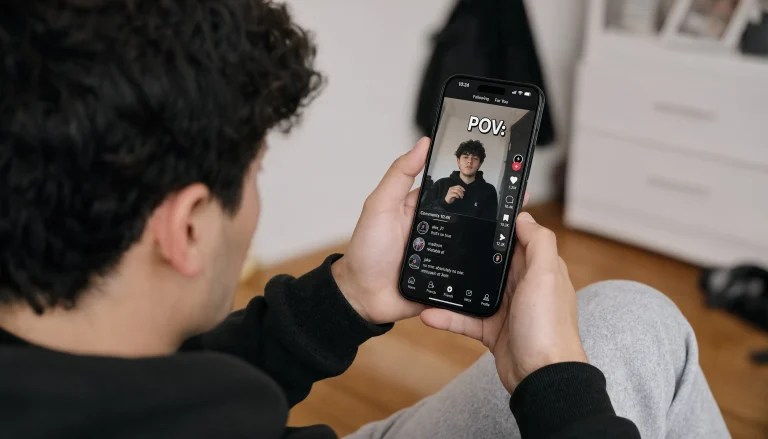
There is also a cultural dimension worth noting. A viral TikTok thread explored a well-known joke inside Black American culture about what OTW actually means in practice — which is “I’ll be there in about three hours, not any time soon.” The humor lands because it captures something deeply relatable: the gap between what we say we are doing and how long it actually takes us to get moving. That joke spread widely because it rings so true for so many people.

What Are All the Meanings of OTW?
OTW carries more than one meaning depending on how and where it is used. The primary definition is dominant, but there are secondary meanings worth knowing — especially if you move across different online communities.
- “On The Way” — The Primary Meaning
This is the one you will encounter 95% of the time. Someone texts you OTW and it means they are physically heading toward wherever you are or wherever you have agreed to meet. It is a status update compressed into three letters. You might see it in response to “where are you?”, “are you coming?”, or even as a standalone message someone fires off when they leave the house. This meaning is consistent across every platform — texting, WhatsApp, Snapchat, Instagram DMs, and TikTok comments. - “Off The Wall” — A Secondary, Less Common Meaning
In some informal contexts, particularly on platforms like Acronym Finder, OTW is also listed as “Off The Wall.” This means something weird, unexpected, or out of the ordinary — similar to how people use “wild” or “random” today. You will hear this more in spoken slang than in texting, and it is far less common than the primary definition. If someone sends you OTW without any travel context, this might be what they mean — especially if they are reacting to something surprising. - “One To Watch” — Industry and Professional Contexts
In entertainment, sports, and media industries, OTW sometimes stands for “One To Watch.” You might see this in entertainment journalism, talent scouting discussions, or sports coverage — referring to a rising star or emerging talent worth paying attention to. This meaning does not appear much in casual texting, but it is active in professional digital media spaces. - “Over The Wall” — Niche Technical Use
In corporate and tech environments, particularly in project management and software development, “over the wall” refers to handing off a project or piece of work to another team without proper communication. OTW in this context means work that gets thrown to the next department without context. This is a very niche, professional usage — you would not encounter it in casual personal texting at all.
How Is OTW Used in Real Chatting?

OTW fits naturally into fast-paced, casual conversations where speed matters more than formality. It is the kind of word that gets sent while you are running out the door, not while you are sitting down to compose a thoughtful message. Here are real scenarios where OTW shows up and exactly what it means in each one:
- The classic location update: Your friend is waiting at the restaurant. You are still in the car. You send: “OTW, 5 minutes out 🙏” — Clean, fast, and reassuring. They know you are coming, they know roughly when, and they can stop wondering if you bailed.
- The reply to “where are you?”: Someone texts you “where are you??” with a certain urgency to it. You fire back: “OTW!” — Just those three letters, maybe with an exclamation mark to signal you are moving fast. It acknowledges their question, answers it, and gives them enough information to relax.
- The group chat update: A group of friends is at someone’s house and people are slowly arriving. Someone texts the group: “Just leaving now, OTW 🚗” — Here it functions as a social check-in that lets the whole group know the timeline without flooding the chat with a long message.
- The food delivery or package update: You ordered food and you are tracking the delivery driver. Some apps actually use “OTW” in their notification language. You might also text a friend who is bringing something: “Hey is the food OTW?” — In this context, OTW refers to the delivery being in motion, not a person.
- The casual Snapchat or Instagram story reply: Someone posts that they are having a party or gathering. You reply to their story: “OTW 🔥” — This is social confirmation that you are coming, delivered in the most efficient possible way. No need for a full sentence. Three letters and an emoji does the job completely.
- The metaphorical use: This one is growing in everyday conversation. Someone might say “major glow-up OTW” or “new era OTW” — meaning something big is coming, even if it is not a physical journey. Here OTW expresses that something is incoming or approaching, used figuratively rather than literally.
OTW vs. OMW: What Is the Difference?
OTW and OMW mean almost the same thing, but they carry a slightly different perspective. This is one of the most common points of confusion around these two acronyms, and it is worth getting right.
Here is the breakdown:
| Acronym | Full Form | Perspective | Tone |
|---|---|---|---|
| OTW | On The Way | General / third person | Neutral, informational |
| OMW | On My Way | First person | Personal, direct |
| OTW | On The Way | Can refer to a person or thing | Flexible |
| OMW | On My Way | Always refers to the speaker | Personal only |
The real difference is about who or what is moving. OMW is always personal — it always means I am on my way. OTW is slightly more flexible. You can say “the package is OTW” or “the pizza is OTW” in a way that does not work as naturally with OMW. OTW describes movement or incoming arrival in a more general way.
In terms of everyday use, both are completely interchangeable when talking about yourself. According to Slang.net, OTW is similar to OMW but slightly less common in general texting — though this has been changing as OTW has gained more traction across social media platforms.
Your choice between the two often comes down to habit and region. Some people grow up saying OMW and never switch. Others prefer OTW. Both are understood universally.
OTW Across Different Platforms: Does the Meaning Change?
The core meaning of OTW stays the same across platforms, but the way it is used shifts slightly depending on where you are. Here is a platform-by-platform look:
- Text Messages / iMessage / WhatsApp: This is where OTW lives most naturally. It is a real-time travel update, usually sent while in motion. The speed and convenience of the acronym matches perfectly with the fast-moving, in-the-moment nature of direct messaging. You send OTW because you are actually moving and do not have time to write a full sentence.
- Snapchat: On Snapchat, OTW shows up frequently in snaps and story replies. The ephemeral, visual nature of Snapchat makes short-form text like OTW a perfect fit. Someone might send a snap of themselves in the car with the caption “OTW 🎉” before a night out. It is casual, it is visual, and it signals participation and energy.
- TikTok Comments: In TikTok comment sections, OTW takes on a slightly more metaphorical and hype-driven tone. Commenters drop “OTW to do this” or “me OTW to [activity]” as a way of expressing enthusiasm or relatability. It is less about a literal trip and more about energy and intention.
- Instagram DMs and Stories: When someone replies to your Instagram story with OTW, it almost always means they are coming to the event, location, or gathering you shared. It is a quick, low-effort RSVP that gets the point across without a long reply.
- Twitter / X: On X, OTW appears in posts that express anticipation or incoming action. A fan might post “OTW to the concert 😭🔥” or someone hyping themselves up might write “discipline era OTW.” Here the word stretches beyond physical travel into motivation, goals, and lifestyle announcements.
When Should You Use OTW — and When Should You Not?
Use OTW in casual, informal conversations with people you know well. That is its natural home. Here is a practical guide to help you decide when OTW fits and when it does not:
- ✅ Use OTW with friends and family: Any time you are headed somewhere and want to give a fast heads-up, OTW is the perfect tool. It is friendly, quick, and universally understood in casual circles. Nobody is going to misread it in these settings.
- ✅ Use OTW in group chats: Group chats move fast. Long messages get lost. OTW communicates your status in an instant and keeps the flow of the conversation moving. It is especially useful when everyone is coordinating a meetup in real time.
- ✅ Use OTW on social media stories and replies: Instagram, TikTok, and Snapchat are built for fast, casual communication. OTW fits right in. Nobody expects full sentences in a story reply or a comment section.
- ❌ Do not use OTW in professional emails: If you are emailing your boss, a client, or a colleague you have never met, OTW has no place in that message. It reads as unprofessional and too casual for a formal setting. Write “I am currently on my way” or “I will arrive shortly” instead.
- ❌ Do not use OTW in academic contexts: Submitting a paper, emailing a professor, or communicating about coursework? Spell everything out. Slang acronyms in academic communication undermine your credibility immediately.
- ❌ Do not use OTW with people who might not know it: Older family members, international contacts, or people who are not heavy texters might not recognize OTW instantly. The last thing you want is someone worried because they could not decode your three-letter message. When in doubt, spell it out.
The Funny Reality of OTW: What It Says vs. What It Means
Let us be completely honest about something: for a huge portion of people, OTW does not actually mean “I am currently in motion.” It means “I am about to start getting ready and will realistically be there in 45 minutes to two hours.”
This is a known cultural joke that spread widely on TikTok in 2025. A video by creator @trezanderson_ about the Black American cultural understanding of OTW went viral specifically because it pointed out this exact gap with humor and precision. The comment sections filled up with people sharing the exact same experience: you get an OTW text and you mentally add 90 minutes to whatever their expected arrival time would be.
The joke works because it captures a universal truth about how we use language when we are running late. Saying OTW is partly a communication of your status and partly a social move to manage someone’s expectations and frustration. It signals good intention even when execution is still pending.
This does not make OTW dishonest — it makes it human. Language in casual conversation has always carried social function alongside informational function. When someone texts you OTW, they are saying I have not forgotten you, I am coming, please do not be annoyed. The timing is a secondary negotiation.
Related Slang Terms You Should Know Alongside OTW
Understanding OTW becomes even more useful when you know the slang terms that sit in the same conversational space. These are the words and acronyms that people use in the same kinds of conversations where OTW shows up:
| Slang/Acronym | Full Form / Meaning | How It Relates to OTW |
|---|---|---|
| OMW | On My Way | Direct synonym — first person version |
| ETA | Estimated Time of Arrival | Used alongside OTW to give a time |
| BRT | Be Right There | Stronger urgency than OTW |
| NGL | Not Gonna Lie | Same casual texting register |
| LMK | Let Me Know | Often follows or precedes OTW |
| HMU | Hit Me Up | Used to invite someone OTW |
| ICYMI | In Case You Missed It | Same shorthand culture |
| IRL | In Real Life | Physical world context where OTW applies |
Knowing these related terms helps you navigate fast-moving conversations where multiple acronyms appear together. A message like “OTW, ETA 10 mins, LMK if plans changed” reads as completely natural once you know all three.
Conclusion: OTW Is Small but Mighty
OTW is one of those pieces of internet slang that earns its place in everyday language because it actually saves time and communicates clearly. Three letters. Two seconds to type. And the person waiting for you immediately knows you are coming.
What I hope you take from this is that OTW is not just an abbreviation — it is a social signal. It tells the other person you are thinking of them, you are moving toward them, and they can stop wondering where you are. That is a surprisingly warm thing to communicate in just three letters.
It fits into casual texting, social media, and real-time coordination in a way that feels completely natural. The key is knowing where it belongs and where it does not. Keep it in informal conversations, use it when you are actually heading somewhere (or at least intending to head somewhere soon), and spell out the full phrase whenever the setting demands more professionalism.
Next time your phone buzzes and all it says is “OTW” — you know exactly what that means, what it implies, and even how much extra time to mentally add to your wait. And next time you are racing out the door and need to check in with someone quickly? Three letters and you are done.
Frequently Asked Questions
What does OTW mean in a text message?
Yes, OTW has a clear and consistent meaning in text messages — it stands for “On The Way.” It tells the recipient that the sender is currently in motion and heading toward them or toward an agreed location. It is one of the most widely used texting abbreviations in casual digital communication today.
Is OTW the same as OMW?
Yes, OTW and OMW are nearly identical in meaning and are often used interchangeably. OMW stands for “On My Way” and is always first-person. OTW stands for “On The Way” and can refer to a person, a delivery, or anything else that is in motion toward a destination. Both are understood universally in casual texting.
Can OTW mean something other than “On The Way”?
Yes, OTW has secondary meanings in specific contexts. In entertainment and sports media, it can mean “One To Watch.” In some informal slang spaces, it is used as “Off The Wall” to describe something surprising or unusual. In corporate environments, it occasionally refers to “Over The Wall” handoffs. However, in everyday texting, “On The Way” is the meaning you will encounter nearly every time.
Is it okay to use OTW at work?
No, OTW is not appropriate in formal professional communication like emails, reports, or official messages to clients or managers. It is casual slang that belongs in informal conversations. In a professional context, write “I am on my way” or “I will arrive shortly” to maintain a professional tone.
Why do people use OTW instead of typing the full phrase?
Yes, there is a clear reason — convenience and speed. When you are rushing out the door or mid-activity, typing a full sentence takes time you may not have. OTW delivers the same information in three keystrokes. In fast-moving group chats and social media comment sections, brevity is valued and OTW fits that culture perfectly.
Does OTW mean the person has actually left already?
No, not always — and this is the honest answer. While OTW technically implies that someone is already in motion, it is frequently used the moment someone decides they are going somewhere, even if they have not physically started moving yet. The gap between sending OTW and actually being on the way can vary significantly from person to person and situation to situation.
What is the difference between OTW and BRT?
Yes, there is a meaningful difference. OTW — On The Way — indicates the person is in motion but does not specify urgency or closeness. BRT — Be Right There — implies the person is very close and will arrive imminently. BRT carries more urgency and shorter implied distance. Use OTW for a general travel update and BRT when you are genuinely almost there.
You May Also Like
 Fun Questions
1500+ This or That Questions for 2026: From Silly Choices to Deep Conversations
 Fun Questions
What Does WSG Mean in Text? How to Respond to WSG in Messages and Social Media
 Fun Questions
350+ Truth or Dare Questions: Play Classic Party Games With Your Friends
 Fun Questions
250+ This or That Questions for Back to School: The Ultimate Icebreaker Guide for Teachers and Students
 Fun Questions
157+ This or That Questions for Cousins: Fun Conversations
 Fun Questions
155+ This or That Questions for Black People: A Complete Cultural Connection Guide
 Fun Questions
What Does GNG Mean in Text? Meaning Slang, Examples, and Real Usage
 Fun Questions
What Does SYBAU Mean? SYBAU Slang Meaning, Origin & Examples
 Fun Questions