25+ Other Ways to Say “I Hope” (Formal & Informal Alternatives)
“I hope” is one of those phrases that quietly weakens your writing without you realizing it. It’s not wrong — it’s just soft, overused, and often carries a note of uncertainty that undermines whatever you’re actually trying to say. When every third sentence in a cover letter, email, or message begins with “I hope,” the phrase stops meaning anything. It becomes verbal filler, the written equivalent of clearing your throat before speaking.
The good news is that English gives you an unusually rich toolkit for expressing hope, expectation, optimism, and anticipation. There are more than two dozen well-established alternatives, and each one carries a slightly different weight. “I anticipate” projects confidence. “Fingers crossed” signals warmth and vulnerability. “I trust that” implies quiet authority. “Manifesting” places you in a specific cultural moment. Choosing between them isn’t a stylistic flourish — it’s a decision about how you want to be read.
This guide walks through those alternatives the way an editor would: not as a list of synonyms, but as a set of tools with specific jobs. You’ll see which phrases belong in a job application versus a group chat, why some options sound confident while others sound hesitant, and where writers most often go wrong when they try to sound more polished. By the end, you’ll have a working framework for picking the right phrase in seconds — not just a memorized list.
Key Takeaways
- “I hope” has 25+ viable alternatives, ranging from highly casual (“fingers crossed”) to strictly formal (“it is my expectation”)
- Context outweighs vocabulary — the same alternative can strengthen one message and weaken another depending on audience and tone
- Formal alternatives (“I anticipate,” “I trust that,” “I’m confident”) work best for cover letters, business emails, and academic writing
- Casual alternatives (“hopefully,” “here’s hoping,” “wish me luck”) suit texts, social media, and conversations with peers
- Certainty levels matter — “I’m confident” projects assurance, while “hopefully” acknowledges doubt
- Mixing registers is the most common mistake — pairing “I anticipate” with “fingers crossed” reads as inconsistent
- Regional English varies — American, British, and Australian speakers favor different phrasing
- Emojis (🤞 🙏 ✨) function as legitimate substitutes in informal digital communication but never in professional writing
Why “I Hope” Deserves a Rewrite
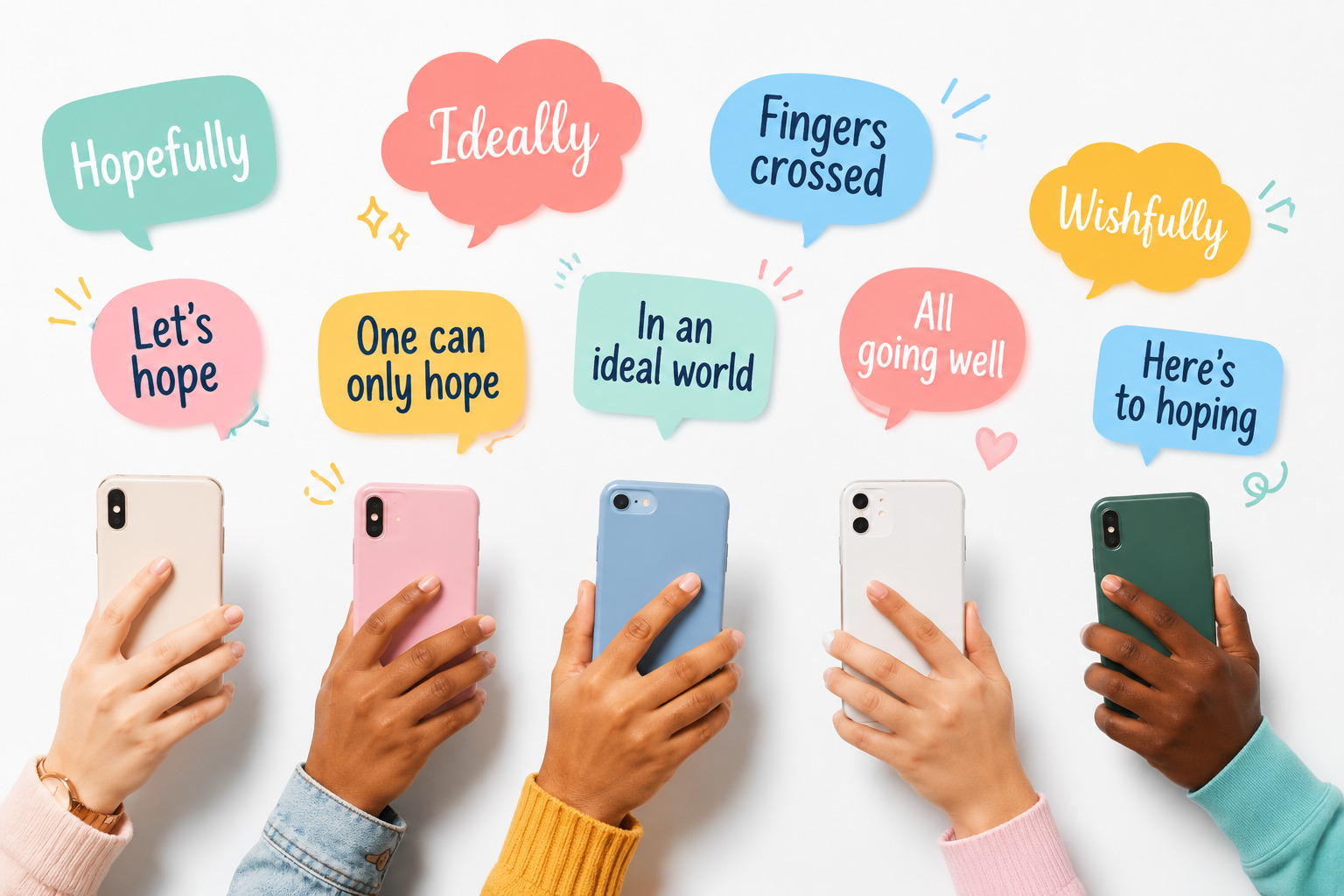
Overusing “I hope” isn’t just a stylistic weakness — it’s a credibility issue. Readers subconsciously calibrate how confident a writer sounds, and repeated hedging language nudges that reading toward uncertainty. In professional communication, especially hedging can cost you.
Consider what these two sentences signal to a hiring manager:
- “I hope you’ll consider my application.”
- “I’m confident my background aligns with what you’re looking for.”
Both express the same underlying wish. The second version simply carries itself differently. It doesn’t ask for permission to be taken seriously — it assumes it.
The core problems with over-relying on “I hope” are consistent across writing types:
- It weakens your message by front-loading uncertainty
- It sounds repetitive when used more than once or twice in the same piece
- It undersells confidence in professional and academic settings
- It flattens your voice by ignoring the range of alternatives English offers
- It signals hedging in situations where clarity or conviction matters more
This isn’t about eliminating “I hope” entirely — it’s a perfectly good phrase in the right spot. It’s about knowing when it earns its place and when a stronger, softer, or simply different alternative would serve you better.
Formal Ways to Say “I Hope” (Professional & Academic Contexts)
Formal alternatives work when the reader expects polish: cover letters, business emails, academic essays, client communications, letters of recommendation, and any writing where tone signals seriousness. The common thread across strong formal alternatives is that they trade tentativeness for measured confidence.
Top formal alternatives with example usage:
- I anticipate — “I anticipate a positive response to this proposal.”
- I trust that — “I trust that you’ll find my qualifications suitable for the role.”
- It is my expectation — “It is my expectation that we will meet the stated deadline.”
- I’m optimistic that — “I’m optimistic that our collaboration will produce strong results.”
- I’m confident — “I’m confident this approach will address the concerns you raised.”
- I look forward to — “I look forward to hearing from you at your convenience.”
- I expect — “I expect the final report to exceed the initial benchmarks.”
- It is my sincere wish — “It is my sincere wish that we can find a workable solution.”
- I remain hopeful — “I remain hopeful that circumstances will improve in the coming weeks.”
- I’m counting on — “I’m counting on your expertise to guide this initiative.”
Where formal alternatives belong:
- Job applications, cover letters, and follow-up emails
- Emails to professors, supervisors, executives, or clients
- Business proposals, reports, and formal requests
- Recommendation requests and academic correspondence
- Networking messages and LinkedIn outreach
- Formal complaints or dispute communications
An editor’s note on register: The strongest formal writing rarely uses more than one hope-expression per document. If your cover letter opens with “I’m confident” and closes with “I look forward to,” you’ve already covered the emotional arc. Repeating variations of the same sentiment throughout dilutes both.
Casual and Informal Alternatives (Texts, Social, and Everyday Chat)
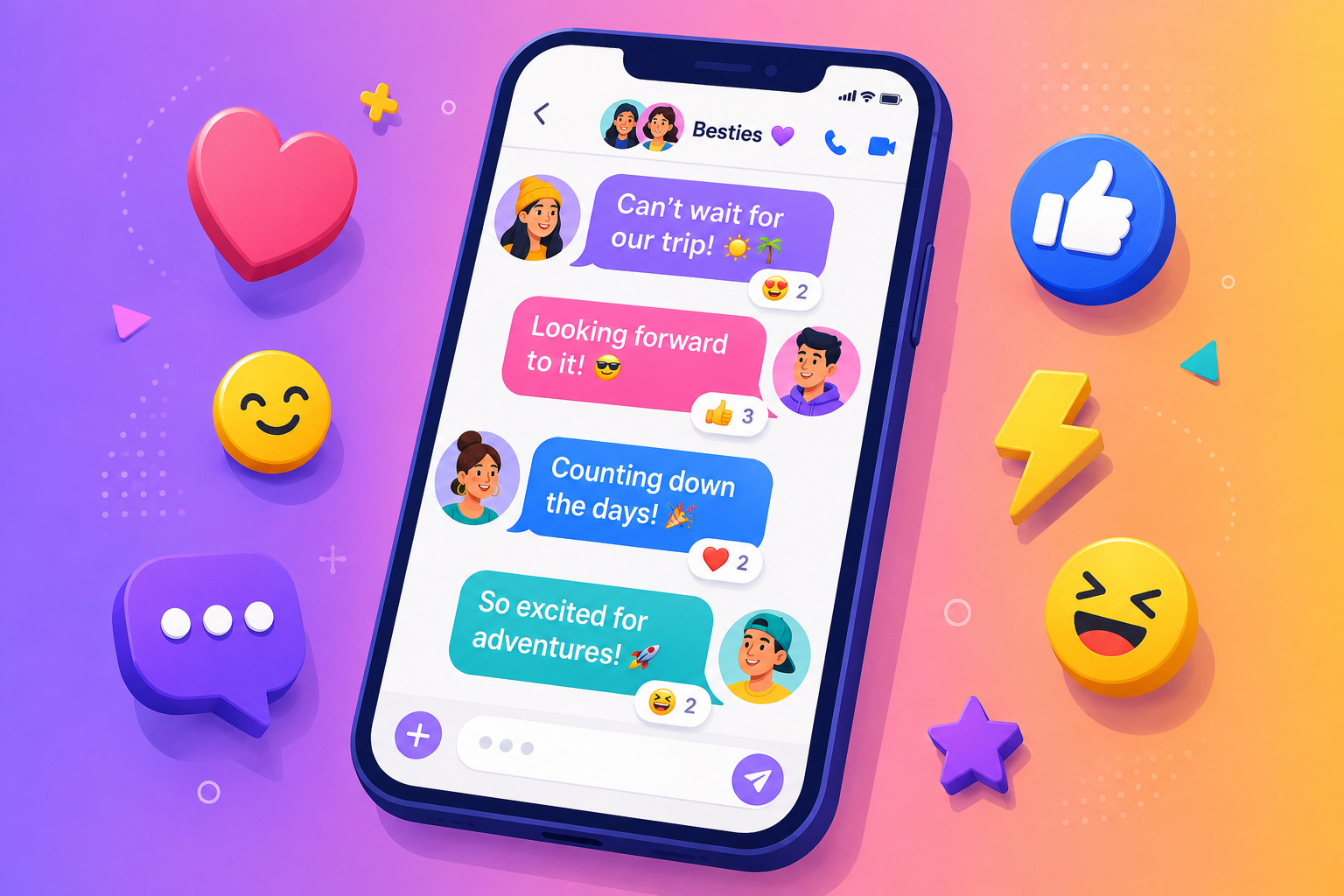
Casual alternatives sound natural when you’re texting friends, posting on social media, chatting in Discord servers, or writing to anyone in a relaxed context. The register here is looser, warmer, and often playful.
Top casual alternatives:
- Hopefully — “Hopefully we can grab lunch this weekend.”
- Fingers crossed — “Fingers crossed the concert isn’t sold out 🤞”
- With any luck — “With any luck, I’ll pass this stats final.”
- Here’s hoping — “Here’s hoping the weather holds up.”
- Wish me luck — “Wish me luck on my driving test tomorrow.”
- Keeping my fingers crossed — “Keeping my fingers crossed for the callback.”
- Let’s hope — “Let’s hope they have your size in stock.”
- I’m hoping — “I’m hoping the package shows up before Friday.”
- Praying that — “Praying that my phone didn’t just die 🙏”
- Crossing my fingers — “Crossing my fingers for a snow day.”
- Manifesting — “Manifesting good vibes for your interview.”
- Sending good vibes — “Sending good vibes your way this week.”
Where casual alternatives belong:
- Text messages and group chats
- Instagram, TikTok, and Snapchat captions
- Discord and community server conversations
- Comments and replies on social media
- Personal journal entries and informal notes
- Any message where warmth matters more than polish
A note on “manifesting”: This word has moved decisively into mainstream casual English over the past few years, particularly on TikTok and among Gen Z users. It signals more than hope — it implies intentional focus on a desired outcome. That specificity is part of its appeal, but it also means “manifesting” carries a cultural moment attached to it. Use it where that vibe fits.
Emoji as substitute: In informal digital contexts, 🤞 (crossed fingers), 🙏 (folded hands), and ✨ (sparkles) function as full substitutes for hope-phrases. They compress meaning into a single character and feel native to how people actually write online. Just don’t carry that habit into professional email.
Certainty Levels: The Hidden Dimension Most Writers Miss
One overlooked aspect of choosing an alternative is that these phrases sit on a spectrum of confidence. Two writers can technically say the same thing and give completely different impressions based on which alternative they choose.
| Certainty Level | Example Phrases | What It Signals |
|---|---|---|
| High certainty | I’m confident, I expect, I anticipate | Assurance, authority, near-conviction |
| Moderate certainty | I’m optimistic, I trust that, with any luck | Balanced optimism with acknowledgment of uncertainty |
| Low certainty | Hopefully, fingers crossed, here’s hoping | Openness about doubt, softness, humility |
This matters because using the wrong level of certainty for the situation creates friction. Telling someone “I’m confident the weather will be perfect for your outdoor wedding” overpromises something you can’t control. On the other hand, writing “hopefully my qualifications are enough” in a cover letter undersells you before the reader even reaches your résumé.
The practical rule: match certainty to what you can actually influence. Use high-certainty language for outcomes you’re driving. Use lower-certainty language for outcomes that depend on factors outside your control.
How to Choose the Right Alternative: A Decision Framework

Rather than memorizing which phrase goes where, apply this three-question framework:
1. Who’s reading this?
- Peer or friend → casual alternatives
- Authority figure, employer, or professional contact → formal alternatives
- Mixed or public audience → lean formal to stay safe
2. What’s the stakes level?
- High-stakes (job, scholarship, major request) → confident, formal language
- Low-stakes (weekend plans, casual chat) → warm, informal language
- Medium-stakes (email to a teacher, a professional acquaintance) → moderate formality
3. How much control do I have over the outcome?
- I’m driving this outcome → high-certainty phrases
- It depends on someone else’s decision → moderate-certainty phrases
- It’s largely out of my hands → lower-certainty, softer phrases
Running any hope-expression through these three filters gets you to the right register more reliably than memorizing lists.
Practical comparison:
- ❌ Weak: “I hope maybe you might possibly consider my application.”
- ✅ Stronger: “I’m confident my background matches what your team is looking for.”
The second version doesn’t just sound better — it commits. Committed writing is almost always more persuasive than hedged writing, provided you have the substance to back it up.
Common Mistakes When Replacing “I Hope”
Even writers who know the alternatives often stumble on execution. These are the mistakes editors flag most often:
Mistake 1: Mixing registers within the same message
❌ “I anticipate a favorable outcome. Fingers crossed! 🤞”
Formal opener, casual closer — the reader gets whiplash. Commit to one tone.
Mistake 2: Using casual alternatives in formal contexts
❌ “Dear Hiring Manager, I’m manifesting that you’ll hire me.”
“Manifesting” belongs in a text, not a cover letter. Choose alternatives that match the seriousness of the venue.
Mistake 3: Overusing your new favorite phrase
If you just discovered “I anticipate,” don’t deploy it five times in one email. Variety is part of what makes writing feel human. Repetition — even of a strong phrase — sounds robotic fast.
Mistake 4: Overclaiming certainty
❌ “I’m confident the weather will be perfect for your outdoor wedding.”
You cannot be confident about weather. Match your certainty language to what you actually control or reasonably predict.
Mistake 5: Overhedging in professional writing
❌ “Maybe hopefully if you have time you might possibly consider my proposal?”
Stacking hedges compounds weakness. Pick one expression and let it stand.
Mistake 6: Ignoring regional English differences
“Hopefully” at the start of a sentence is unremarkable in American English but flagged as incorrect in traditional British academic writing. If you’re writing across regions, know your audience.
Regional and Cultural Variations
Different English-speaking regions favor different phrasing, and these preferences shape how natural your writing sounds to native readers.
American English favorites:
- “Hopefully” (widely used, including sentence-initial)
- “Fingers crossed”
- “With any luck”
- “I’m hoping”
- “Here’s hoping”
British English favorites:
- “With a bit of luck”
- “Touch wood” (equivalent to “knock on wood”)
- “I’m rather hoping”
- “One hopes”
- “All being well”
- “Fingers crossed” (also common)
Australian English favorites:
- “She’ll be right” (an all-purpose optimistic expression)
- “With a bit of luck”
- “Fingers crossed”
- “Hopefully”
Online and Gen Z variations:
- “Manifesting”
- “Sending good vibes”
- “Praying” (often non-religious)
- Standalone emojis: 🤞 🙏 ✨
- “Lowkey hoping” (hoping without fully committing to the hope)
A cross-cultural note: In some communication cultures, expressing high confidence reads as arrogant; in others, expressing uncertainty reads as weak. When writing for international audiences, err toward the middle of the certainty spectrum — phrases like “I’m optimistic” or “I trust that” tend to translate across cultures more gracefully than either extreme.
Quick Reference Guide by Situation
For job applications and cover letters:
- “I’m confident my experience aligns with your needs.”
- “I look forward to discussing this opportunity.”
- “I trust you’ll find my qualifications suitable.”
For college essays and applications:
- “I anticipate contributing meaningfully to campus life.”
- “I’m optimistic about what this program offers.”
- “I expect to grow both academically and personally.”
For emails to teachers or professors:
- “I’m hoping to discuss my progress in your class.”
- “I trust you’ll consider my request.”
- “I’m optimistic we can find a workable solution.”
For professional networking:
- “I look forward to connecting.”
- “I’m confident we could collaborate effectively.”
- “I anticipate mutually beneficial opportunities.”
For texting friends:
- “Hopefully we can meet up soon.”
- “Fingers crossed 🤞”
- “Wish me luck!”
For social media captions:
- “Manifesting good news ✨”
- “Sending good vibes”
- “Here’s hoping this pays off”
For asking someone out:
- “I’m hoping you’d want to hang out sometime.”
- “Fingers crossed you’re free Saturday.”
- “I’m optimistic you might be interested.”
What Editors Actually Look For
A few patterns that show up repeatedly in strong writing:
1. Confidence is a style choice, not just a personality trait.
Writers often assume they need to “feel” confident to write confidently. In practice, choosing confident phrasing is a habit you can build. “I’m confident” costs the same to type as “I hope” — the difference is in what you’re willing to commit to on the page.
2. The best writers rotate registers deliberately.
Skilled communicators don’t just pick a formality level and stick with it forever. They shift consciously — formal for a cover letter, casual for a thank-you follow-up to the recruiter three weeks later. The alternative you choose is part of how you signal what kind of relationship this is.
3. “Hopefully” is not a grammatical error.
Traditional style guides used to prohibit “hopefully” at the start of a sentence (as in “Hopefully, we’ll finish on time”). Contemporary usage — including in major style manuals — has accepted this construction. Don’t waste energy avoiding it in casual or general writing.
4. Emojis are not weakness.
In digital-native communication, replacing “fingers crossed” with 🤞 isn’t lazy — it’s efficient. What matters is knowing when the medium supports emoji use and when it doesn’t. A text to a friend? Fine. An email to a professor? Not fine.
5. Overcorrection creates its own problems.
Writers who learn about hedging language sometimes overcorrect into stiff, overly formal phrasing. “It is my expectation that we shall convene” sounds like a legal document, not a professional email. Formal doesn’t have to mean archaic.
Practical Recommendations
If you write professional communication regularly, build a small personal shortlist of go-to alternatives — maybe three formal, three casual — that you actually like the sound of. You’ll pull from that shortlist automatically, and your writing will develop a consistent voice.
If you’re a student or early-career writer, pay attention to how the people whose writing you admire handle hope-language. Note which phrases they use in which contexts. This kind of pattern-matching is how strong prose habits get built.
If you’re writing across cultures, default to phrases with the widest cross-cultural acceptance: “I’m optimistic,” “I look forward to,” “I trust that.” Save regional-specific expressions (“one hopes,” “she’ll be right”) for audiences who’ll recognize them.
If you’re texting or posting on social media, don’t overthink it. Casual alternatives exist because they sound natural. “Fingers crossed” doesn’t need a substitute — it is the substitute.
Frequently Asked Questions
What’s the most professional way to say “I hope”?
“I anticipate” and “I’m confident” are the strongest professional alternatives. They project certainty and authority while remaining formal. Use them in cover letters, business proposals, and communications with senior stakeholders.
Can I use “hopefully” at the beginning of a sentence?
Yes, in modern American English it’s fully acceptable and used regularly in professional and journalistic writing. In stricter British academic writing, some traditional grammar guides still discourage it. When in doubt, “I hope” or “with any luck” are safe replacements.
What’s the difference between “I hope” and “I wish”?
“I hope” refers to something you consider possible or likely. “I wish” often implies something is unlikely, contrary to fact, or impossible. “I hope you feel better” is appropriate for someone recovering; “I wish I could fly” is appropriate for something unattainable.
Is “manifesting” appropriate for professional emails?
No. “Manifesting” belongs in casual and social contexts. It signals a specific cultural moment and reads as too informal (and sometimes too trendy) for professional writing. Use “I anticipate” or “I’m optimistic” instead.
How do I avoid sounding uncertain in job applications?
Replace hedging phrases like “I hope” with committed alternatives like “I’m confident,” “I expect,” or “I trust that.” Avoid stacking softeners such as “maybe,” “possibly,” and “hopefully” in cover letters — they compound each other and weaken your position.
What does “fingers crossed” mean and when should I use it?
“Fingers crossed” expresses hope for a good outcome, usually in situations involving luck. It’s warm, casual, and slightly vulnerable — perfect for texts, social posts, and informal conversation, but out of place in formal writing.
Can I use emojis instead of saying “I hope”?
In casual digital communication, yes. 🤞 and 🙏 function as full substitutes for hope-phrases and often feel more natural than the written version. Keep them out of professional email, academic writing, and any formal document.
What’s the British English equivalent of “hopefully”?
British speakers often prefer “with a bit of luck,” “all being well,” “one hopes,” or simply “I’m hoping.” These sound more natural in British contexts, especially in written correspondence.
Is “I’m praying” only for religious contexts?
Not anymore. Many speakers — especially younger ones — use “praying” and “praying that” casually to mean “really hoping,” with no religious connotation. It’s widely understood in social contexts but may confuse more traditional audiences.
How many times can I use hope-expressions in a single message?
As a general rule, once per short message and no more than twice in a longer document. Repeated hope-expressions signal uncertainty and dilute their own impact. If you’re expressing hope multiple times, ask whether all of them are actually necessary.
What’s the most casual way to say “I hope”?
“Fingers crossed,” “wish me luck,” and “manifesting” are among the most casual alternatives currently in use. They suit texts, group chats, and social media but are inappropriate for any professional or academic setting.
Should I use “I trust that” with people I don’t personally trust?
Yes — in formal contexts, “I trust that” doesn’t refer to personal trust. It expresses confidence in an outcome, similar to “I expect” or “I anticipate.” It’s appropriate with strangers, clients, and professional contacts regardless of your personal relationship.
Conclusion
Learning to say “I hope” in twenty-five different ways isn’t really about vocabulary — it’s about choosing how you want to be read. Every alternative you pick sends a small signal about your confidence, your relationship to the reader, and how seriously you want your message taken.
The core principle is simple: match the alternative to the context. Use formal, confident phrases (“I anticipate,” “I’m confident,” “I trust that”) when the stakes are high and the reader expects polish. Use warmer, softer options (“fingers crossed,” “hopefully,” “here’s hoping”) when you’re writing to peers, friends, or in casual digital spaces. And use lower-certainty phrasing when the outcome genuinely depends on factors outside your control — overclaiming confidence is its own kind of credibility problem.
The writers who use these alternatives most effectively aren’t reaching for variety for its own sake. They’re making deliberate choices about tone, register, and confidence — and those choices show up in how their writing lands. Start with the framework, practice with the situations you actually encounter, and the right phrase will start arriving without effort.
You May Also Like
 Personal Motivation Quotes
150+ Fake Friends Quotes: Dealing with Toxic Relationships
 Quotes
100+ Best Quotes for Unicorns: Find Inspiration and Wonder in Magical Words
 Family and Relationships
150+ Celebration of Life Quotes: Words to Celebrate Loved Ones
 Quotes
250+ Weekend End Quotes: Say Goodbye to Your Days Off with Style
 Rejection Quotes
150+ They Only Remember You When They Need You Quotes
 Quotes
50 Best Quotes for Your Boss (That Actually Mean Something)
 Quotes
100+ XXXTentacion Quotes: Real Words from a Hip-Hop Legend
 Personal Motivation Quotes
100 Tuesday Motivational Quotes for Work: Start Your Day Right
 Personal Motivation Quotes