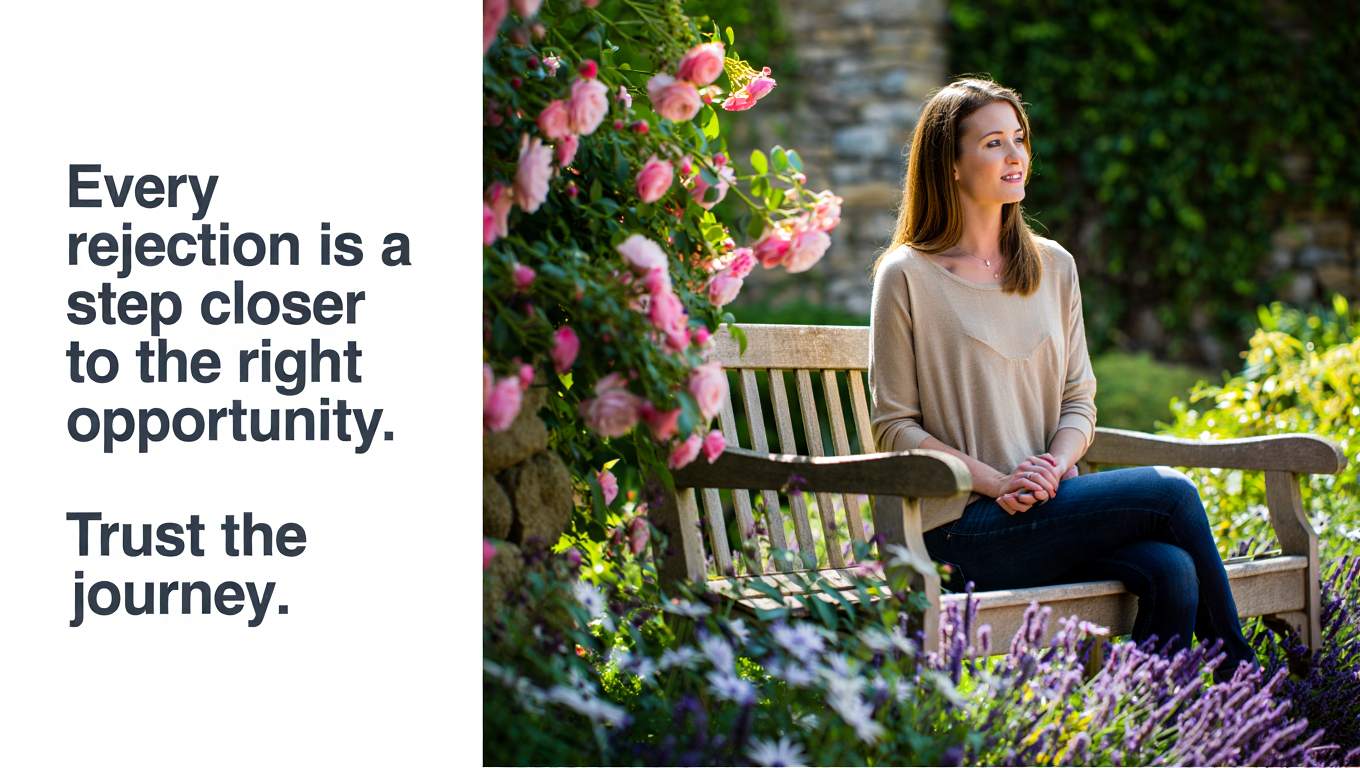
100 Rejection Quotes for Love, Work, Friendship, and Starting Again
You sent the message. You applied for the job. You shared something you made. Then came a no—or silence that felt a lot like one.
Rejection can leave you disappointed, embarrassed, angry, or unsure what to do next. Sometimes the stakes are practical, too: you needed that job, valued that relationship, or spent months on the project. A quote cannot change the decision. It can give you a sentence that describes the moment without making it a verdict on your whole life.
If you need one rejection quote right now, try this: “I can take this no seriously without turning it into everything I believe about myself.”
This collection includes quotes for romantic rejection, job disappointment, creative setbacks, and feeling left out. You will also find ways to use a quote when it helps—and set it aside when you need information, support, or time instead.
Attribution note: The 100 numbered quotes below are original editorial lines written for this article. They are not quotations from public figures or claims about what real people said after being rejected.
Why Does Rejection Hurt So Much?

Rejection can threaten something important: a relationship, an opportunity, a sense of belonging, or a future you had started to picture. That is enough to make it painful. You do not need a dramatic explanation to justify your feelings.
Brain research adds nuance, but it is often oversimplified online. One study of people recalling an unwanted breakup found overlap between some brain activity associated with social rejection and physical pain. A later analysis found distinct activity patterns for the two experiences, even in some of the same broad regions. Rejection can genuinely hurt; that does not mean every rejection is literally the same as a physical injury.
The situation matters as much as the feeling. Not getting a first date is different from losing a long-term partner. A rejected manuscript is different from losing work you need to pay rent. And being excluded because of discrimination or harassment is not simply a matter of “fit.” Useful advice should leave room for those differences.
What happens after you get rejected?
You might replay a conversation, wonder what you missed, or want an explanation immediately. You might also feel relieved, especially if the situation was already uncertain or uncomfortable. There is no required reaction.
A helpful first step is to separate three things:
- What happened: “They chose another candidate.”
- What you know about why: “They did not give a reason.”
- What your mind is adding: “I must not be good enough.”
That last sentence may feel convincing. It is still an interpretation, not a fact.
20 Rejection Quotes for When You Need Strength
You do not have to feel strong to read this section. These lines are for the moment when you want to keep one difficult experience from defining everything else.
- “I can admit this hurt without calling myself weak.”
- “A no can change my plans without changing my worth.”
- “Today I may need steadiness more than inspiration.”
- “I can care about the outcome and still be more than the outcome.”
- “Trying mattered, even though it did not end the way I hoped.”
- “I do not owe anyone an instant comeback story.”
- “This disappointment is part of my day. It is not all of my life.”
- “I can ask what happened without assuming everything was my fault.”
- “Being turned down does not make my effort embarrassing.”
- “I can take a pause without deciding to give up.”
- “My feelings deserve attention, not a lecture.”
- “One answer cannot speak for every person or opportunity.”
- “I can be unsure of my next step and still take care of myself now.”
- “I would rather understand this moment than pretend it does not matter.”
- “I can learn something useful without calling the rejection a gift.”
- “It is okay if my first response is disappointment.”
- “A hard answer is not permission to be cruel to myself.”
- “I do not need to prove the other person wrong to move forward.”
- “I can change direction for practical reasons, not because I am defeated.”
- “I am allowed to take this one decision at a time.”
Which quote fits now? If you just heard the news, number 16 may feel more honest than a line about your next move. If some time has passed, number 15 might help you decide whether there is anything worth reviewing. You can use a quote as a starting point, not an instruction to feel differently.
20 Love and Relationship Rejection Quotes
Romantic rejection can bring up grief for what happened and what you thought might happen. A person may not return your feelings. Someone you dated may decide not to continue. A relationship may end even though parts of it were good.
None of those situations is made easier by promising that another partner is just around the corner. These quotes make space for the loss without asking you to predict your future.
When your feelings are not returned
- “I can respect their answer and still feel sad about it.”
- “Their feelings are theirs to choose; my feelings still deserve care.”
- “Wanting to be chosen does not make me needy or foolish.”
- “I do not need to argue someone into wanting a relationship.”
- “I can accept a clear no without agreeing that I am unlovable.”
- “The future I imagined felt real to me, even if we never shared it.”
- “I can miss the possibility as well as the person.”
- “Their honesty may hurt, but uncertainty was hurting, too.”
- “I do not have to make them a villain to let go.”
- “I can stop pursuing someone without being ashamed that I cared.”
After a breakup or an uncertain ending
- “An ending can be right for someone and still be painful for both people.”
- “I can remember what was good without reopening what has ended.”
- “Missing them does not automatically mean I should contact them.”
- “I do not need to turn every memory into evidence that I failed.”
- “If I need distance to recover, I can take it.”
- “I can grieve a relationship without making promises about when I will date again.”
- “I may understand more with time; I do not have to understand everything tonight.”
- “Someone leaving does not erase the care I was capable of giving.”
- “I can ask for support without asking a friend to take sides.”
- “Moving on may begin with a quiet decision, not a dramatic goodbye.”
If you are looking specifically for words about a relationship ending, our collection of sad breakup quotes goes deeper into missing someone, anger, and letting go. A quote can help you express a feeling; it cannot tell you whether a particular relationship should continue. If there has been coercion, intimidation, or abuse, put safety and appropriate support ahead of inspirational advice.
15 Work and Career Rejection Quotes
A rejected application can affect your confidence. It can also affect your finances, schedule, and sense of security. Telling someone who needs work that “the right job is coming” is not a practical substitute for help.
These lines acknowledge both the emotional and real-world sides of career disappointment.
- “I wanted the role; it makes sense that this answer stings.”
- “A hiring decision describes this opening, not my entire career.”
- “I can review my application without treating it like a personality test.”
- “If I receive useful feedback, I can use it. If I do not, I will avoid inventing it.”
- “An interview gave me information, even though it did not give me an offer.”
- “I can need income urgently without calling myself a failure.”
- “One unclear answer is something to practice, not proof I cannot interview.”
- “I may need to adjust my résumé, my target roles, or neither; I need more information first.”
- “I can ask for help with the job search before I am completely worn out.”
- “I do not have to feel grateful for a rejection that created real hardship.”
- “Another applicant’s selection does not make my experience disappear.”
- “I can keep a record of applications without counting every no as a personal loss.”
- “A change in strategy can be useful even when my effort was already real.”
- “Resting after an interview is allowed, whether it went well or badly.”
- “My next step should respond to my circumstances, not somebody else’s success story.”
Example: You make it to a final interview but do not get the job. “I always ruin interviews” gives you little to work with. “I struggled to explain one project clearly; I can practice that answer” identifies something specific. You still may not know why the employer chose another candidate, and it is okay to leave that question unanswered.
For more focused lines and a sample message requesting interview feedback, read our job rejection quotes and next-step guide.
15 Creative Rejection Quotes for Writers, Artists, and Makers
A rejected pitch, audition, submission, or proposal can feel personal because you put thought and taste into it. Sometimes the answer reflects a publication’s needs or a client’s brief. Sometimes feedback reveals a weakness worth addressing. Often, you cannot tell from one short email.
You do not have to choose between believing in your work and being willing to revise it.
- “A rejected submission is one response to this version of my work.”
- “I can protect what matters in this piece and still improve its execution.”
- “A short form email cannot give me a complete creative assessment.”
- “I do not have to call every criticism wrong to disagree with part of it.”
- “This project may need a better match, a revision, or simply more time.”
- “I can feel exposed after sharing my work and still be glad I made it.”
- “One editor’s needs are not a universal rule about my voice.”
- “I can take a note seriously without surrendering the whole idea.”
- “Making art for myself and seeking an audience are both valid choices.”
- “I am allowed to ask whether the feedback is specific enough to use.”
- “A rejected audition can hurt even when I know many people were considered.”
- “I can rest before deciding whether to resubmit, revise, or start something new.”
- “My creative work can matter to me before it finds an audience.”
- “I do not need to make the person who said no into an enemy.”
- “I can keep creating without pretending this rejection was easy.”
Example: A magazine declines a personal essay with no explanation. You cannot conclude that the essay is brilliant—or terrible—from that message alone. You might check the publication’s recent work, ask a trusted reader for specific feedback, or send the essay elsewhere. Each is a choice; none guarantees acceptance.
If creating has become draining rather than meaningful, taking a break is also an option. Commitment to your craft is not measured by how quickly you work after a setback.
15 Friendship and Social Rejection Quotes
Being left out of a gathering can hurt, even if no one intended to exclude you. Repeated exclusion, on the other hand, may point to a relationship that needs an honest conversation—or a change in how much energy you invest in it.
Try not to label someone a “fake friend” based on one missed invitation. Also, do not dismiss a pattern that keeps causing pain.
- “I can ask about the invitation without accusing anyone before I know what happened.”
- “Being left out once hurts; it does not tell me why it happened.”
- “If exclusion keeps happening, I am allowed to notice the pattern.”
- “I can want more from a friendship without demanding constant attention.”
- “A canceled plan may be disappointing without being a rejection.”
- “I do not need a group’s approval to be worth knowing.”
- “I can tell a friend what hurt me instead of testing whether they guess.”
- “Not every friendship will be close, and that is not always a failure.”
- “I am allowed to invest in people who make room for me.”
- “I can leave space for misunderstanding and still take my feelings seriously.”
- “A quiet group chat can make me anxious; it does not tell me what anyone is thinking.”
- “I can reach out to one person instead of trying to win over an entire room.”
- “Belonging can take time, especially in a place where I am new.”
- “I deserve relationships where I can ask a question without fearing the answer.”
- “If I need different friendships, I can begin looking without blaming myself for feeling lonely.”
Example: Your friends meet without inviting you. If this is unusual, you could say, “I saw the photos and felt left out. Was there a reason I wasn’t included?” If it happens often and conversations lead nowhere, you may decide to put more energy into other connections. Those are different responses to different patterns.
If meeting people feels difficult right now, our guide to making new friends offers ideas beyond waiting to be included in the same group.
15 Healing Rejection Quotes for the Next Step
“Move on” can sound simple from the outside. On the inside, moving forward may involve an ordinary task: eating, replying to one email, asking a friend to sit with you, or deciding not to check someone’s account tonight.
These final quotes are about that quieter kind of progress.
- “I can care for myself before I know what this experience means.”
- “I may need comfort today and a plan tomorrow.”
- “A small next step counts even when my mood has not changed.”
- “I do not have to get over this on somebody else’s schedule.”
- “I can tell the story accurately without making myself the villain.”
- “I am allowed to need people while I work through this.”
- “If a quote makes me feel worse, I can put it down.”
- “Healing does not require me to be thankful for what hurt.”
- “I can make room for grief and still notice what needs attention.”
- “Not knowing what comes next is uncomfortable; it is not proof there is nothing next.”
- “I can choose a boundary without turning it into a punishment.”
- “The next useful question may be ‘What do I need?’ rather than ‘Why wasn’t I enough?’”
- “I can try again, choose something else, or take time before deciding.”
- “Being kind to myself does not prevent me from taking responsibility where I need to.”
- “This no matters. It does not get to tell my whole story.”
How to Use These Quotes Without Forcing Positivity
You do not need to read all 100 quotes every morning. Choose one that is believable enough to be useful. A line that says, “Everything will work out perfectly” may feel comforting to one person and painfully false to another. You are allowed to prefer, “I do not know what happens next, but I can decide what to do today.”
Try this three-question rejection toolkit:
- What am I reacting to? Name the event specifically: a breakup, a declined application, an unanswered invitation, or rejected work.
- What do I know for sure? Separate the decision from guesses about the other person’s reasons or your value.
- What do I need next? Consider comfort, information, a conversation, practical assistance, distance, or rest.
For example, imagine that someone you were dating says they do not want another date:
- What happened? They said they do not want to continue dating.
- What am I assuming? “I must have done something embarrassing.”
- What might help? Talk to a friend, stop rereading the messages, and allow the other person’s decision to stand.
That last point matters. Caring for yourself after romantic rejection does not mean persuading someone to change their answer. Respecting a no protects both people’s autonomy.
Should you keep a quote on your phone or share it?
If a line helps you describe your experience, save it. You might add one sentence beneath it: “This applies to me because…” That can make it more useful than collecting dozens of images you never revisit.
Sharing a quote is optional. A public post may invite support, but it can also invite questions you do not want to answer. You can send a line privately to a trusted person—or say directly, “I got rejected, and I’d like some company.”
There is no evidence-backed number of quotes you must read each day. And repeating a statement that feels deeply untrue is not necessarily helpful: in experiments on positive self-statements, some participants with low self-esteem felt worse after repeating a strongly positive statement. The study was not a test of this quote collection. It is a reminder that words should serve you, not become another task you can fail.
Why Rejection Hurts—and What Can Help
The best response depends on what happened. A job rejection may call for financial or career support. A breakup may call for space from an ex-partner. Social exclusion may call for a conversation or new connections. There is no single “rejection recovery” routine that fits them all.
Understand rejection sensitivity without diagnosing yourself
Rejection sensitivity generally refers to a tendency to anxiously expect, readily perceive, and strongly react to rejection; researchers have studied it in relationships and social interactions. That description is not a diagnosis you can make from one painful reaction. It also does not mean the rejection you experienced was imagined. Read the research overview on rejection sensitivity.
If you often find yourself treating an unanswered message as proof someone dislikes you, you might pause before drawing that conclusion. If someone has clearly told you no, repeatedly excluded you, or treated you badly, you do not need to explain it away as oversensitivity. Looking at the evidence in this situation is more helpful than applying a label to yourself.
Be kind to yourself without pretending nothing needs to change
Self-compassion is not the same as saying you were right about everything. You can acknowledge a mistake, apologize if necessary, and decide what to do differently without calling yourself worthless.
Suppose you sent a frustrated message after someone canceled plans. A balanced response might be: “I was hurt. My reply was sharper than I wanted. I can apologize for the tone and still explain why the repeated cancellations have been difficult.” You are addressing both the relationship and your own behavior.
For a deeper look at caring for yourself without requiring instant confidence, see our guide on how to love yourself.
Get the right kind of help for the actual problem
Ask yourself whether you need emotional support, practical support, or both.
- Emotional: “Could you listen for a few minutes? I do not need advice yet.”
- Practical: “Could you review my portfolio before I submit it again?”
- Clarifying: “When plans changed, I felt left out. Can we talk about it?”
- Professional: “This keeps affecting my sleep and daily life. I want help working through it.”
You do not need to wait for a crisis to talk with a mental health professional. The National Institute of Mental Health’s guide to finding help explains options that may include a primary care provider, insurance network, school services, or local treatment resources.
Common Questions About Rejection Quotes
Do rejection quotes actually help?
They may help you name a feeling or find a more balanced way to describe an event. They are not a proven treatment for rejection, and there is no guarantee they will improve your mood. If a quote feels dismissive, choose another—or do something more useful for your situation.
Should I read quotes immediately after being rejected?
You can if you want to. There is no rule requiring you to wait until you feel calmer. Some people want words right away; others want quiet, company, or a practical plan. Follow what helps without pressuring yourself to “recover” on schedule.
Can rejection quotes replace therapy?
No. Quotes are short pieces of language, not individualized mental health care. If rejection is connected with persistent distress, trauma, intense anxiety, depression, or difficulty functioning, consider speaking with a qualified professional.
What is a good quote for romantic rejection?
Try number 25: “I can accept a clear no without agreeing that I am unlovable.” It acknowledges both the other person’s decision and your own worth, without promising a new relationship.
What is a good quote after a job rejection?
Number 44 may help if you received little information: “If I receive useful feedback, I can use it. If I do not, I will avoid inventing it.” It leaves room to improve without pretending you know why the employer said no.
Can teens use these quotes?
Yes, if the language fits their situation, but a quote should not replace a supportive conversation. If a young person is repeatedly excluded, bullied, or distressed, a trusted adult can help them understand what is happening and what support is available.
Building Strength Over Time
Long-term strength is not the ability to smile at every no. It may look like asking clearer questions, noticing repeated patterns, protecting your time, and knowing when a situation requires help from someone else.
If rejection has made you afraid to try again, begin with a realistic assessment: What would trying involve? What is the actual risk? What support would make it more manageable? Our guide to fear of rejection explores how that fear can show up in work, relationships, and everyday decisions.
Be especially cautious with advice to seek rejection on purpose as a form of “therapy.” Applying for an opportunity you genuinely want is different from bothering strangers, testing another person’s boundaries, or creating stressful situations to prove you can tolerate a no. You do not need to collect rejections to earn resilience.
And remember that a setback is not always yours to solve through a better mindset. If an experience involved discrimination, harassment, or repeated mistreatment, consider documenting what happened and seeking appropriate support. If it has disrupted your income or safety, practical help deserves priority over motivational language.
Final Thought
Rejection does not have to become a hidden blessing. Sometimes it is simply disappointing, unfair, or painful. What happens next may be uncertain.
You can still choose a sentence that helps you stay grounded: “This no matters. It does not get to tell my whole story.” Then choose the next step that fits your circumstances—whether that is asking a question, changing a plan, reaching out to someone, or resting.
If rejection has left you in immediate emotional crisis or you are thinking about harming yourself, seek help now. In the United States, call or text 988 for the Suicide & Crisis Lifeline. If there is immediate danger, call 911 or go to the nearest emergency department. Outside the United States, contact your local emergency or crisis service.
You May Also Like
 Positive Affirmations
Building Self-Confidence: 12 Practical Ways to Believe in Yourself
 Personal Motivation Quotes
45 Self Confidence Quotes to Help You Build Lasting Self-Esteem
 Personal Growth
10 Good Things Confident Women Do Every Day
 Personal Growth
How to Love Yourself (Even When You Have No Idea Where to Start)
 Personal Growth
How to Overcome Fear of Failure: 7 Practical Steps
 Rejection Quotes
60 Job Rejection Quotes for Disappointment, Perspective, and Your Next Step
 Motivational for Students
50 Believe Nothing Is Impossible Quotes for the Days You Need a New Way Forward
 Personal Motivation Quotes
150+ Fake Friends Quotes: Dealing with Toxic Relationships
 Rejection Quotes