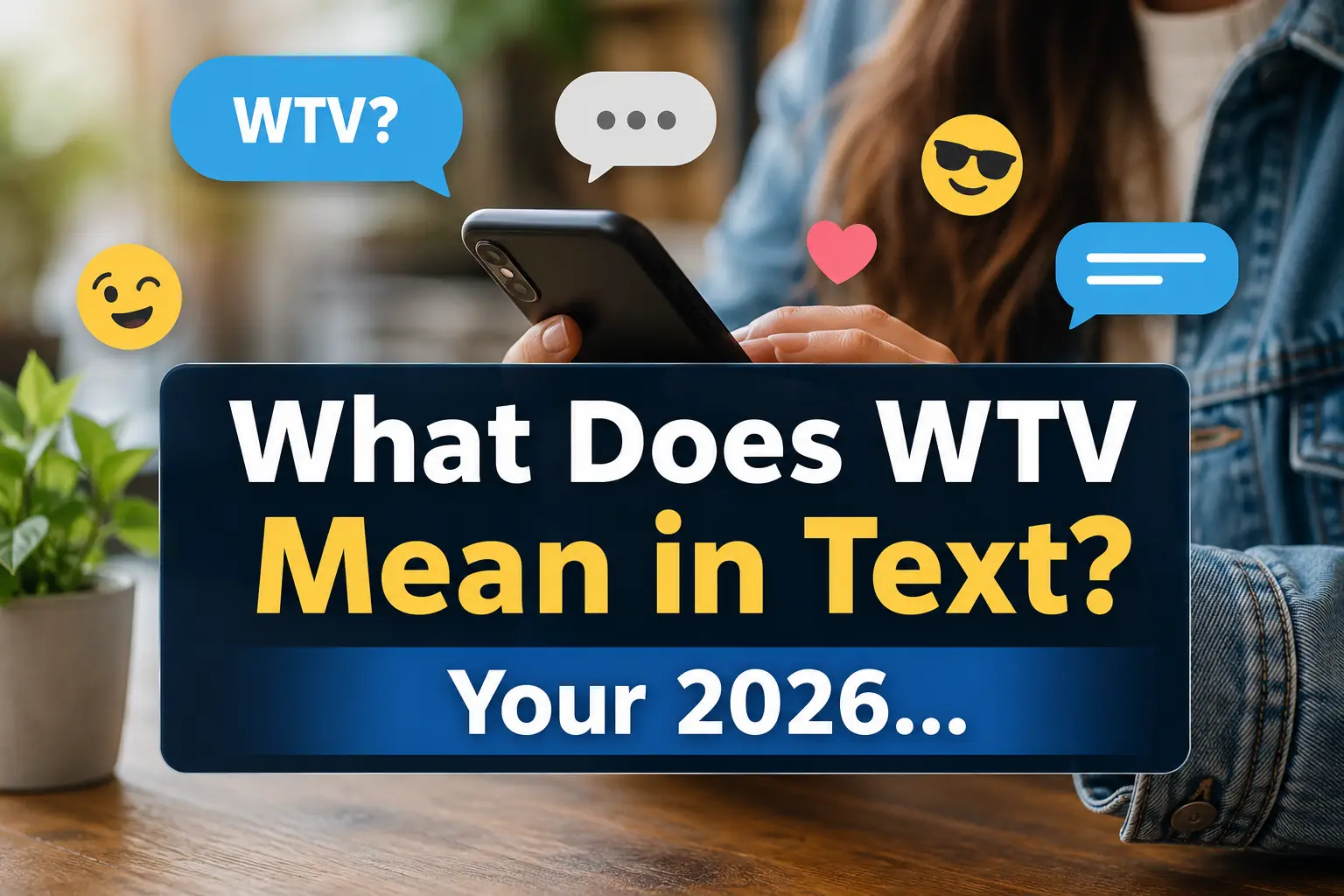
What Does WTV Mean in Text? Your 2026 Guide to the Slang, Acronym, and Meaning on TikTok, Snapchat & More
WTV is a text abbreviation that simply stands for “whatever.” It’s used in online messaging and on social media to show you’re easygoing about a decision, to express indifference, or sometimes to dismissively end a conversation. The exact wtv meaning depends heavily on the context of the chat and your relationship with the person you’re talking to. It’s just one of many texting abbreviations that have become second nature in modern chat.
Key Takeaways
- Direct Meaning: WTV is the acronym for “whatever”.
- Primary Use: It’s used to express a casual, easygoing attitude, like “anything is fine with me.”
- Indifference: The wtv slang can also mean you don’t really care about the topic being discussed.
- Ending a Conversation: Sometimes, people use WTV to stop a discussion they no longer want to be a part of.
- Context is Key: The tone of WTV can range from friendly and flexible to passive-aggressive and dismissive, depending on the situation.
- Platform Usage: The wtv abbreviation is common across all messaging platforms, including SMS, Instagram, Snapchat, and TikTok.
- Safety: For parents, WTV is considered a harmless piece of internet slang and not a high-risk code.
- Stability: Unlike newer slang, the meaning of WTV has been stable for years and hasn’t changed in 2026.
I remember the first time my younger cousin hit me with a “WTV” in our family group chat. I had just laid out a detailed plan for our weekend get-together, asking for everyone’s opinion on dinner spots. His three-letter reply felt so… short. Was he annoyed? Did he hate my ideas? I spent a good ten minutes trying to figure out the wtv meaning in text. It turns out, he just genuinely didn’t have a preference and was happy with anything. In other words, he was trying to be agreeable, not dismissive.
That little experience taught me a big lesson about internet slang and texting abbreviations. These little shortcuts are a huge part of how we communicate now, but the wtv text meaning can be a real chameleon. It can be a friendly shrug or a digital eye-roll. This guide is here to clear up all the confusion. We’ll dive into what does wtv stand for, how to use it on Snapchat, Instagram, and TikTok, and how to know if someone is being chill or just plain rude. By the end, you’ll be a pro at understanding this super common chat acronym.
What Does WTV Stand For, Exactly?
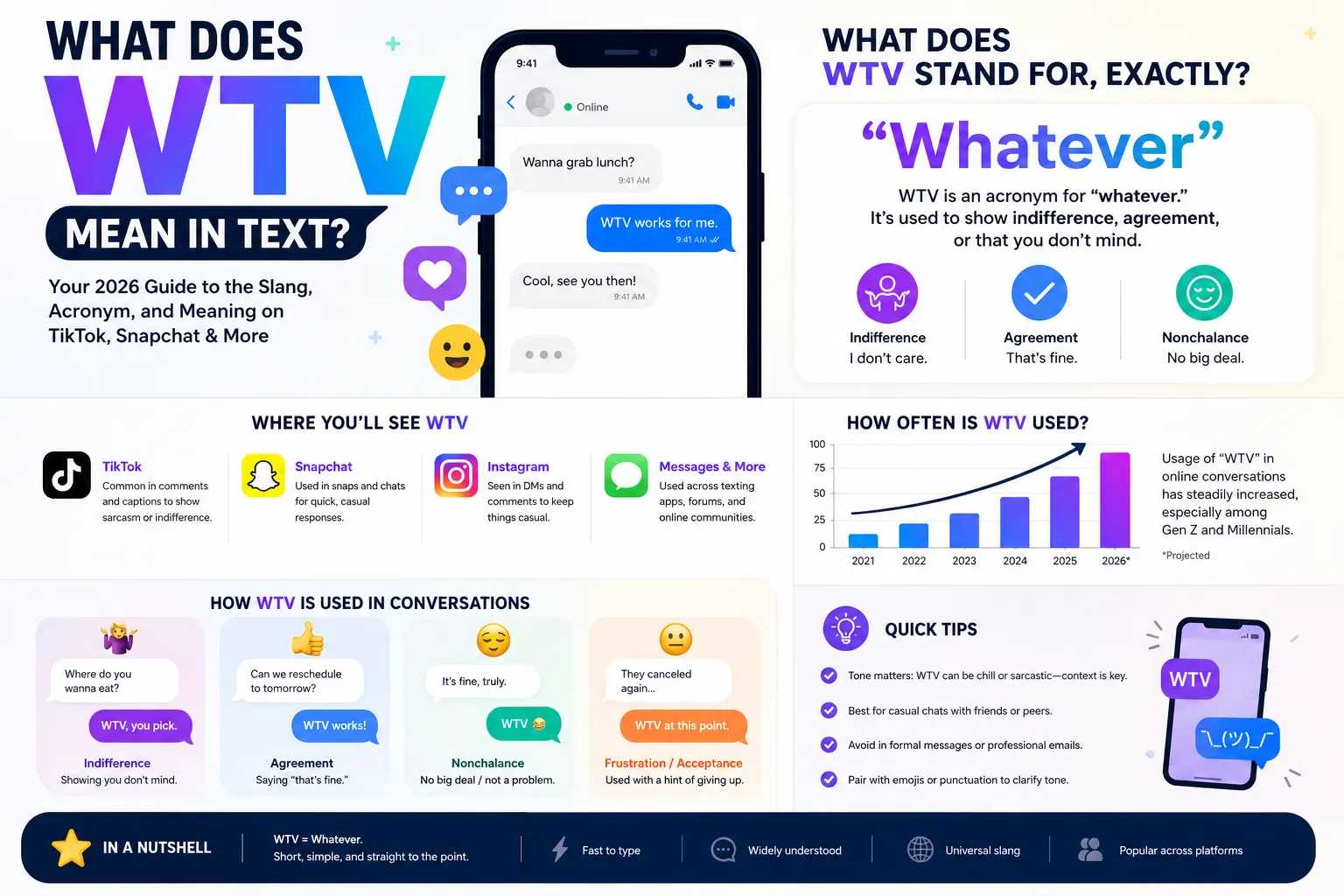
The acronym WTV stands for one simple word: whatever. It’s a direct, letter-for-letter shorthand used in digital communication to save time and keystrokes. There are no hidden or secret meanings; it’s just a faster way to type the full word in a text message or a social media comment.
For years, “whatever” has been a go-to word for expressing flexibility or a lack of strong opinion. The wtv abbreviation simply carries that same meaning into the world of SMS abbreviations and online messaging terms — much like other shorthand you’ll spot in a chat, such as IMSG or OTW. Think of it as the digital equivalent of shrugging your shoulders. It’s one of the older, more stable pieces of slang that hasn’t changed much over time, unlike newer, fast-evolving terms you might see on TikTok. Basically, if you see WTV, your first thought should always be “whatever.”
How Is WTV Used in Everyday Texting and Chat?
In daily conversations, WTV is used in a few key ways: to passively agree with someone, to show you don’t have a strong preference, or to end a topic of conversation. Its function is to signal a relaxed or indifferent attitude toward a question or statement.
I use it all the time with my friends when we’re making plans. It’s just easier than typing out “I don’t mind, whatever you all decide is fine with me!” The wtv meaning in chat is all about being efficient and conveying a certain mood quickly — it’s basically the texting equivalent of playing a round of this or that questions and shrugging at every option.
Here are the three most common scenarios you’ll see WTV used:
- To Show Flexibility: This is the most common and friendly use. It’s a way of saying, “I’m good with any option.”
- Example: Friend 1: “Should we watch a comedy or a horror movie tonight?” Friend 2: “WTV, I’m happy with either!”
- To Express Indifference: Sometimes, you just don’t have an opinion on something. WTV is the perfect shorthand for that feeling of “I don’t really care.”
- Example: Person 1: “Do you like the new logo design in blue or green?” Person 2: “WTV, they both look the same to me.”
- To End a Conversation: This is where the tone can get a little tricky. If someone wants to stop talking about something, they might use WTV to shut it down.
- Example: Person 1: “I still think you should have handled that differently.” Person 2: “WTV. I’m done talking about this.”
Here’s a quick table to help you see the different uses in action:
| Use Case | Example Sentence | What It Really Means |
|---|---|---|
| Passive Agreement | “WTV you want for dinner is fine.” | “I’m easygoing and will be happy with your choice.” |
| Expressing Apathy | “He can think wtv he wants.” | “I don’t care about his opinion on the matter.” |
| Ending Discussion | “Fine, wtv.” | “I don’t want to argue about this anymore.” |
The Different “Vibes” of WTV: From Casual to Passive-Aggressive
The “vibe” of WTV depends almost entirely on the context of the conversation and your relationship with the sender. While the acronym itself is neutral, it can feel friendly and easygoing in one chat and cold or dismissive in another. Understanding the difference is key to avoiding miscommunication.
The casual, friendly vibe is the most frequent. When a friend texts, “We can go to the park or the beach, wtv you prefer,” they’re being considerate and giving you the choice. It’s a sign of a relaxed and flexible attitude. I find that with close friends and family, WTV is almost always used in this positive or neutral way. It’s part of our conversational shorthand and no one takes it personally.
However, the wtv slang can take a sharp turn into passive-aggressive territory. If you’re in a disagreement and the other person replies with just “WTV,” it’s often a sign that they are frustrated and want to end the conversation without actually resolving anything. It can be used to dismiss your feelings or your point of view. For example, if you pour your heart out in a long message and the reply is a blunt “WTV,” it feels invalidating. The period at the end often adds to the dismissive tone, “WTV.” feels a lot harsher than “wtv!”
- Common Mistake: Assuming WTV is always negative. More often than not, it’s just a neutral, quick way to show flexibility. Always look at the rest of the conversation before jumping to conclusions.
WTV Meaning on Snapchat, Instagram, and TikTok
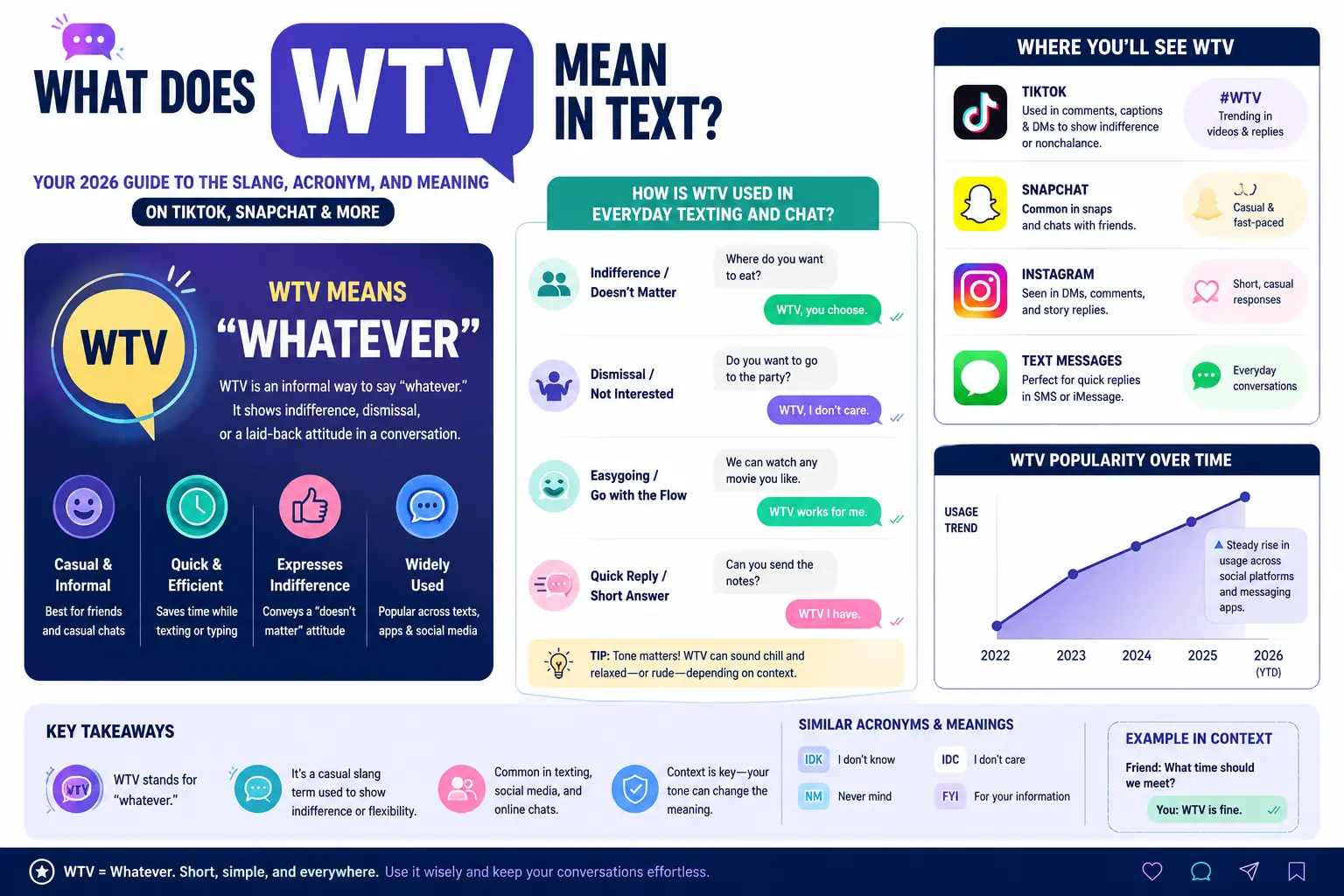
On visual-heavy social media platforms like Snapchat, Instagram, and TikTok, the wtv meaning stays the same, but its use is often even faster and more casual. It’s frequently used in quick replies, comments, or direct messages where long sentences aren’t common.
The wtv meaning on Snapchat and the wtv meaning on Instagram are very similar. You’ll often see it used as a reply to a story poll or a question sticker. For instance, if a friend posts a “This or That?” story, you might just swipe up and reply “wtv” to show you’re engaging but don’t have a strong opinion. It’s a low-effort way to interact and show casual support. In DMs, it functions just like a regular text message, right alongside acronyms like IICYIFY.
The wtv meaning on TikTok is also straightforward. You’ll see it most often in the comments section. Someone might post a video asking for suggestions on a topic, and commenters might reply with “WTV” to express that any of the popular opinions are good. It can also be used in comment threads during a debate, where one user might end their point with “wtv” to signal they are done arguing. Across all these platforms, it remains a staple of social media slang for showing a relaxed or indifferent attitude.
Is WTV Considered Rude? Navigating the Etiquette
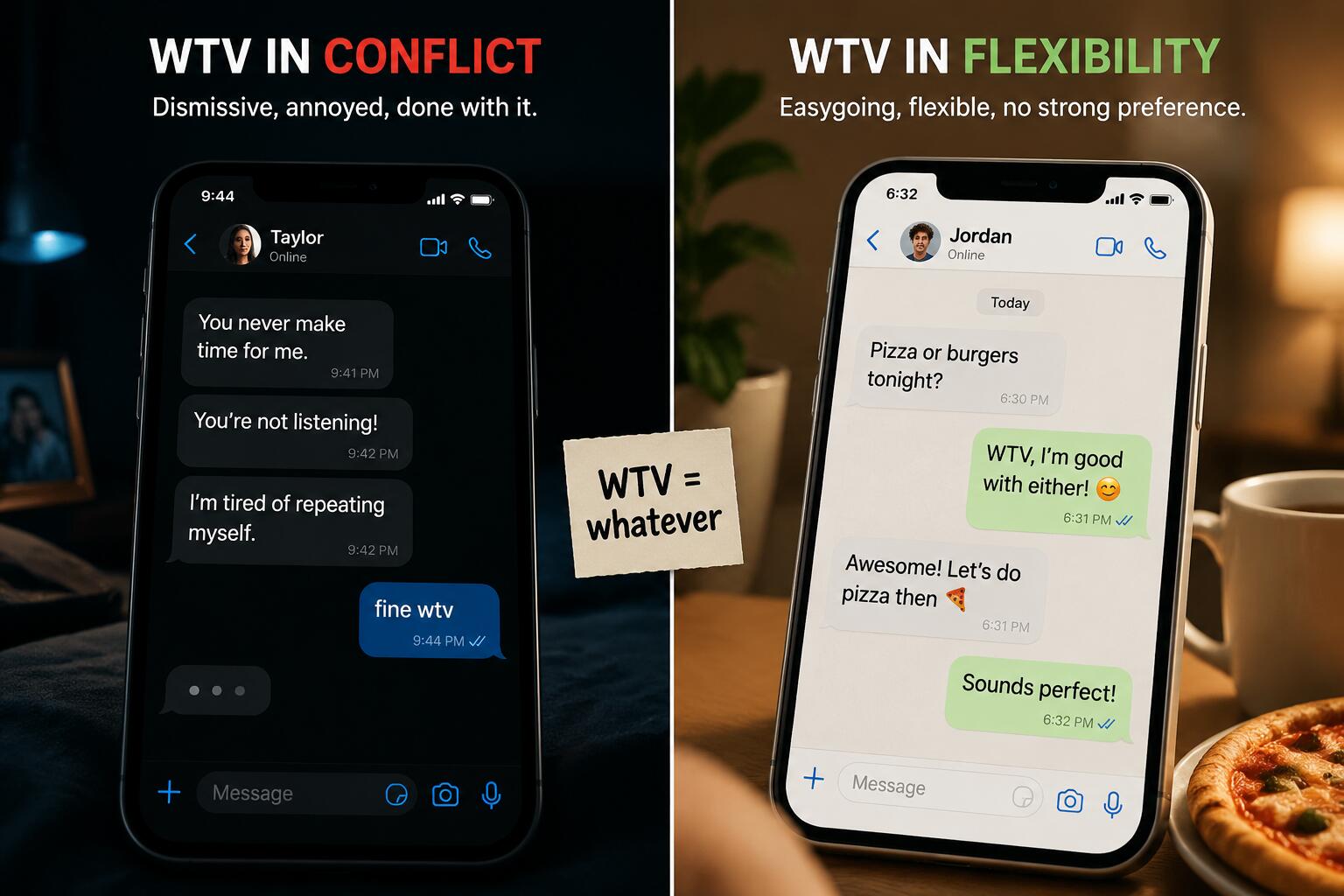
WTV can be considered rude, but it isn’t always. The key is to understand the context and the potential impact of using such a short, and sometimes dismissive, abbreviation. Using it improperly can make you seem uninterested or even passive-aggressive, so it’s smart to know when it’s appropriate.
Think of it this way: if the topic is important or emotional, using WTV is probably a bad idea. It can come across as though you’re brushing off the other person’s feelings. For example, if a friend is telling you about a problem they’re having and you reply with “WTV,” you’re likely going to hurt their feelings. In these situations, taking a few extra seconds to type out a full sentence shows that you care — or reaching for one of these fun conversation topics can help you engage more fully instead of shutting the chat down.
On the other hand, for low-stakes decisions and casual chats, WTV is perfectly fine. It’s an efficient part of the language of online messaging terms.
Here’s a quick checklist to help you decide when to use it:
- ✅ Use WTV when:
- Making simple plans (“Pizza or burgers?” “WTV is good.”)
- Showing you are genuinely flexible and don’t have a preference.
- Chatting with close friends who understand your texting style.
- Replying to something that doesn’t require a detailed response.
- ❌ Avoid WTV when:
- Someone is sharing their feelings or talking about something serious.
- You are having a disagreement and want to find a solution.
- Talking to someone you don’t know well, like a boss or a new acquaintance.
- The other person might misinterpret your tone as dismissive or rude.
As a Parent, Should I Be Worried About WTV?
As a parent navigating the world of teen texting codes, it’s natural to worry about the slang your kids are using. The good news is that WTV is not an acronym you need to lose sleep over. It is widely considered harmless slang that simply means “whatever”.
Unlike some acronyms that can hide risky behavior, WTV is just a common, everyday term for expressing indifference. Digital safety experts who monitor teen slang do not list WTV among the high-risk codes that might refer to self-harm, drug use, or other dangerous activities. It’s in the same category as other harmless SMS abbreviations like LOL (laughing out loud) or IDK (I don’t know).
Of course, context still matters. If your teen is using WTV constantly to shut down conversations with you, it might be a sign of emotional withdrawal or frustration, but the term itself isn’t the problem. It’s more of a text-based indicator of their mood. If you’re looking for ways to keep the lines of communication open, some tips on how to start a conversation with a new person can double as icebreakers with a quieter teen too. In general, you can view WTV as a normal part of digital communication for young people and not a red flag on its own.
How Does WTV Compare to Other Slang Like IDK or IDC?
WTV, IDK, and IDC are all popular chat acronyms that express a state of mind, but they have distinct meanings and should not be used interchangeably. Understanding the subtle differences can help you communicate more clearly and avoid misunderstandings.
- WTV (Whatever): This signals flexibility or passive indifference. It means “any option is fine with me.” It leaves the decision up to the other person.
- IDK (I Don’t Know): This indicates a lack of information or knowledge. It means “I don’t have the answer to that question.”
- IDC (I Don’t Care): This is a much stronger and more direct statement of apathy. It’s often blunter and can be perceived as ruder than WTV. It means “This topic has no importance to me.”
Here’s a simple comparison table to break it down:
| Acronym | Full Meaning | Primary Use | Emotional Tone |
|---|---|---|---|
| WTV | Whatever | Expressing flexibility or passive indifference. | Usually neutral or casual, but can be passive-aggressive. |
| IDK | I Don’t Know | Stating a lack of knowledge. | Neutral and informational. |
| IDC | I Don’t Care | Expressing a strong lack of interest. | Often blunt, dismissive, and can be seen as rude. |
Choose WTV if… you are happy with any outcome and want to let someone else decide. Choose IDK if… you genuinely do not have the information someone is asking for. Choose IDC if… you want to firmly state your lack of interest in a topic, but be prepared for it to sound harsh.
Conclusion
In the fast-paced world of digital communication, texting abbreviations like WTV are more than just lazy shortcuts; they are a core part of how we express tone and mood. As we’ve seen, WTV simply stands for “whatever,” but its meaning can shift dramatically based on the context of a conversation. It can be a friendly, easygoing signal of flexibility, a neutral shrug of indifference, or a sharp, dismissive tool to end an argument.
The most important takeaway is to always consider your audience and the situation. With close friends making casual plans, WTV is a perfectly normal and efficient piece of internet slang. In a serious or emotional conversation, however, it can feel cold and invalidating — and if you’d rather keep someone talking than shut them down, it might be worth brushing up on what it means to be socially awkward so you can spot when a “wtv” is really a sign someone’s struggling to open up. By paying attention to the conversational cues, you can master the wtv text meaning and avoid common misunderstandings.
So, the next time you see “WTV” pop up in your messages, take a second to read the room. And when you’re thinking of using it yourself, ask if it truly conveys the message you intend. When in doubt, typing out the full word never hurts!
Frequently Asked Questions (FAQ)
What is WTV in texting?
WTV is a texting abbreviation that stands for “whatever.” It’s used to show that you are flexible with a decision or that you are indifferent to the topic.
What does WTV mean on Snapchat?
On Snapchat, WTV has the same meaning as in texting: “whatever.” It’s often used as a quick, casual reply to a Snap, a story, or in a chat to show you’re easygoing about something.
Is saying WTV passive-aggressive?
It can be. While often used in a neutral or friendly way, WTV can feel passive-aggressive if it’s used to dismiss someone’s feelings or shut down an important conversation. Context is everything.
How do you respond to WTV?
If the context is casual (like making plans), you can just make the decision (e.g., “Okay, let’s do pizza then!”). If it feels dismissive in an argument, you might want to address the conversation shutdown directly or give the person space.
Are there other meanings for WTV?
In the context of texting and social media slang, WTV almost universally means “whatever”. Some might associate it with call letters for television stations, but in a chat, it’s safe to assume it’s the slang acronym.
Is WTV still popular in 2026?
Yes, WTV is a stable, long-standing piece of internet slang. Unlike trendy terms that come and go, it has remained a common abbreviation for years and is still widely used in 2026.
What’s the difference between WTV and ‘whatever’?
There is no difference in meaning, only in format. WTV is just the abbreviated, shorthand version of the word “whatever,” making it faster to type in a digital conversation.
You May Also Like
 Fun Questions
1500+ This or That Questions for 2026: From Silly Choices to Deep Conversations
 Fun Questions
What Does WSG Mean in Text? How to Respond to WSG in Messages and Social Media
 Fun Questions
350+ Truth or Dare Questions: Play Classic Party Games With Your Friends
 Fun Questions
250+ This or That Questions for Back to School: The Ultimate Icebreaker Guide for Teachers and Students
 Fun Questions
157+ This or That Questions for Cousins: Fun Conversations
 Fun Questions
155+ This or That Questions for Black People: A Complete Cultural Connection Guide
 Fun Questions
What Does GNG Mean in Text? Meaning Slang, Examples, and Real Usage
 Fun Questions
What Does SYBAU Mean? SYBAU Slang Meaning, Origin & Examples
 Fun Questions