150+ This or That Questions for Kindergarten: Fun, Printable Choices for 5-Year-Olds
This or that questions for kindergarten are simple choice questions that help young children express preferences, develop decision-making skills, and engage in meaningful conversations. These questions present two options—like “cats or dogs?” or “pizza or ice cream?”—allowing kindergarteners to choose their favorite between the two.
We’ve watched countless kindergarten classrooms light up when teachers use these questions during circle time. Kids love sharing their opinions, and these simple games give them that chance. Whether you’re a teacher looking for icebreaker activities or a parent wanting fun conversation starters at home, this or that questions work perfectly for five and six-year-olds.
In this guide, we’ll share over 150 this or that questions designed specifically for kindergarteners. You’ll find questions organized by category, tips for using them effectively, and even printable options. We’ll also explain why these questions matter for your child’s development and how they can turn any boring moment into a fun learning opportunity.
What Are This or That Questions for Kindergarten?
This or that questions are simple choice-based questions that present two options for children to pick from. Kids select which option they prefer, like or enjoy more.
These questions work differently from open-ended questions. Instead of asking “What’s your favorite animal?” you ask “Dogs or cats?” This makes it much easier for young children to answer quickly without feeling overwhelmed.
Teachers and parents use these questions in many settings. During morning meetings, kids can share their preferences. At the dinner table, families can learn more about each other. Even during car rides, these questions keep children engaged and talking.
The beauty of this or that questions lies in their simplicity. Kindergarteners don’t need advanced vocabulary or complex thinking skills. They just pick what they like better. This builds their confidence in expressing opinions and making choices.
Similar to how we use this or that questions or truth or dare questions with adults and teens, the kindergarten version focuses on age-appropriate topics. Instead of asking about career goals or political views, we stick to pizza versus tacos or summer versus winter.
Why Use This or That Questions with Kindergarteners?
How Do These Questions Help Child Development?
This or that questions support several areas of child development simultaneously. They help kindergarteners practice language skills by learning how to express preferences clearly.
When children answer these questions, they develop critical thinking abilities. Even though the questions seem simple, kids mentally compare two options and decide which one they value more. This comparison process strengthens their reasoning skills.
These questions also build social-emotional learning. Children learn that people have different preferences, and that’s okay. When one child picks chocolate and another picks vanilla, they see that differences make conversations interesting rather than problematic.
Decision-making becomes easier through regular practice. Many kindergarteners struggle with making choices because they haven’t had enough experience. This or that questions provide low-stakes practice opportunities where no answer is wrong.
What Classroom Benefits Do Teachers Notice?
Teachers report that this or that questions transform classroom dynamics. They create inclusive environments where every child can participate, regardless of their language level or academic abilities.
These questions work wonderfully as transition activities. When you need to fill five minutes before lunch or recess, a quick round of this or that questions keeps kids engaged and prevents behavior problems.
Teachers also use them to learn about their students’ personalities and interests. When you know that Maya loves cats and Jordan prefers dogs, you can incorporate those interests into lesson plans and reading choices.
The questions reduce anxiety for shy or quiet students. Some kindergarteners feel nervous speaking in front of the class, but answering a simple this or that question feels less intimidating than giving a longer response.
How Do Parents Benefit from Using These Questions?
Parents find these questions incredibly useful for connecting with their kindergarteners. After school, instead of getting one-word answers to “How was your day?” you can ask fun this or that questions that get kids talking naturally.
Long car rides become more enjoyable when you have a list of these questions ready. They beat screen time and help you learn more about your child’s evolving preferences and personality.
These questions also help during meal times. Family dinners feel more engaging when everyone shares their answers to fun questions. You’ll create memories and traditions that your kids will remember.
Parents of multiple children appreciate how these questions involve everyone. Younger siblings can answer the same questions as older ones, making it a truly inclusive family activity.
150+ This or That Questions for Kindergarten (By Category)
Food This or That Questions
Food questions are always popular with kindergarteners because everyone has opinions about what they eat. These questions spark enthusiasm and often lead to funny discussions about why they picked certain foods.
- Pizza or tacos?
- Apples or bananas?
- Chocolate or vanilla?
- Cookies or cake?
- Ice cream or popsicles?
- Carrots or broccoli?
- Chicken nuggets or fish sticks?
- Spaghetti or macaroni and cheese?
- Strawberries or blueberries?
- Pancakes or waffles?
- Hot dogs or hamburgers?
- Orange juice or apple juice?
- Grapes or watermelon?
- Cheese or pepperoni pizza?
- French fries or tater tots?
- Yogurt or pudding?
- Pretzels or chips?
- Popcorn or candy?
- Sandwiches or wraps?
- Cereal or oatmeal?
Animal This or That Questions
Animal questions let kindergarteners share their favorite creatures. These questions often reveal interesting facts about your students or children as they explain their choices.
- Dogs or cats?
- Lions or tigers?
- Elephants or giraffes?
- Butterflies or ladybugs?
- Fish or birds?
- Horses or ponies?
- Bunnies or hamsters?
- Sharks or dolphins?
- Bears or wolves?
- Frogs or lizards?
- Monkeys or gorillas?
- Penguins or polar bears?
- Snakes or turtles?
- Owls or eagles?
- Koalas or pandas?
- Zebras or cheetahs?
- Dinosaurs or dragons?
- Puppies or kittens?
- Ducks or chickens?
- Spiders or ants?
Activity and Play This or That Questions
These questions help you understand what activities your kindergarteners enjoy most. You can use this information to plan future lessons or playdates.
- Playing outside or playing inside?
- Coloring or painting?
- Building blocks or puzzles?
- Reading books or looking at pictures?
- Singing or dancing?
- Playing at the park or playing at the beach?
- Swings or slides?
- Tag or hide and seek?
- Dress-up or pretend cooking?
- Playing with dolls or action figures?
- Board games or card games?
- Playing with friends or playing alone?
- Bike riding or scooter riding?
- Drawing or crafts?
- Playing ball or jumping rope?
- Bubbles or balloons?
- Playdough or slime?
- Digging in sand or splashing in water?
- Running or jumping?
- Playing with cars or trains?
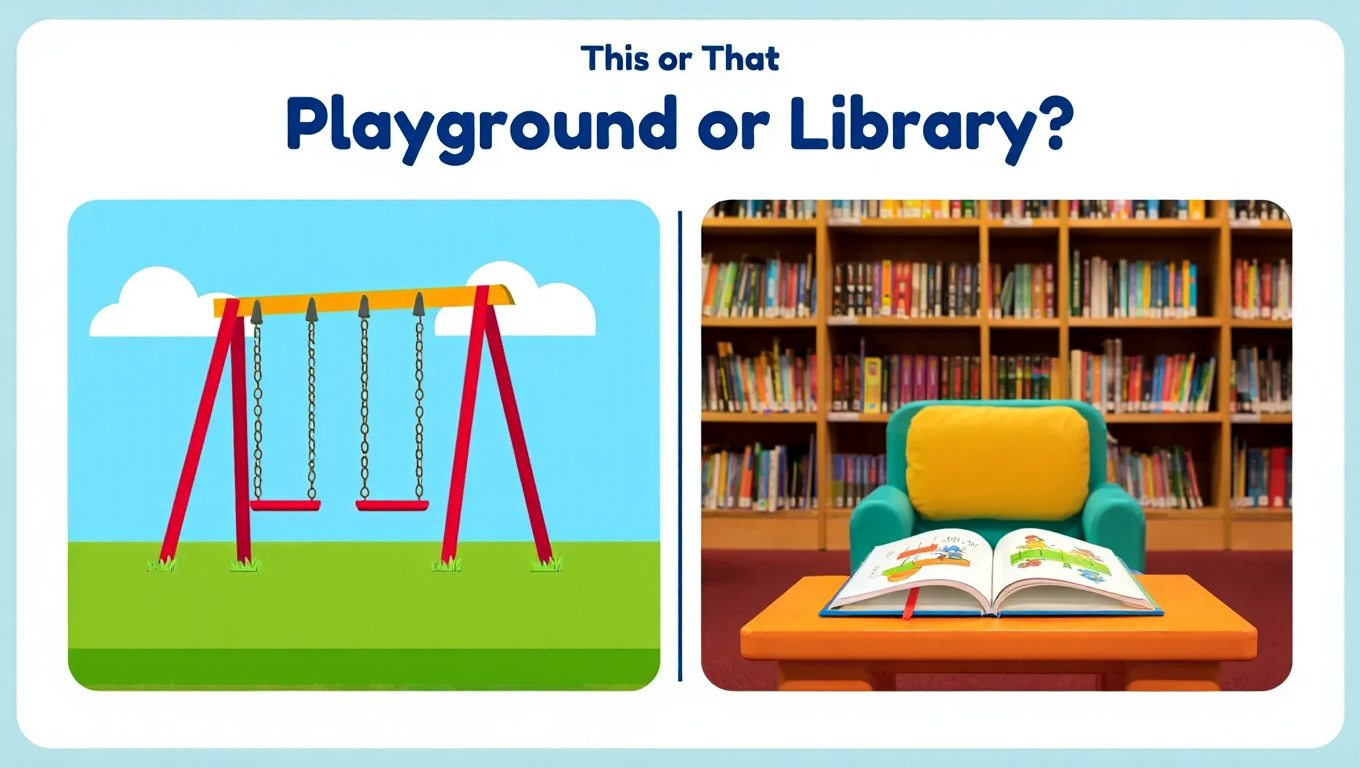
School This or That Questions
School-themed questions help kindergarteners think about their educational experiences. These work especially well during circle time or morning meetings.
- Math or reading?
- Library time or recess?
- Snack time or lunch time?
- Markers or crayons?
- Story time or music time?
- Writing or drawing?
- Art class or gym class?
- Sitting at tables or sitting on the floor?
- Morning or afternoon?
- Backpacks or lunchboxes?
- Pencils or pens?
- School bus or car ride?
- Show and tell or free play?
- Counting or spelling?
- Science experiments or art projects?
- Working alone or working with a partner?
- Computers or tablets?
- Painting or gluing?
- Scissors or glue sticks?
- Field trips or regular school days?
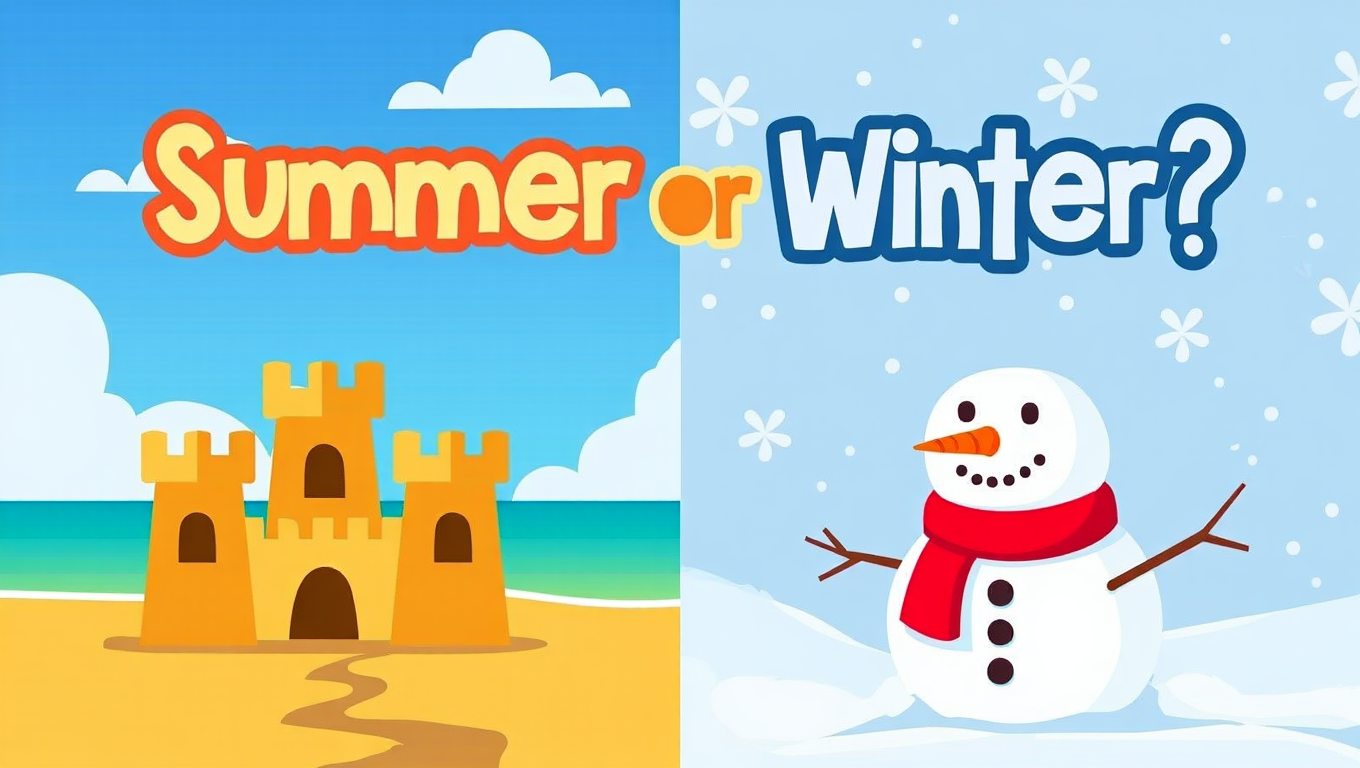
Seasonal and Holiday This or That Questions
Seasonal questions connect to what’s happening outside and help children notice changes throughout the year. Holiday questions build excitement around special celebrations.
- Summer or winter?
- Spring or fall?
- Snow or rain?
- Sunny days or cloudy days?
- Hot weather or cold weather?
- Swimming or sledding?
- Halloween or Christmas?
- Birthday parties or holiday parties?
- Pumpkins or Christmas trees?
- Snowmen or sandcastles?
- Easter eggs or Valentine’s cards?
- Thanksgiving turkey or Fourth of July fireworks?
- Flowers or leaves?
- Shorts or sweaters?
- Ice skating or swimming?
- Camping or staying at hotels?
- Beach vacations or mountain vacations?
- Fireworks or parades?
- Snow days or sunny days?
- Hot chocolate or lemonade?
You might also enjoy our collection of this or that questions for Halloween if you’re planning seasonal activities.
Color and Appearance This or That Questions
These questions let kindergarteners express their visual preferences. Color discussions often lead to interesting conversations about favorites and personal style.
- Red or blue?
- Pink or purple?
- Green or yellow?
- Orange or brown?
- Black or white?
- Rainbow colors or one color?
- Bright colors or light colors?
- Stripes or polka dots?
- Sparkles or plain?
- Long hair or short hair?
- Glasses or no glasses?
- Fancy clothes or comfy clothes?
- Shoes or bare feet?
- Hats or no hats?
- Jewelry or no jewelry?
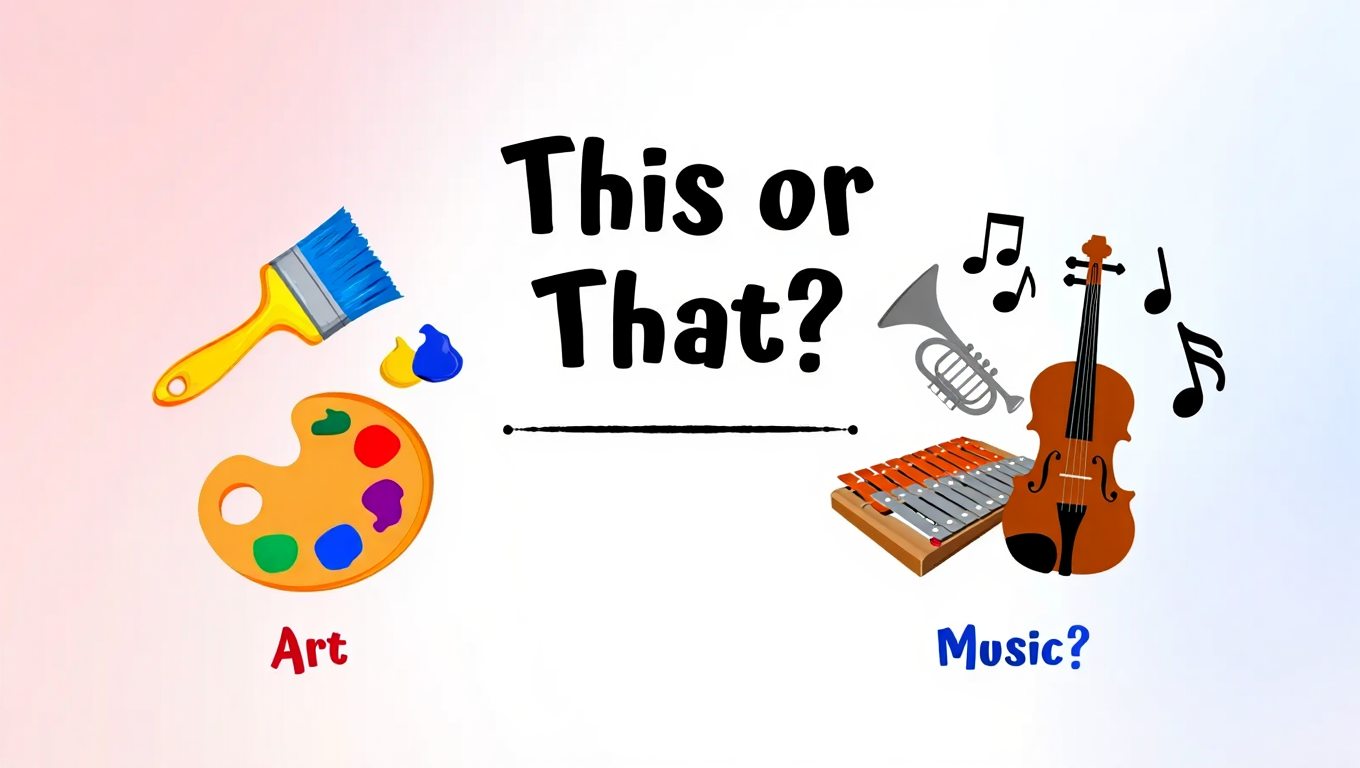
Silly and Funny This or That Questions
Silly questions make everyone laugh and create a playful atmosphere. Kindergarteners especially love questions that seem ridiculous or silly because they enjoy using their imaginations.
- Would you rather have elephant ears or a monkey tail?
- Flying or invisibility?
- Being super strong or super fast?
- Talking animals or flying cars?
- Living in a castle or living in a treehouse?
- Having ten fingers on one hand or ten toes on one foot?
- Eating only dessert or only vegetables forever?
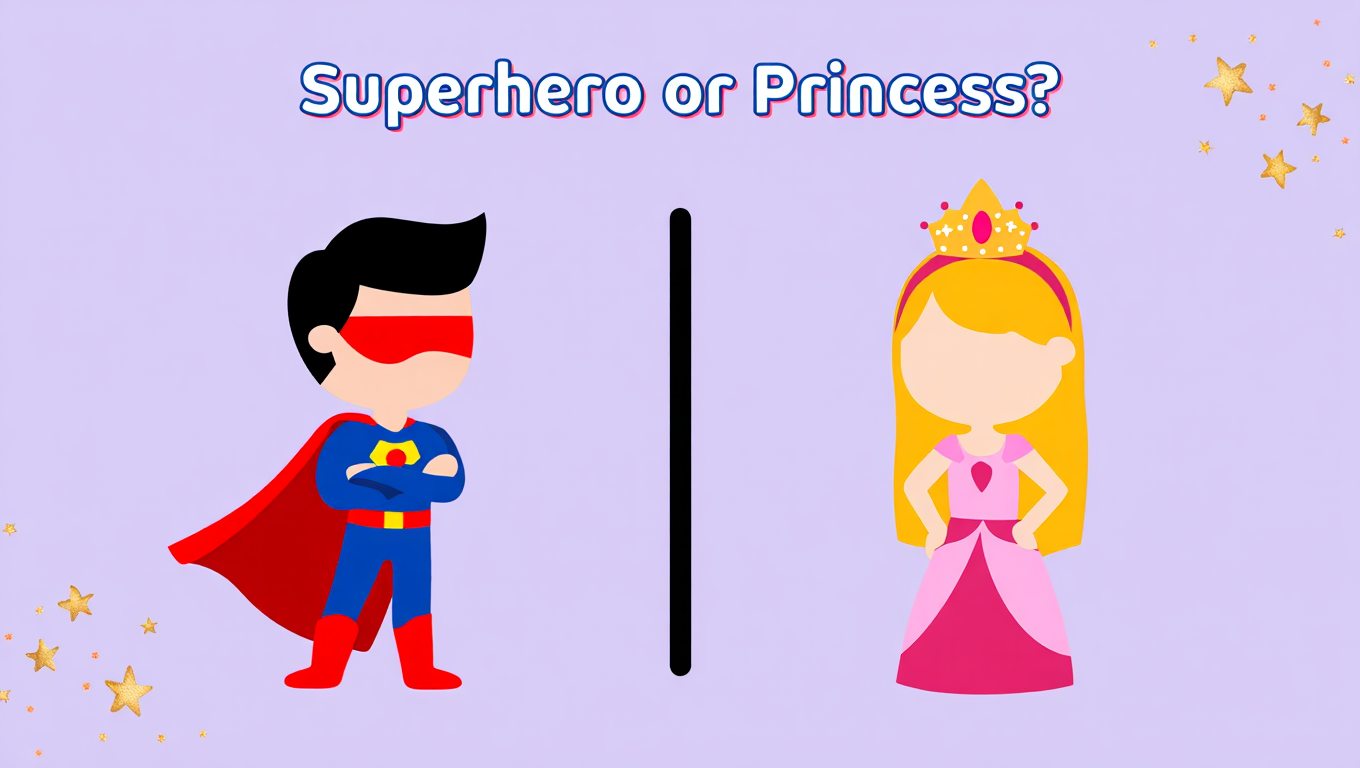
- Being a superhero or being a princess/prince?
- Having a pet dinosaur or a pet dragon?
- Living underwater or living in space?
- Being able to talk to animals or being able to fly?
- Having a magic wand or having super strength?
- Being a giant or being tiny?
- Having purple skin or green hair?
- Sleeping in a bed made of marshmallows or pillows made of clouds?

Entertainment and Media This or That Questions
These questions relate to the shows, movies, and entertainment that kindergarteners enjoy. They’re great for finding common interests among classmates.
- Movies or TV shows?
- Cartoons or live-action shows?
- Singing songs or listening to stories?
- Dancing or watching others dance?
- Playing games or watching games?
- Funny shows or adventure shows?
- Animal characters or people characters?
- Watching videos or reading books?
- Music or silence?
- Playing pretend or playing real games?
Family and Home This or That Questions
These questions help children think about their home lives and family relationships. They’re gentle ways to learn more about your students’ backgrounds.
- Playing with siblings or playing with parents?
- Visiting grandma or visiting grandpa?
- Home-cooked meals or restaurant meals?
- Your bedroom or the living room?
- Helping cook or helping clean?
- Family game night or family movie night?
- Staying home or going out?
- Bath time or shower time?
- Morning wake-up or bedtime?
- Hugs or high-fives?
Bonus Questions
- Big dogs or small dogs?
- Fast rides or slow rides?
- Loud music or quiet music?
- New toys or favorite old toys?
- Going to the zoo or going to the aquarium?
- Watching clouds or watching stars?
- Making noise or being quiet?
- Getting dirty or staying clean?
- Learning new things or practicing things you know?
- Sharing or keeping things to yourself?
How to Use This or That Questions Effectively in Kindergarten
What’s the Best Way to Introduce These Questions?
Start with familiar topics that kindergarteners already understand. Food questions work wonderfully as first introductions because every child eats and has opinions about meals and snacks.
Model how to answer before asking students to respond. Say something like “I’m going to ask you a this or that question. You pick which one you like better. Here’s my answer first: I choose pizza over tacos because I love cheese.” This demonstration shows kids exactly what you expect.
Keep your tone enthusiastic and playful. When you sound excited about their answers, children feel more confident participating. Your energy sets the mood for the entire activity.
Allow children to explain their choices, but don’t require lengthy explanations. Some kindergarteners will naturally want to tell you why they picked something, while others just want to state their choice and move on. Both responses are perfectly fine.
How Can Teachers Use These During Circle Time?
Circle time provides the perfect setting for this or that questions. Everyone can see and hear each other, creating a sense of community and shared experience.
Try the “stand up if” method. Ask everyone to sit down, then say, “Stand up if you choose ice cream.” Then say, “Stay standing if you choose popsicles.” Kids who chose ice cream sit back down. This adds movement to the activity and helps visual learners see how many people chose each option.
Another approach involves going around the circle. Each child takes a turn answering the same question. This works well when you want to ensure every student participates and feels heard.
You can also use voting methods. Hold up two pictures or objects representing each choice. Kids point to their preferred option. This works especially well for children who feel shy about speaking out loud.
Consider using these questions as morning meeting routines. Starting each day with a fun question sets a positive tone and helps students transition from home to school mode.
What Activities Work Well with These Questions?
Create a graphing activity where students place their names under their chosen option. Use a whiteboard, chart paper, or even tape on the floor. After everyone votes, discuss which option got more votes and practice counting.
Movement games make these questions more active. Designate different areas of the room for each choice. When you ask “Summer or winter?” kids run to the summer corner or winter corner based on their preference.
Art projects can incorporate these questions, too. After asking about favorite animals, have students draw their chosen creature. Display all the artwork and discuss the variety of choices.
Turn the questions into a guessing game. One student picks their answer secretly, and classmates ask yes or no questions to figure out what they chose. This builds critical thinking and questioning skills.
Create a “question of the day” display. Write one this or that question on a board each morning. Throughout the day, students add their names to their chosen side. Discuss the results during afternoon circle time.
How Should Parents Use These Questions at Home?
Meal times offer natural opportunities for these conversations. While eating dinner, go around the table and have everyone answer the same question. You’ll learn surprising things about your children’s preferences.
Car rides become less boring when you have questions ready. Keep a list on your phone or printed in the car. These questions turn travel time into quality conversation time.
Bedtime routines can include a this or that question as part of winding down. This gentle activity helps children transition from active play to quiet time while keeping them engaged.
Use these questions to ease difficult moments. When your kindergartener feels grumpy or upset, asking a silly this or that question can shift their mood and redirect their attention.
Make it reciprocal by letting your child ask you questions too. This shows that you value their curiosity and creates a more balanced conversation where everyone participates equally.
Creating Your Own This or That Questions for Kindergarten
What Makes a Good This or That Question for Five-Year-Olds?
Good questions present two clear, distinct options that kindergarteners can easily understand and visualize. Avoid abstract concepts or things they’ve never experienced.
Both choices should feel relatively equal in appeal. Asking “Candy or vegetables?” isn’t really fair because most five-year-olds will obviously choose candy. Try to make both options genuinely appealing so the choice feels more meaningful.
Keep the vocabulary simple and age-appropriate. Use words that kindergarteners hear regularly in their daily lives. If you need to explain what the words mean, the question might be too complex.
Visual options work better than abstract ones. “Dogs or cats?” works better than “loyalty or independence?” because young children think in concrete rather than abstract terms.
Questions should relate to children’s actual experiences. Don’t ask about things they’ve never seen or done. Stick to familiar foods, animals, activities, and objects from their world.
How Can You Personalize Questions for Your Class or Child?
Pay attention to what your students or children talk about naturally. If your class is obsessed with a particular book or character, create questions around those interests.
Consider the season and upcoming events. Create questions about pumpkins in October, snow in January, or flowers in April. Connecting to current experiences makes questions more relevant.
Think about your students’ cultural backgrounds and family traditions. Include foods, celebrations, and activities that reflect the diversity in your classroom or community.
Notice individual interests and incorporate them. If you have a student who loves trains, include train-related questions. When children see their interests reflected, they feel more valued and engaged.
Adapt questions based on difficulty level. Some kindergarteners handle more complex choices than others. You can offer simpler questions to struggling students and more challenging ones to advanced students.
What Topics Should You Avoid?
Stay away from questions about scary or violent topics. Even if kids watch superhero shows, questions about weapons or fighting aren’t appropriate for this age group.
Avoid questions that might make children feel self-conscious about their family situations. Don’t ask things like “Mom or dad?” because some children don’t live with both parents or might have different family structures.
Skip questions about body size, appearance, or physical abilities that could make some children feel bad. Questions like “Tall or short?” might upset kids who feel sensitive about their height.
Don’t include questions about expensive items or experiences. Asking “Disney World or beach vacation?” might make children whose families can’t afford vacations feel left out or embarrassed.
Religious topics require careful consideration. Unless you’re in a religious school setting where families share similar beliefs, stick to secular questions that include everyone.
Printable This or That Questions for Kindergarten
Where Can You Find Free Printable Resources?
Many education websites offer free printable this or that questions. Teachers Pay Teachers has both free and paid options created by fellow educators who understand kindergarten needs.
Pinterest serves as an excellent source for printable resources. Search for “kindergarten this or that questions printable” and you’ll find hundreds of options in various formats and themes.
We’ve created printable resources that you can download and use immediately in your classroom or home. These come organized by category, making it easy to find questions that match your current themes or interests.
Educational blogs like ours regularly share free printable materials. Bookmark sites that align with your teaching style or parenting approach so you can easily find resources when you need them.
How Do You Create Your Own Printable Worksheets?
Use simple word processing software like Microsoft Word or Google Docs. Create a document with questions listed clearly, leaving space for children to circle or color their chosen answer.
Add visual elements that appeal to kindergarteners. Include small pictures or icons next to each option. For “dogs or cats?” add a small dog and cat picture. These visuals help emerging readers understand the questions.
Consider creating different formats. Some worksheets might list questions vertically down the page. Others might present questions in a grid format where kids check boxes or circle pictures.
Make sure the font is large and easy to read. Kindergarteners are just learning to read, so clear, simple fonts in 14-point size or larger work best.
Test your worksheet with actual kindergarteners before printing multiple copies. You might discover that certain questions confuse them or that the layout doesn’t work as well as you expected.
What Format Works Best for Different Settings?
For whole-class activities, create large poster-sized versions. Print questions on chart paper or project them on a smartboard so everyone can see them clearly at once.
For individual work or assessment purposes, use standard letter-sized worksheets. These fit easily into folders and backpacks if you want to send them home with students.
Small cards work wonderfully for quick transitions or free time. Print questions on cardstock, cut them into individual cards, and store them in a container. Students can draw a card and answer it with a partner.
Create a laminated question board that you can reuse throughout the year. Write questions with dry-erase markers and change them daily or weekly ,depending on your themes and lessons.
Digital formats work well for tech-savvy classrooms. Use Google Slides to create interactive presentations where kids click on their chosen answer. This approach saves paper and provides instant visual feedback about class preferences.
This or That Questions vs. Would You Rather Questions
How Are These Question Types Different?
This or that questions present two simple noun options. “Pizza or tacos?” offers two foods to choose from. The structure stays straightforward and easy for young children to process quickly.
Would you rather questions present two scenarios or situations. “Would you rather eat pizza for every meal or never eat pizza again?” creates a more complex choice that requires imagining future consequences.
For kindergarteners, this or that questions work better because they require less abstract thinking. Five and six-year-olds process concrete choices more easily than hypothetical situations.
Would you rather questions often include silly or impossible scenarios like “Would you rather have three arms or three legs?” This makes them entertaining but also more challenging for literal-thinking kindergarteners.
The language structure differs too. This or that uses fewer words and simpler grammar. Would you rather questions need more complex sentence construction that some kindergarteners are still developing.
When Should You Use Each Type?
Use this or that questions for daily quick activities, transitions, and getting to know you games. They work perfectly when you need fast responses from many children.
Would you rather questions fit better during longer discussion times when you want to encourage critical thinking and explanation. Save these for small group settings where children can explain their reasoning.
Start with this or that questions at the beginning of the school year when kindergarteners are still developing their language skills. Introduce would you rather questions later after students feel more comfortable expressing complex ideas.
For shy or reluctant speakers, this or that questions feel less intimidating. The simple choice reduces anxiety and helps these children participate more willingly.
Would you rather questions challenge advanced students who need more complex thinking opportunities. Use them during enrichment times or with small groups of students who need extra challenges.
Can You Use Both Types Together?
Absolutely. Start with simpler this or that questions to warm up, then transition to a few would you rather questions for children who want more challenge.
You can also present the same topic in both formats. Begin with “Summer or winter?” then follow up with “Would you rather swim every day in summer or build snowmen every day in winter?” This progression builds complexity gradually.
Create mixed question lists that include both types. This variety keeps kids engaged and prevents the activity from feeling repetitive or boring.
Use this or that questions for the whole class and would you rather questions for individual conversations with students who can handle the extra complexity.
Benefits of This or That Questions for Kindergarten Development
How Do These Questions Build Language Skills?
These questions expand vocabulary as children hear new words in context. When discussing food options, kids encounter words like “spaghetti,” “blueberries,” or “tacos” that they might not use regularly in conversation.
Children practice forming complete sentences when explaining their choices. Instead of just saying “pizza,” you can encourage them to say “I choose pizza because I like cheese.”
Listening skills improve as kindergarteners hear classmates’ different answers and reasons. They learn to pay attention to others and process different perspectives.
These questions also build categorization skills. Children begin to understand that apples and bananas both belong to the fruit category, while pizza and tacos fit in the meal category.
Pronunciation practice happens naturally during these activities. When kids say words out loud repeatedly, they improve their clarity and confidence in speaking.
What Social Skills Do Children Develop?
Turn-taking becomes easier through regular practice with these questions. Children learn to wait for their turn to answer and give others space to speak.
Respect for different opinions grows when kindergarteners see that people make different choices. They realize that your preference for cats doesn’t make my choice of dogs wrong—we just like different things.
These activities build classroom community by creating shared experiences. When everyone participates in the same activity, students feel connected to each other and to their classroom environment.
Shy students gain confidence as they successfully participate in low-pressure social interactions. Answering a simple question feels less scary than giving a presentation or reading aloud.
Students also develop empathy by thinking about why others might make different choices. This perspective-taking is crucial for social development and reduces conflicts during play time.
How Do These Questions Support Cognitive Development?
Decision-making skills strengthen with each question. Even though these are simple choices, kindergarteners exercise their ability to evaluate options and commit to a selection.
Comparison skills develop as children mentally weigh two options against each other. They consider which one they like more, which requires analytical thinking even at a basic level.
Memory skills get practice too. When you ask follow-up questions like “Remember what you chose last week—summer or winter?”, children exercise recall abilities.
These questions support flexible thinking. Some days a child might choose pizza, other days tacos. They learn that preferences can change based on mood, hunger, or other factors.
Pattern recognition emerges as children notice trends in their classmates’ answers. They might observe that most kids prefer summer over winter or that more students like cats than dogs.
Similar to building self-esteem in children, these activities create opportunities for success and positive recognition that boost confidence.
Common Mistakes When Using This or That Questions
What Should You Avoid Doing?
Don’t force children to explain their choices if they don’t want to. Some kindergarteners need time to warm up to sharing their reasoning. Respect their comfort level and let participation grow naturally.
Avoid judging or showing disappointment in children’s answers. If everyone chooses pizza except one child who picks tacos, celebrate that uniqueness rather than making the child feel different in a negative way.
Don’t rush through questions too quickly. Give children time to think about their choices. Some kids process information more slowly and need extra seconds to decide.
Never use these questions as academic assessments. They’re meant for fun and connection, not for evaluating children’s intelligence or abilities. There are no right or wrong answers.
Don’t ask the same questions repeatedly without adding variety. Even though kindergarteners enjoy routine, asking “Dogs or cats?” every single day becomes boring. Rotate through different topics and themes.
How Can You Make Questions More Inclusive?
Consider all family structures when creating questions. Instead of “Playing with mom or playing with dad?” ask “Playing with family or playing with friends?”
Include diverse food options that reflect different cultural backgrounds. Don’t only ask about typical American foods—include items like rice, naan bread, dumplings, or plantains.
Make sure questions don’t exclude children with disabilities. Asking “Running or swimming?” might make a child with physical limitations feel left out. You can ask “Playing outside or playing inside?” which includes everyone.
Be thoughtful about economic differences. Questions about expensive toys, vacations, or experiences can create uncomfortable situations for children whose families struggle financially.
Use gender-neutral language and options. Instead of “Princess dresses or superhero capes?” which assumes gender preferences, ask “Dressing up or playing sports?”
What Timing Issues Should You Watch For?
Don’t use these questions when children are tired, hungry, or upset. A cranky kindergartener won’t enjoy the activity and might refuse to participate or become emotional about their choices.
Avoid asking these questions right after difficult lessons or challenging activities. Children need time to decompress before jumping into social activities.
Watch the clock during longer sessions. Five to ten minutes works well for most kindergarten classes. Beyond that, attention spans fade and the activity loses effectiveness.
Consider the time of day carefully. Morning works great for energizing questions, while afternoon might call for calmer, quieter question sessions.
Don’t interrupt important instruction time for these activities. While they’re valuable, academic learning takes priority. Use them during transitions, morning meetings, or designated social time.
Adapting This or That Questions for Different Learning Environments
How Do You Use These Questions in Virtual Learning?
Video calls offer unique opportunities for this or that questions. Use the chat function where students type their answers, which helps with literacy skills and creates a written record you can reference later.
Polls and surveys built into Zoom or Google Meet make voting easy and visual. You can display results instantly, which kindergarteners find exciting and engaging.
Create digital slides with pictures representing each choice. Share your screen and ask students to show thumbs up or thumbs down for each option. This adds movement to screen time.
Send parents a weekly list of this or that questions to ask during home learning. This gives families conversation starters and helps maintain school connections during remote periods.
Record yourself asking questions and post videos for asynchronous learning. Students can respond via email or recorded video, allowing participation even when schedules don’t align.
What Works for Mixed-Age Classrooms?
Choose questions that work across age ranges. “Summer or winter?” appeals to both kindergarteners and second graders, while “Learning to read or learning to add?” might only work for specific ages.
Let older students help facilitate the activity with younger ones. A first grader can ask questions to kindergarteners, building leadership skills for the older child and providing peer interaction for the younger.
Create different question levels within the same topic. Ask kindergarteners, “Dogs or cats?” while asking first graders, “What do you like better about your chosen animal?”
Use mixed-age pairing where an older student and younger student discuss their answers together. This builds mentoring relationships and helps younger children feel supported.
Allow advanced kindergarteners to participate with older students if they’re ready for more complex questions. Flexibility serves students better than rigid age-based restrictions.
How Can You Incorporate These Questions into Special Education Settings?
Use picture cards or objects instead of just spoken words. Visual supports help students with language delays, autism, or hearing impairments participate fully.
Give extended wait time for students who need extra processing time. Count silently to ten before moving on, allowing all students a fair chance to formulate their response.
Accept non-verbal responses. Students can point, nod, use sign language, or use communication devices. Participation matters more than the method of answering.
Simplify questions further if needed. Some students might need options that are even more concrete or familiar than typical kindergarten questions.
Create sensory-friendly versions of movement activities. Instead of running to different corners, students might place a marker on a floor mat or hand you a card with their choice.
Partner with speech therapists and special education staff to identify which questions work best for each student’s individual learning plan and communication goals.
Seasonal This or That Questions Throughout the School Year
What Questions Work Best in Fall?
Fall brings pumpkins, changing leaves, and cooler weather. These natural changes provide perfect topics for this or that questions that connect to what children see around them.
Ask questions like “Pumpkin pie or apple pie?” and “Jumping in leaf piles or picking apples?” These connect to fall activities many families enjoy together.
Halloween-themed questions add excitement without being too scary. “Pumpkins or ghosts?” and “Trick-or-treating or Halloween parties?” work well for this age group.
Thanksgiving offers opportunities for gratitude-focused questions. “Turkey or stuffing?” and “Thanksgiving parade or Thanksgiving dinner?” help children think about holiday traditions.
Back-to-school questions work wonderfully in early fall. “New backpack or new lunchbox?” and “Meeting new friends or seeing old friends?” address common kindergarten experiences.
If you’re planning Halloween activities, check out our Halloween this or that questions for more seasonal fun.
How Do You Create Winter Questions?
Winter questions focus on cold weather, snow activities, and winter holidays. These topics excite kindergarteners who love playing in the snow or celebrating special occasions.
Simple weather questions include “Snow or rain?” and “Hot chocolate or apple cider?” These connect to daily winter experiences that all students notice.
Holiday questions should be inclusive of diverse celebrations. Ask “Giving gifts or receiving gifts?” instead of specifically Christian or Jewish holiday questions.
Snow activities provide endless options. “Building snowmen or making snow angels?” and “Sledding or ice skating?” work great even for kids who don’t get much snow.
Indoor winter activities matter too. “Reading by the fireplace or playing board games?” and “Warm blankets or fuzzy socks?” acknowledge that we spend more time inside during winter.
What Spring Questions Should You Ask?
Spring brings growth, flowers, and warming weather. Questions about nature, outdoor play, and spring celebrations fit this season perfectly.
Gardening questions work well. “Planting flowers or planting vegetables?” and “Digging in dirt or watering plants?” connect to spring planting activities that many schools and families do together.
Weather changes provide question material. “Rain or sunshine?” and “Rainboots or rain jackets?” acknowledge spring’s famously unpredictable weather patterns.
Easter and spring break create opportunities for questions. “Easter eggs or Easter baskets?” and “Spring vacation or staying home?” relate to common springtime experiences.
Animal questions fit spring too. “Baby chicks or baby bunnies?” and “Birds singing or frogs croaking?” highlight the wildlife activity that increases as the weather warms.
How Can Summer Questions Extend Learning?
Even though school might be ending, summer questions help with transitions. “Summer camp or staying home?” and “Swimming or playing at the park?” prepare children for their summer experiences.
Vacation questions work well. “Beach or mountains?” and “Road trips or airplane trips?” let students share their summer plans and build excitement.
Summer foods provide tasty topics. “Watermelon or corn on the cob?” and “Ice cream cones or ice cream bars?” celebrate favorite summer treats.
Outdoor activities dominate summer questions. “Playing in sprinklers or running through splash pads?” and “Catching fireflies or watching fireworks?” highlight warm-weather fun.
End-of-year reflection questions help with closure. “This school year or next school year?” and “Kindergarten or first grade?” support children through major transitions.
Frequently Asked Questions
What age group are this or that questions best for?
This or that questions work best for children aged 4 to 7 years old, which includes preschoolers through early elementary grades. Kindergarteners particularly benefit because these questions match their developmental stage perfectly—they can understand choices but might struggle with open-ended questions.
Can you use this or that questions for assessment purposes?
No, you should not use this or that questions as formal academic assessments. These questions measure preferences and opinions rather than knowledge or skills. They work wonderfully for building relationships and community but don’t provide valid data about academic progress.
How many questions should you ask in one session?
You should ask between 5 and 15 questions per session, depending on your students’ attention spans and the setting. Morning circle time might include 5 quick questions, while a dedicated game time could handle 15 questions with discussion. Watch for signs of restlessness and adjust accordingly.
Do this or that questions help with language development?
Yes, this or that questions significantly support language development in kindergarteners. Children practice vocabulary, sentence structure, listening skills, and turn-taking during these activities. When kids explain their choices, they build even more advanced language skills through extended speaking opportunities.
Are there wrong answers to this or that questions?
No, there are no wrong answers to this or that questions because they ask about personal preferences. One child’s choice is just as valid as another’s. This structure makes these questions particularly valuable for building confidence in hesitant speakers who might fear giving incorrect responses.
How do you handle when all kids choose the same answer?
When everyone chooses the same answer, acknowledge the agreement and ask follow-up questions. You might say “Wow, everyone picked ice cream! Does anyone want to tell me why ice cream is so popular?” This turns a uniform response into a discussion opportunity rather than a problem.
Can these questions work for children with speech delays?
Yes, these questions work excellently for children with speech delays because they only require one or two-word responses. Children can point, use picture cards, or say just one word to participate successfully. This inclusion helps build confidence while they work on more complex speech skills with specialists.
Should you force shy children to answer these questions?
No, never force shy children to answer. Instead, create a supportive environment where passing is acceptable. You might say “If you want to answer, raise your hand. If not, that’s okay too.” Over time, most shy children will voluntarily participate when they feel safe and ready.
How often should you use this or that questions in class?
You can use this or that questions daily without overdoing it, as long as you rotate topics and keep sessions brief. Many teachers include one or two questions during morning meetings. The key is maintaining variety so the activity stays fresh and interesting rather than becoming repetitive.
Where can you find more question ideas?
You can find more question ideas in educational blogs, teacher resource sites, Pinterest, and by observing what your specific students talk about and enjoy. Pay attention to current interests in your classroom and create custom questions that reflect those topics. Teacher collaboration groups also share creative question ideas regularly.
Conclusion
This or that questions for kindergarten transform ordinary moments into opportunities for connection, learning, and fun. We’ve shared over 150 questions across categories like food, animals, activities, and seasons that you can use immediately in your classroom or home.
These simple choice questions do more than just fill time. They build language skills, develop decision-making abilities, strengthen social connections, and create inclusive environments where every child can participate successfully. Whether you’re a teacher leading morning meetings or a parent looking for conversation starters, these questions serve as versatile tools that adapt to your needs.
Remember to keep questions age-appropriate, present options fairly, and celebrate all answers equally. There’s no wrong choice when asking about pizza versus tacos or summer versus winter. Each response gives you valuable insights into your students’ or children’s personalities and preferences.
Start using these questions today during your next circle time, car ride, or family meal. You’ll notice children becoming more engaged, confident, and expressive as they practice making choices and sharing their opinions. Download our printable resources, create your own questions based on your students’ interests, and watch as these simple activities create lasting positive impacts on your kindergarteners’ development.
What this or that question will you ask first? We hope this guide has given you plenty of ideas and the confidence to make these questions a regular part of your routine with kindergarteners.
You May Also Like
 Fun Questions
1500+ This or That Questions for 2026: From Silly Choices to Deep Conversations
 Fun Questions
What Does WSG Mean in Text? How to Respond to WSG in Messages and Social Media
 Fun Questions
350+ Truth or Dare Questions: Play Classic Party Games With Your Friends
 Fun Questions
250+ This or That Questions for Back to School: The Ultimate Icebreaker Guide for Teachers and Students
 Fun Questions
157+ This or That Questions for Cousins: Fun Conversations
 Fun Questions
155+ This or That Questions for Black People: A Complete Cultural Connection Guide
 Fun Questions
What Does GNG Mean in Text? Meaning Slang, Examples, and Real Usage
 Fun Questions
What Does SYBAU Mean? SYBAU Slang Meaning, Origin & Examples
 Fun Questions