150+ This or That Food Questions: Your Taste Preferences and Spark Fun Conversations
You know those moments when you’re sitting around with friends or family, and someone throws out “Pizza or tacos?” and suddenly everyone’s got opinions? That’s the magic of this or that food questions. They’re simple, they’re fun, and honestly, they tell you way more about someone than you’d think.
We’ve spent years asking people these kinds of questions at dinner parties, first dates, family gatherings—you name it. What started as a way to avoid awkward silences turned into something we genuinely love: understanding how people think about food, what they grew up eating, and what makes them happy when they sit down for a meal.
Food does something special. It connects us in ways that other topics just don’t. We argue about the “right” way to make grilled cheese. We defend our hometown’s BBQ like our lives depend on it. We judge (okay, maybe just a little) when someone orders pineapple on pizza. These aren’t just preferences—they’re little windows into who we are.
So we put together this collection of over 150 food questions. Some are silly, some make you think, and some might even start a friendly argument at your next get-together. Whether you’re the type who sticks to what you know or you’ll try anything once, there’s something here that’ll get people talking.
What Makes Food Questions Actually Work?
Look, we’ve tried a lot of conversation starters over the years. Some fall flat. Some feel forced. But food questions? They just work.
Here’s the thing—everyone eats. Sounds obvious, right? But that’s exactly why these questions are so good. You don’t have to know anything about sports, politics, or the latest Netflix show. Everyone’s got an opinion about breakfast foods or whether ketchup belongs on a hot dog (it doesn’t, fight us).
These questions feel personal without getting weird. Nobody’s asking about your ex or your bank account. We’re just talking about whether you prefer coffee or tea. But here’s what’s cool: that simple choice actually says something about you. Maybe you’re a coffee person because you need that morning jolt. Maybe you’re a tea drinker because you like the ritual of it. See? Already learning something.
Why people actually enjoy answering these:
- Nobody feels left out—we’ve all got food stories
- They bring back memories (like grandma’s cookies or that amazing taco truck you found on vacation)
- You end up with restaurant recommendations and new recipes to try
- They work whether you’re 8 or 80
- There’s no “wrong” answer, so people relax
When someone tells you they’d rather cook at home than eat out, you’re learning they probably value comfort, control, or maybe they’re just good with a spatula. When they pick spicy over mild every single time, you’re getting a peek at their personality. It’s more revealing than you’d expect from such simple questions.
Similar to this or that questions that work in any situation, food comparisons get people talking without putting them on the spot. If you want something a bit more adventurous, check out truth or dare questions for your next gathering.
Why Your Food Choices Matter More Than You Realize
We used to think food preferences were just… preferences. Then we started paying attention. Turns out, what you eat—and more importantly, how you choose what to eat—says a lot about how you move through life.
Take our friend Sarah. Always picks the healthy option. Always. At first, we thought she was just health-conscious. But really, she’s someone who thinks long-term about everything. She’s got a retirement plan at 28 and reads ingredient labels like they’re mystery novels. Her food choices reflect how she makes all her decisions.
Then there’s our cousin Mike. Give him anything fried, covered in cheese, or both. He’s all about comfort, nostalgia, and not overthinking things. Neither approach is wrong—they’re just different ways of being human.
What your food choices can reveal:
Cultural background shapes everything. The flavors you grew up with literally feel like home. When you choose familiar dishes over exotic ones, you’re honoring where you come from. For some of us, garlic rice and dried fish is comfort food. For others, maybe it’s mac and cheese or roti. These connections run deep.
Research actually backs this up: people who try unusual foods tend to be more open to new experiences in general. They’re the ones booking spontaneous trips, trying new hobbies, and saying yes to things that make other people nervous.
Budget shows up in food choices too. Someone who always picks affordable options might be practical and money-conscious. Someone who splurges on fancy restaurants values experience over savings. Again—not better or worse, just different priorities.
Time matters. Quick meals versus hours of cooking? That tells you if someone sees food as fuel or as a creative outlet. Some people can whip up dinner in 15 minutes flat. Others will spend all Sunday making homemade pasta because they find it relaxing. Same result (food in stomach), completely different approach.

150+ This or That Food Questions (Organized by Category)
Breakfast Choices
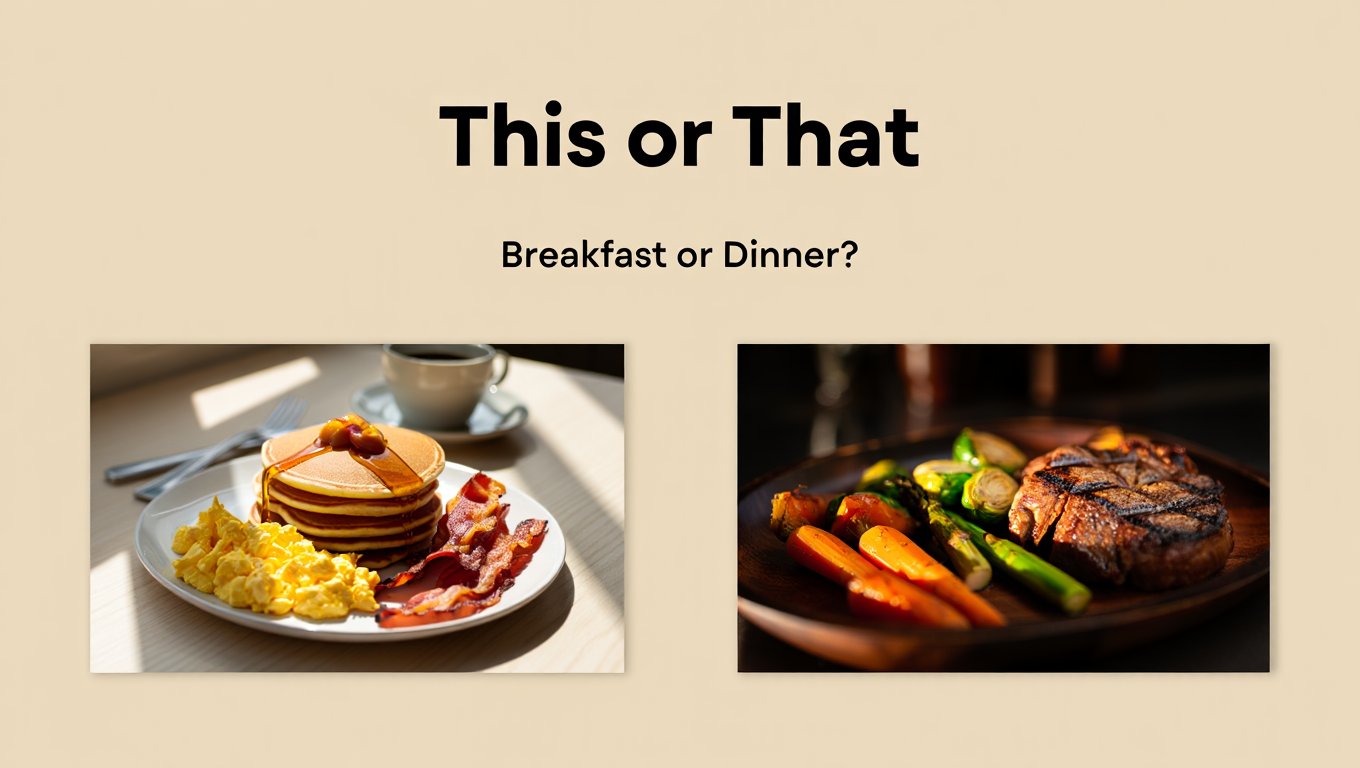
Breakfast people are real. Morning meal preferences reveal whether you’re actually functional before 10 AM or just going through the motions.
- Pancakes or waffles?
- Scrambled eggs or fried eggs?
- Bacon or sausage?
- Cereal or oatmeal?
- Toast or bagels?
- Orange juice or apple juice?
- French toast or regular toast?
- Breakfast burrito or breakfast sandwich?
- Yogurt or smoothie bowl?
- Muffins or donuts?
- Hash browns or home fries?
- Sweet breakfast or savory breakfast?
- Coffee or tea in the morning?
- Eggs Benedict or omelet?
- Granola or cereal?
Main Meal Debates
These are the big ones. The questions that actually matter. The hills some people will literally die on.
- Pizza or pasta?
- Burgers or hot dogs?
- Tacos or burritos?
- Steak or chicken?
- Fish or shrimp?
- Fried chicken or grilled chicken?
- Sushi or ramen?
- Lasagna or spaghetti?
- BBQ ribs or pulled pork?
- Fajitas or enchiladas?
- Meatloaf or meatballs?
- Pot roast or roast chicken?
- Fried rice or noodles?
- Quesadilla or nachos?
- Sandwich or wrap?
- Soup or salad?
- Chili or stew?
- Curry or stir-fry?
- Wings or tenders?
- Pork chops or lamb chops?
Snack Time Showdowns
Snacking habits reveal who you really are when nobody’s watching. Are you a planner with pre-portioned almonds or a “grab the whole bag of chips” person?
- Chips or pretzels?
- Cookies or crackers?
- Fruit or vegetables for snacks?
- Trail mix or granola bars?
- Popcorn or chips?
- Candy or chocolate?
- Nuts or seeds?
- String cheese or cheese cubes?
- Apple slices or banana?
- Peanut butter or almond butter?
- Rice cakes or protein bars?
- Beef jerky or turkey jerky?
- Hummus or guacamole?
- Carrots or celery sticks?
- Energy balls or protein shakes?
Dessert Decisions
Sweet tooth territory. This is where things get personal because everyone’s got strong feelings about sugar.
- Cake or pie?
- Ice cream or frozen yogurt?
- Brownies or cookies?
- Chocolate or vanilla?
- Cheesecake or tiramisu?
- Cupcakes or macarons?
- Pudding or mousse?
- Apple pie or cherry pie?
- Chocolate chip cookies or oatmeal cookies?
- Ice cream cone or ice cream cup?
- Donuts or cinnamon rolls?
- Fruit tart or chocolate tart?
- Popsicles or ice cream bars?
- Rice pudding or bread pudding?
- Fudge or caramel?
- Lemon desserts or chocolate desserts?
- Warm desserts or cold desserts?
- Gelato or sorbet?
- Candy bars or gummy candy?
- Milkshake or smoothie?
Cuisine and Culture Questions
This is where you find out if someone’s adventurous with food or if they panic when they can’t pronounce menu items.
- Italian food or Mexican food?
- Chinese food or Japanese food?
- Indian food or Thai food?
- Greek food or Lebanese food?
- French cuisine or Spanish cuisine?
- Korean BBQ or Brazilian steakhouse?
- Vietnamese pho or Japanese ramen?
- Dim sum or tapas?
- Mediterranean or Middle Eastern food?
- Soul food or Cajun food?
- German food or Polish food?
- Ethiopian food or Moroccan food?
- Caribbean food or Latin American food?
- Tex-Mex or authentic Mexican?
- American BBQ or Korean BBQ?
Looking for questions beyond food? Try this or that football players questions if you’re into sports conversations.
Cooking and Preparation Style
How food is prepared matters just as much as what it is. These questions reveal if someone’s a purist or an experimenter in the kitchen.
- Grilled or fried?
- Baked or roasted?
- Steamed or sautéed?
- Raw or cooked vegetables?
- Slow-cooked or pressure-cooked?
- Air-fried or deep-fried?
- Marinated or seasoned?
- Charred or lightly cooked?
- Crispy or soft?
- Al dente or well-done pasta?
- Rare steak or well-done steak?
- Fresh ingredients or frozen ingredients?
- Homemade or store-bought?
- Simple recipes or complex recipes?
- Traditional cooking or modern techniques?
Beverage Battles
Drinks deserve their own spotlight. What you sip says something about your daily rituals and preferences.
- Water or juice?
- Soda or lemonade?
- Hot chocolate or hot tea?
- Iced coffee or hot coffee?
- Sweet tea or unsweetened tea?
- Energy drinks or coffee?
- Sparkling water or still water?
- Fresh-squeezed juice or packaged juice?
- Sports drinks or coconut water?
- Milk or plant-based milk?
- Fruit smoothies or green smoothies?
- Iced tea or hot tea?
- Flavored water or plain water?
- Bottled water or tap water?
- Morning coffee or afternoon coffee?
Dining Experience Questions
Where and how you eat reveals lifestyle preferences that go way beyond just food itself.
- Dine-in or takeout?
- Fast food or sit-down restaurant?
- Buffet or à la carte?
- Food truck or brick-and-mortar restaurant?
- Fine dining or casual dining?
- Brunch or dinner out?
- Eating at the table or eating on the couch?
- Restaurant or homemade meal?
- Food delivery or picking it up yourself?
- Cafeteria or packed lunch?
- Drive-through or dine-in?
- Outdoor dining or indoor dining?
- Bar seating or booth seating?
- Sharing plates or individual meals?
- Prix fixe menu or ordering separately?
Flavor Profile Questions
These dig into the specific tastes and sensations that make your mouth happy.
- Sweet or savory?
- Spicy or mild?
- Salty or sweet snacks?
- Tangy or bland?
- Bitter or sour?
- Rich flavors or light flavors?
- Smoky or fresh?
- Creamy or chunky?
- Buttery or oil-based?
- Herb-heavy or simple seasoning?
- Garlic or onion?
- Lemon or lime?
- Hot sauce or ketchup?
- Mustard or mayonnaise?
- Ranch or blue cheese dressing?
Dietary Approach Questions
These explore attitudes toward eating styles and food philosophies—no judgment, just curiosity.
- Organic or conventional?
- Plant-based or meat-inclusive diet?
- Low-carb or balanced carbs?
- Meal prep or cook daily?
- Intermittent fasting or regular meals?
- Count calories or eat intuitively?
- Cheat meals or consistent eating?
- Protein shakes or whole food protein?
- Supplements or food-only nutrition?
- Strict diet or flexible eating?
When and Where to Use Food Questions
Food questions fit naturally into so many situations. Here are the best times we’ve found to break them out:
During meals together: Whether you’re at a restaurant or someone’s home, these questions make dinner conversation flow without effort. Everyone’s already thinking about food anyway, so it’s perfect timing.
Grocery shopping trips: Walking the aisles with friends or family? Ask these questions. You’ll discover new products and get meal ideas for the week ahead.
Cooking sessions: When you’re preparing food together, these questions help you understand preferences before you start. No surprises when someone reveals they hate the main ingredient halfway through prep.
Party planning: Before hosting gatherings, use these questions to figure out what foods will make everyone happy. You’ll avoid serving things that half your guests won’t touch.
Road trip conversations: Long drives need entertainment. Food questions spark debates that make miles disappear, plus you’ll find great restaurants to stop at along the way.
First dates or meetups: Food questions feel safer than deeply personal questions, but still reveal personality. They give you conversation material and help pick a good restaurant for next time.
For more conversation starters that work in different situations, check out fun conversation topics to talk about with anyone.
How to Turn Food Questions Into Deeper Conversations
Simple yes-or-no answers waste the potential here. Here’s how to dig deeper and actually learn something:
Ask about memories: When someone picks a food, ask if they have a special memory attached to it. Maybe their grandmother made the best version, or they ate it on a memorable trip. These stories reveal so much more than the food choice itself.
Discuss preparation methods: Don’t just accept “pizza.” Ask about toppings, crust style, and where they get the best pizza. These details matter to true food lovers and often lead to passionate explanations.
Explore the why: Understanding reasoning reveals values. Someone choosing healthy options might explain fitness goals or health concerns that matter deeply to them. Listen for the story behind the choice.
Share recipes: When you agree on a favorite food, exchange recipes or restaurant recommendations. Turn conversation into practical information you’ll actually use later.
Plan future meals: Use these questions to organize future hangouts. “We both love sushi? Let’s hit that new place next week.” Food conversations naturally lead to making plans together.
Respect dietary restrictions: When someone mentions allergies, intolerances, or ethical choices, listen respectfully. Their food limitations often connect to important personal values or health needs.
Connect to culture: Food ties strongly to heritage. When someone picks dishes from their culture, that’s an invitation to learn about their background. Ask follow-up questions with genuine curiosity.
Similar to conversation topics to talk about with friends and family, food discussions naturally lead to richer exchanges when you’re willing to go beyond surface-level answers.
What Your Food Choices Reveal About Your Personality
Food preferences actually correlate with personality traits and life approaches in ways researchers have studied and documented.
Adventurous eaters: People who try exotic foods and unusual combinations tend to be open-minded in other life areas. They embrace new experiences and don’t fear the unfamiliar. We’ve noticed they’re usually the first ones suggesting spontaneous road trips or trying new activities.
Comfort food lovers: Those gravitating toward familiar, nostalgic foods often value stability and tradition. They find security in predictability and appreciate routines that work. There’s nothing wrong with knowing what makes you happy.
Health-conscious choosers: Folks consistently picking nutritious options typically think long-term. They prioritize future benefits over immediate gratification. These are the people who actually read nutrition labels and plan their meals.
Spice seekers: People who love extremely spicy food often enjoy intensity in other areas too. They seek strong sensations and experiences. We’ve found they usually have other intense hobbies or preferences as well.
Sweet tooth types: Those with strong dessert preferences might be more reward-motivated. They appreciate indulgence and treating themselves for accomplishments or just because it’s Tuesday.
Simple food fans: People preferring plain, uncomplicated meals often value efficiency and function. They see eating as fuel rather than entertainment, which isn’t a character flaw—it’s just a different perspective.
Gourmet enthusiasts: Those choosing sophisticated, expensive foods might value quality and refinement across their lifestyle. They’re often willing to invest more for better experiences in general.
Learn more about personality connections at understanding personality traits.
Creating Themed Food Question Lists
Customize questions for specific events or audiences to make them more relevant and engaging for everyone involved.
Holiday gatherings: Focus on traditional holiday foods, family recipes, and seasonal favorites during festive occasions. “Pumpkin pie or apple pie?” hits different at Thanksgiving than in July.
Summer cookouts: Ask about grilling preferences, cold beverages, outdoor eating, and warm-weather foods at BBQs. “Beer or margarita?” “Burgers or hot dogs?” These questions fit the vibe.
Kids’ parties: Simplify questions for younger audiences. “Chicken nuggets or mac and cheese?” works better than complex cuisine comparisons. Check out this or that questions for kindergarten for age-appropriate options.
Diet-specific events: At vegan potlucks or keto meetups, tailor questions to that dietary approach. Everyone can participate meaningfully when the questions match their lifestyle.
Cultural celebrations: During cultural events, focus on foods from that tradition. It becomes educational and celebratory simultaneously, helping everyone learn and appreciate different cuisines.
Fitness group meetups: Ask nutrition and performance-related food questions that align with athletic goals and healthy living. “Pre-workout snack or post-workout meal?” resonates with this crowd.
Themed lists show thoughtfulness and create more engaged participation from your specific audience.
Food Questions for Picky Eaters
Picky eaters need modified questions that respect their limited preferences without judgment or pressure.
Instead of asking about exotic cuisines they’ve never tried, focus on variations within foods they do eat. “Crunchy peanut butter or smooth?” works better than “Thai or Indian food?” when you’re talking to someone with selective tastes.
Ask about preparation methods for familiar foods. This helps them expand within their comfort zone gradually without overwhelming them with completely new ingredients or flavors.
Never pressure picky eaters to justify their preferences. Food aversions often have sensory or psychological roots beyond their control. Some people genuinely can’t handle certain textures or flavors.
Use these questions to find common ground. Even selective eaters have preferences worth discussing and respecting. Building on what they do like creates positive conversations rather than making them feel defensive.
Some people grew up in food-insecure environments where being picky wasn’t an option. Others have sensory processing differences that make certain textures unbearable. Approach everyone’s food journey with compassion and understanding.
Using Food Questions to Plan Better Gatherings
Smart hosts use these questions strategically before events to ensure everyone enjoys the meal without awkward dietary surprises.
Survey your guests: Send out a few key questions before parties. You’ll gather crucial information about allergies, dietary restrictions, and strong preferences that matter for menu planning.
Find common favorites: Discover which foods the majority loves. Build your menu around those crowd-pleasers while offering variety for different preferences and restrictions.
Identify deal-breakers: Some people have foods they absolutely won’t eat. Knowing these helps you avoid serving something half your guests will push around their plates politely.
Plan variety: Use answers to ensure you’re covering different preference types. Include both adventurous and safe options so everyone finds something they genuinely enjoy.
Create conversation starters: Share interesting findings from your survey during the gathering. “Did you know everyone here prefers savory over sweet, except Tom?” This breaks ice and gets people talking.
Reduce food waste: When you serve what people actually want, less food gets thrown away. It’s better for your wallet and the environment while ensuring guests leave satisfied.
Thoughtful planning using these questions transforms you from a good host into a great one that people remember positively.
Food Questions for Different Relationships
Tailor your approach based on who you’re talking with and what kind of relationship you’re building or maintaining.
New friendships: Stick to lighter questions about general preferences and favorite restaurants. Save deeper food philosophy discussions for later when you know each other better.
Dating scenarios: Food questions help you plan future dates and avoid awkward situations like taking a vegetarian to a steakhouse. They’re practical and revealing without being too intense for early relationship stages.
Family discussions: Use food questions to understand changing preferences. Your nephew who hated vegetables last year might love them now. People’s tastes evolve, especially kids.
Coworker conversations: Food questions provide safe office small talk that’s more interesting than weather discussions. They help you learn about colleagues without getting inappropriately personal for workplace settings.
Long-term relationships: Even with your closest people, food preferences evolve. Regular check-ins through these questions keep you updated on current tastes and prevent serving things they’ve grown tired of.
For relationship-specific questions, explore this or that questions for husband and wife.
The Cultural Significance of Food Preferences
Food carries deep cultural meaning that goes way beyond nutrition or simple taste preferences.
When someone chooses foods from their heritage, they’re connecting with identity and history. Those dishes link them to ancestors and traditions spanning generations. It’s about belonging and remembering where you came from.
Regional pride appears strongly in food loyalty. New Yorkers will fight you about their pizza. Texans champion their BBQ with religious fervor. Chicagoans stand by their hot dogs. These aren’t just preferences but cultural identity markers that people take seriously.
Immigration stories hide in food choices. Many people grew up eating fusion dishes their parents created by combining homeland flavors with American ingredients—bridges between two worlds on a plate.
Religious and ethical values show up in dietary choices. Kosher, halal, vegetarian, and vegan selections reflect deeply held beliefs worth respecting, even if you don’t share them.
Economic background influences food experiences dramatically. Someone who grew up with food insecurity might have very different comfort foods than someone who always had abundance and variety.
Understanding this context helps you approach food conversations with appropriate sensitivity and curiosity rather than judgment.
Food Questions as Educational Tools
These questions teach more than just preferences. They open doors to nutrition education, geography lessons, and cooking skill development.
Nutritional awareness: Discussing why someone chooses certain foods can lead to conversations about health benefits, vitamins, and balanced eating habits that interest everyone.
Geography lessons: Asking about international cuisines naturally leads to learning where dishes originate and what makes those regions unique culturally and historically.
Cooking skills development: When someone loves a dish, asking how to make it shares knowledge and builds confidence in the kitchen for both experienced and novice cooks.
Food science exploration: Questions about cooking methods can spark discussions about why certain techniques produce specific results—the chemistry and physics of cooking.
Sustainability education: Choices between local and imported, organic and conventional, or plant-based and animal products open conversations about environmental impact and responsible eating.
Budget management: Discussing expensive versus affordable food choices teaches practical financial planning and prioritization that applies beyond just food shopping.
Teachers, parents, and group leaders can use these questions as springboards for broader learning experiences that engage people naturally.
Common Mistakes When Asking Food Questions
Avoid these errors that can make food conversations uncomfortable, judgmental, or unproductive for everyone involved.
Judging people’s answers: Rolling your eyes at someone’s pineapple pizza preference kills the fun immediately. Every food choice is valid, even if you personally disagree strongly.
Assuming everyone can afford everything: Not everyone has access to expensive restaurants or specialty ingredients. Don’t make people feel bad about budget limitations or food access issues.
Ignoring dietary restrictions: When someone mentions allergies or intolerances, don’t dismiss them as fussy or difficult. These are serious health concerns, not personality quirks.
Pushing food on people: If someone says they don’t like something, accept it. Don’t insist they just haven’t tried the “right” version yet or pressure them to try things.
Making it too complicated: Keep questions simple and clear. Don’t overwhelm people with too many options, qualifications, or convoluted choices.
Turning it into nutrition lectures: Unless someone asks for health advice, don’t use their answers as opportunities to preach about “proper” eating habits.
Forgetting cultural sensitivity: Some foods hold religious or cultural significance. Approach all cuisines with respect rather than mockery or grossed-out reactions.
Using Social Media for Food Questions
Digital platforms offer new ways to engage people with food questions beyond face-to-face conversations.
Instagram stories: Post questions using poll stickers. You’ll get instant feedback from followers and spark conversations in DMs about favorite foods and restaurants.
TikTok videos: Create quick videos showing two food options and asking viewers to comment their choice. Food content consistently goes viral because everyone relates to it.
Twitter polls: The platform’s built-in polling feature works perfectly for food debates. Results often surprise you and generate lots of engagement.
Facebook groups: Food-focused communities love these questions. You’ll get detailed answers and recipe recommendations from passionate members who genuinely care.
Pinterest boards: Create collections of food questions and watch them get repinned as party planning resources by people hosting gatherings.
YouTube community posts: Ask your subscribers food questions between video uploads to maintain engagement and learn more about your audience.
Social media transforms private conversations into community discussions where everyone can participate and learn from diverse perspectives.
Food Questions for Kids and Family Time
Children love talking about food, making these questions perfect for family bonding without screens or distractions.
Keep questions age-appropriate and focused on foods kids actually encounter. “Dinosaur nuggets or regular nuggets?” resonates more than sophisticated cuisine comparisons they’ve never experienced.
Use food questions during car rides to school, doctors’ appointments, or activities. They distract from boredom and teach kids to express preferences and opinions.
Involve children in meal planning by asking these questions before grocery shopping. They feel heard and are more likely to eat what they helped choose.
Make it educational by discussing where foods come from, how they grow, and who makes them. Simple questions open doors to bigger lessons about nutrition, farming, and culture.
Respect kids’ changing tastes. Preferences shift constantly during childhood development. What they hated last month might become a favorite today, and that’s completely normal.
Similar age-appropriate content includes this or that questions for kindergarten designed specifically for young children’s developmental levels.
The Role of Food Questions in Building Confidence
Speaking up about preferences helps people develop stronger self-advocacy skills that extend beyond food choices.
Many individuals struggle to state their needs clearly in various life situations. Food questions provide low-stakes practice for expressing wants and boundaries without major consequences.
When your choices get accepted without judgment, it reinforces that your opinions matter. This small validation accumulates into stronger self-worth over time.
Picky eaters especially benefit from safe spaces to share preferences. Too often, they face pressure and mockery for their food limitations from peers and even family members.
Children learning to communicate use these questions as templates. “We prefer this over that” becomes a formula they apply beyond food in many life situations.
For teens forming identity, declaring food preferences helps solidify a sense of self. “We’re chocolate people” or “We love spicy food” contributes to self-concept development.
Learn more about building confidence at how to build self-esteem through healthy self-expression.
Conclusion
This or that food questions create connections through our universal relationship with eating while revealing personality, culture, and values in surprisingly meaningful ways. We’ve shared over 150 questions covering breakfast debates, main meals, snacks, desserts, cuisines, cooking styles, beverages, dining experiences, flavors, and dietary approaches.
These questions work because food matters to everyone. Unlike specialized interests that exclude people, eating is something we all do multiple times daily. Our preferences tell stories about where we’re from, how we were raised, and what we value today.
Start using these questions at your next meal, party, or casual hangout. You’ll discover new restaurants through recommendations, learn recipes from friends, and understand the people in your life more deeply through their food choices.
Remember that no food preference is wrong or silly. Respect every answer, ask follow-up questions with genuine curiosity, and share your own preferences openly. The goal isn’t to judge but to connect through our shared love of good food.
What are you waiting for? Pick a category that interests you, ask a few questions, and watch conversations come alive. Every answer reveals something new about the person sitting across from you.
For more question ideas beyond food, explore this or that questions for girls or try this or that football players questions if sports interest you.
FAQ About This or That Food Questions:
Do food preferences really reveal personality traits?
Yes, research shows connections between food choices and personality characteristics. Adventurous eaters tend to score higher in openness to experience, while those preferring familiar foods often value tradition and security. However, preferences are just one small window into personality, not complete psychological profiles.
How do we handle conflicting food preferences when planning group meals?
Offer variety that covers different preference types. Include at least one option for common dietary restrictions like vegetarian, gluten-free, or dairy-free. Focus on finding a few items that most people enjoy rather than trying to please everyone with every dish.
Are picky eaters just being difficult?
No, picky eating often has legitimate sensory, psychological, or medical roots. Some people have heightened taste sensitivity, past negative food experiences, or texture aversions they can’t control. Approach all eating patterns with compassion rather than judgment.
Can food preferences change over time?
Absolutely. Taste buds change throughout life, especially during childhood, pregnancy, and aging. New experiences, health changes, and lifestyle shifts all influence what we enjoy eating. People who hated vegetables as kids often grow to love them as adults.
Should we avoid asking food questions to people with eating disorders?
Use sensitivity and read the situation. Some people in recovery appreciate normal food conversations that don’t focus on restriction or body image. Others find any food discussion triggering. When in doubt, let them lead conversations about eating and follow their comfort level.
How do cultural differences affect food question answers?
Culture profoundly shapes food preferences through childhood exposure, traditional ingredients, and cooking methods. What seems normal or delicious to one culture might be unfamiliar or unappetizing to another. Neither perspective is right or wrong, just different based on experience.
Can we use these questions for meal planning and grocery shopping?
Yes, these questions help identify family preferences before shopping. You’ll waste less money on foods nobody eats and reduce mealtime conflicts when you serve things people actually want. Regular food discussions keep you updated on changing preferences.
You May Also Like
 Fun Questions
1500+ This or That Questions for 2026: From Silly Choices to Deep Conversations
 Fun Questions
What Does WSG Mean in Text? How to Respond to WSG in Messages and Social Media
 Fun Questions
350+ Truth or Dare Questions: Play Classic Party Games With Your Friends
 Fun Questions
250+ This or That Questions for Back to School: The Ultimate Icebreaker Guide for Teachers and Students
 Fun Questions
157+ This or That Questions for Cousins: Fun Conversations
 Fun Questions
155+ This or That Questions for Black People: A Complete Cultural Connection Guide
 Fun Questions
What Does GNG Mean in Text? Meaning Slang, Examples, and Real Usage
 Fun Questions
What Does SYBAU Mean? SYBAU Slang Meaning, Origin & Examples
 Fun Questions