
Childhood Rejection Trauma: Why the Wound Nobody Sees Is the One That Shapes You Most
I’ve spent close to fifteen years writing about relationships and mental health, and if there’s one thread that keeps showing up in the messages I get from readers — on X, in Instagram DMs, buried in Facebook group comments — it’s this: “I don’t know why I do this, but if someone goes quiet on me, I spiral.” Or: “My partner says I take everything personally, and I don’t know how to stop.” Or, the one that stops me every time: “I don’t think my parents ever actually rejected me. So why does everything feel like rejection?”
That last question is the one this article is really about. Because childhood rejection trauma doesn’t require a dramatic origin story. It doesn’t require an abusive parent, a single terrible event, or a childhood anyone would call “bad” from the outside. Most of the people I talk to who carry this had parents who loved them. And they still walked away wired to expect rejection everywhere they look.
I want to go through what’s actually known about this — not the Instagram-therapy-speak version, the research version — and then talk about what to actually do with that information.
What Childhood Rejection Trauma Actually Is (And Isn’t)
Rejection trauma isn’t a formal diagnosis you’ll find in the DSM-5. What clinicians and researchers actually study are the underlying experiences — emotional neglect, inconsistent caregiving, conditional acceptance, parental unavailability — and the downstream pattern that shows up in adulthood, which psychologists call rejection sensitivity.
Here’s the distinction I think gets lost the most: rejection trauma is not the same as abuse, and it’s not always the same as obvious neglect. It can come from:
- A parent who was physically present but emotionally checked out (working, depressed, overwhelmed, or just not a demonstrative person)
- Conditional love — approval tied to grades, obedience, appearance, or not being “too much”
- A household where a sibling was clearly favored
- A parent who withdrew affection as punishment (the silent treatment, used on a child)
- Being sent away, sent to relatives, or otherwise physically separated during a formative period
- Growing up with a caregiver whose attention was unpredictable — warm one day, dismissive the next
None of these need to look like cruelty from the outside. A parent working two jobs to keep the lights on isn’t a villain. But a child’s nervous system doesn’t grade on effort or intention — it responds to whether a need for connection was reliably met. That’s the part that gets missed in most pop-psychology takes on this topic, and it’s worth sitting with because it changes how you interpret your own history. If you’re trying to make sense of your own childhood, “my parents didn’t mean to hurt me” and “I still experienced rejection” can both be true at the same time.
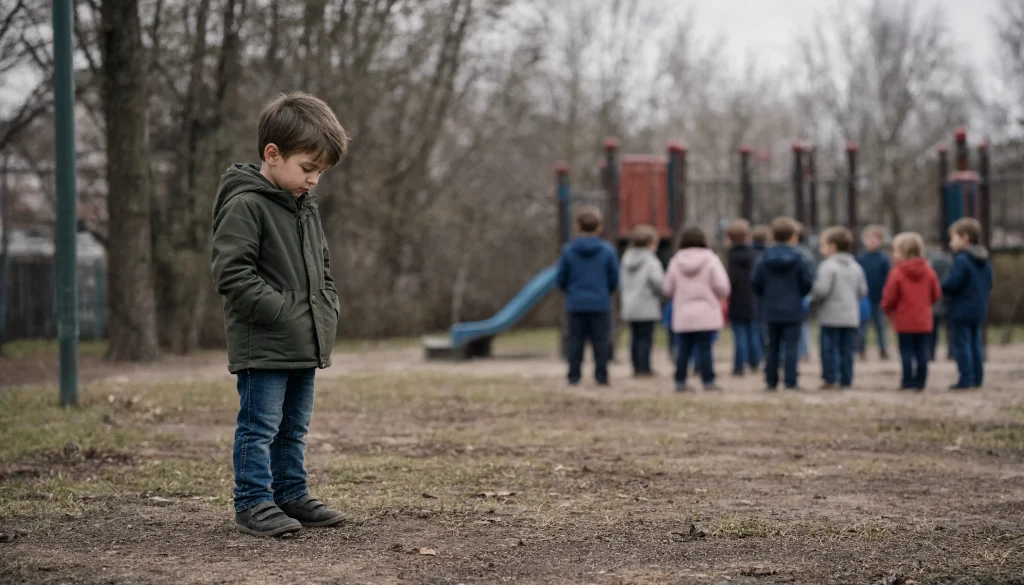
The Family Environments Where This Tends to Take Root
I get asked a version of this constantly: “But my childhood wasn’t that bad, so why do I have this?” In my experience talking to readers, and consistent with what shows up in the clinical literature on family systems, rejection trauma tends to grow out of a handful of recognizable environments rather than one dramatic event:
- The high-control household, where love is real but heavily conditional on compliance, achievement, or not causing friction
- The emotionally unpredictable household, where a parent’s warmth depends entirely on their own mood, stress, or circumstances that day
- The comparison household, where a child is regularly measured against a sibling, a cousin, or an idealized version of who they “should” be
- The enmeshed or role-reversed household, where a child is expected to manage a parent’s emotions rather than the other way around
If more than one of these sounds familiar, it’s worth reading through the more detailed breakdown of signs you grew up in a toxic family, which goes deeper into how these dynamics show up day to day rather than in hindsight. It’s also worth understanding the broader category these patterns fall under — what family therapists actually mean by unhealthy family dynamics, since rejection is rarely the only pattern operating in a household like this. It tends to travel with a handful of others.
How Common Is This, Actually?
This is where the data gets genuinely useful, because it pushes back on the idea that this is a rare or extreme experience.
A large meta-analysis pooling nearly 60,000 participants across 16 independent samples found an overall estimated prevalence of 184 per 1,000 for emotional neglect — meaning roughly 1 in 5 people, globally, report having experienced it. Other meta-analytic work by Stoltenborgh and colleagues puts the figure closer to 18% globally, though this varies a lot by culture and by how researchers define and measure it.
That variation matters. In a study of Chinese college students, researchers noted that over 40% of children report experiencing emotional neglect in cultural contexts where parents tend to be more emotionally reserved and express care through provision rather than affection. Meanwhile, a systematic review looking specifically at psychiatric populations found emotional neglect rates as high as 43.1% among people with diagnosed psychiatric disorders, which tells you something about how strongly this experience correlates with later mental health struggles — even if it doesn’t prove which came first.
Here’s a snapshot of what the research actually shows, pulled from several independent studies:
| Population studied | Reported prevalence of emotional neglect | Source |
|---|---|---|
| Global meta-analysis (59,655 participants, 16 samples) | ~18.4% | Stoltenborgh et al., cited via ScienceDirect |
| Adults with diagnosed psychiatric disorders (122 studies) | 43.1% | ScienceDirect meta-analysis |
| Chinese college students | 40%+ | ScienceDirect |
| Ethiopian adolescent sample | 68% | MedCrave narrative review |
| Birth-cohort study (UK, ALSPAC) | 19% (moderate-to-high levels) | Frontiers in Psychiatry |
My interpretation: the range is wide because “emotional neglect” isn’t measured the same way twice — some studies use strict clinical cutoffs, others use broader self-report scales. But even the most conservative estimates put this in the range of 1 in 5 to 1 in 6 people. That’s not a niche experience. That’s a huge portion of the adult population walking around with a nervous system calibrated by inconsistent early attachment, most of whom have never once framed their anxiety, people-pleasing, or relationship patterns as trauma.
Context worth adding: girls and women are consistently reported as experiencing somewhat higher rates of emotional neglect than boys and men in several studies — around 23% versus 17% in one large sample examined in a narrative review of emotional neglect research — though researchers are honest that this could partly reflect reporting differences rather than a true prevalence gap. I wouldn’t build a strong claim on that gap alone, but it’s a pattern worth watching in future research.
The Biology: Why Rejection Actually Hurts
This is the part of the research I think people find most validating, because it explains why rejection doesn’t just feel emotionally unpleasant — it registers in the brain in a way that overlaps with actual physical pain.
In a now well-known 2003 study published in Science, UCLA researcher Naomi Eisenberger and colleagues scanned participants’ brains while they played a rigged virtual ball-tossing game called Cyberball, in which the participant was gradually frozen out by the other “players.” The anterior cingulate cortex — a brain region also active during physical pain — showed more activity during exclusion than inclusion, and that activity tracked closely with how much distress people reported feeling. A follow-up study published in PNAS went further: when people who had recently gone through a breakup looked at a photo of their ex while thinking about the rejection, regions that process the sensory, not just emotional, side of physical pain also became active.
Analysis: this matters clinically because it explains why “just get over it” has never worked as advice for anyone, and why rejection in childhood — repeated, chronic, low-grade rejection from the people a child depends on for survival — isn’t a minor emotional bruise. The nervous system doesn’t file it under “disappointment.” It files it closer to where it files threat and injury. Eisenberger and Lieberman have proposed, in a widely cited theoretical review, that the social attachment system essentially borrowed the computations of the physical pain system, likely because for a mammal, separation from a caregiver was historically a survival-level threat, not just an emotional one.
Recommendation: if you’ve ever felt embarrassed by how much a small rejection wrecked your whole day — a friend not replying, a job rejection, a partner being short with you — this research is a reasonable answer to “why do I feel this so much.” Your brain isn’t overreacting by its own logic. It’s running old software that once kept infants alive by making disconnection feel unbearable enough to fix immediately.
Rejection Sensitivity: The Psychological Model That Explains the Adult Pattern
The most useful clinical framework for understanding what actually happens to people after childhood rejection is called Rejection Sensitivity Theory, developed by psychologists Geraldine Downey and Scott Feldman in a landmark 1996 study published in the Journal of Personality and Social Psychology. Their central finding, put in plain terms: people who anxiously expect rejection tend to readily perceive it, even in fairly ambiguous behavior, and they tend to overreact to it in ways that end up damaging the very relationships they’re trying to protect.
The theory builds directly on attachment theory. The idea, in plain terms: if a child’s early bids for connection are met inconsistently — sometimes warmly, sometimes ignored, sometimes punished — that child doesn’t just feel sad about it. They develop a kind of internal radar that stays permanently tuned to rejection cues, because as a child, missing a rejection cue could mean missing a chance to fix the relationship before it got worse. As one academic review of the rejection sensitivity model describes it, when parents fail to meet a child’s expressed needs, the child becomes hypervigilant to rejection and starts anxiously anticipating it from others — and that radar doesn’t switch off in adulthood. It just points at new people: partners, bosses, friends.
This is the mechanism behind a pattern almost everyone recognizes even if they’ve never had language for it: reading a delayed text reply as anger, assuming silence means someone’s mad at you, over-apologizing pre-emptively, or picking a fight with a partner because you sensed distance before they said a word.
Strategic consideration: rejection sensitivity isn’t a character flaw or a sign of weakness, and treating it as one usually makes it worse (shame is itself a rejection cue, so shaming yourself for being rejection-sensitive tends to activate the exact system you’re trying to calm). The more useful frame is that it’s a learned prediction model — and prediction models can be retrained with new, consistent evidence. That reframing alone changes how people approach fixing it.
How Rejection Sensitivity Actually Shows Up in Adult Life
Based on the clinical literature and honestly, based on the hundreds of conversations I’ve had with readers about this exact topic, here’s where I see it play out most consistently:
1. Interpreting neutral behavior as hostile
Interpretation: ambiguous behavior — a short reply, a canceled plan, a flat tone — gets filled in with the worst-case story, because a rejection-sensitive nervous system doesn’t tolerate ambiguity well. Ambiguity feels like danger, so the mind resolves it fast, usually toward “they’re upset with me” or “they’re pulling away.”
Analysis: Downey and Feldman’s original experimental work actually demonstrated this directly — participants high in rejection sensitivity were more likely to perceive intentional rejection in a hypothetical partner’s insensitive-but-ambiguous behavior, compared to less sensitive participants shown the identical scenario.
Recommendation: when you notice yourself building a story from an ambiguous signal, it helps to name it out loud, even just to yourself: “This is one interpretation, not the only one.” Then look for the version of events that assumes good faith and see if it fits the facts just as well. It almost always does.
2. Pre-emptive withdrawal (“leaving before you can be left”)
Interpretation: some people respond to the fear of rejection not by clinging, but by exiting first — ending relationships, jobs, or friendships at the first sign of friction, so the rejection is self-authored rather than something that happens to them.
Context: this is often mistaken for independence or “not needing people,” when it’s frequently the opposite — a strategy built specifically around how much rejection would hurt if it came from someone else’s decision instead of your own.
Strategic consideration: the test I’d suggest is asking whether the decision to leave is coming from clear information about the relationship, or from a felt sense of dread the moment things get slightly uncertain. Those are different decisions and deserve different responses.
3. Chronic people-pleasing and self-erasure
Interpretation: if rejection once meant a caregiver withdrawing warmth, a very logical adaptation is to become whoever earns the warmth back — agreeable, low-maintenance, endlessly accommodating.
Analysis: this shows up statistically too. Research tracking rejection sensitivity in daily interpersonal life has found it to be negatively associated with relationship satisfaction and positively associated with loneliness — which is a hard irony, because the pattern is built to protect connection, and instead it tends to erode it, since a self that’s been edited down to avoid conflict is harder for anyone to actually feel close to.
4. Anger as a rejection response
Interpretation: Downey and Feldman’s model actually names two versions of rejection sensitivity: anxious and angry. Some people brace for rejection with dread; others brace for it with pre-emptive hostility, essentially rejecting first, harder, before the other person can.
Recommendation: if your first response to feeling excluded is a flash of anger rather than sadness, that’s still rejection sensitivity — it just wears a different outfit. Naming which version you default to is genuinely useful, because the two need slightly different management strategies (the anxious version benefits more from grounding and self-soothing; the angry version benefits more from a pause before reacting).
5. A baseline sense of not being enough
Interpretation: when acceptance was conditional in childhood, a lot of people don’t just develop a fear of rejection — they develop a quiet, background assumption that they’re not fully acceptable as they are, which is a different (and arguably heavier) thing to carry than fear alone.
Context: this is worth separating out because it doesn’t always look like anxiety from the outside. It can look like modesty, or “not wanting to be a burden,” or genuinely believing your needs matter less than everyone else’s. If any of that sounds familiar, it’s worth reading through the more detailed signs of low self-esteem, because rejection trauma and low self-esteem overlap heavily but aren’t identical, and knowing which one (or both) you’re dealing with changes what actually helps.
6. Insecurity that shows up specifically in romantic relationships
Interpretation: rejection sensitivity from childhood tends to concentrate hardest in romantic relationships, because a partner sits closest to the emotional role a caregiver once occupied. This is where the pattern usually gets loudest — checking a partner’s phone, needing constant reassurance, or reading a change in tone as evidence the relationship is ending.
Recommendation: if this is the arena where your rejection sensitivity shows up most, it’s worth reading through practical guidance on how to stop being insecure in a relationship, since the day-to-day tools for managing it in a live relationship are a bit different from the broader psychological picture covered here.
Rejection Trauma vs. Betrayal Trauma: Why the Distinction Matters
I want to flag this because I see the two conflated constantly in casual conversation, and mixing them up tends to lead people toward the wrong kind of healing work.
Rejection trauma, as covered here, is about a withholding of connection — a child’s bids for closeness going unmet, ignored, or made conditional. Betrayal trauma is a related but distinct concept: it’s about a violation of trust by someone you depended on, often involving deception, someone who was supposed to protect you instead causing harm, or a caregiver’s actions actively contradicting what they claimed to feel for you. Both can absolutely originate in childhood, and both can absolutely coexist in the same person’s history, but the underlying wound isn’t identical.
Why this matters practically: if what you’re actually dealing with is more about deception and broken trust than about withheld affection, the more accurate starting point is understanding what betrayal trauma in a relationship actually looks like, because the recovery work for betrayal trauma leans more heavily on rebuilding trust in specific, verifiable ways, whereas rejection trauma work leans more on recalibrating a prediction system. People often assume they’re dealing with one when they’re actually dealing with a blend of both, and getting that distinction right early tends to save a lot of time in therapy.
What the Research Says About Long-Term Risk
I don’t think it’s responsible to write about this without being honest about what’s actually at stake if this pattern goes unaddressed for decades, so here’s what the data shows.
Childhood emotional neglect has been consistently linked in longitudinal and cross-sectional research to:
- Depression and anxiety disorders — described in a summary of the meta-analytic literature as among the most frequent outcomes associated with childhood emotional neglect in young adults and later in life
- Reduced relationship quality and social anxiety — poor interpersonal functioning and reduced relationship quality show up repeatedly across independent research groups studying this population
- Substance use and disordered eating patterns — one study found emotional neglect significantly correlated with binge eating behavior and with drive for muscularity, alongside physical neglect showing similar associations
- Alexithymia — difficulty identifying and describing one’s own emotions, which researchers found was significantly predicted by both physical and emotional neglect history
Context: none of this means rejection trauma guarantees any of these outcomes. Correlation in this research doesn’t equal fate, and plenty of people carry emotional neglect histories without developing clinical depression or anxiety. What the data supports is a dose-response-shaped risk increase — the more consistent and prolonged the neglect, the higher the statistical association with these outcomes later in life. That’s a meaningfully different claim than “this happened to you, so this will happen to you,” and I think the distinction matters for how much dread people should reasonably carry about their own history.
What Actually Helps: An Honest Look
I’m going to resist the urge to hand you a five-step fix, because that’s not how this works, and I think most articles on this topic oversell how fast this pattern can shift. What the research and clinical practice do support:
Recognizing the pattern in real time. The single biggest lever isn’t erasing the sensitivity — it’s shortening the gap between having the reaction and noticing you’re having it. Rejection sensitivity operates fastest when it’s unconscious. Naming it, even mid-reaction (“I’m reading this as rejection, and I’m not sure that’s accurate”) measurably slows the spiral.
Working with a therapist trained in attachment-based or schema-based approaches. This isn’t a plug for therapy in general — it’s specific. Cognitive behavioral approaches and attachment-focused therapy both have research support for reshaping the automatic predictions rejection sensitivity runs on. A general “let’s talk about your week” therapy style tends to be less effective here than an approach that specifically targets the belief system underneath the reaction.
Building relationships with people who are consistent, not just kind. One-off kindness doesn’t retrain a prediction model built on inconsistency. Repetition does. If you’re rejection-sensitive, the relationships that help you heal the most are usually the least dramatic ones — the friend who replies at roughly the same pace every time, the partner whose mood doesn’t swing your worth up and down. This is also, practically speaking, a matter of learning to extend and receive trust in relationships again after a childhood that taught you trust was risky, which tends to be slower and less linear than people expect going in.
Doing the underlying self-worth work, not just the reactivity work. Managing the reaction in the moment matters, but it’s addressing a symptom, not the source. A lot of the lasting change I’ve seen readers describe comes from parallel work on how to build self-esteem that isn’t contingent on anyone else’s approval — because a rejection-sensitive nervous system calms down considerably once your sense of worth stops living entirely in other people’s hands.
Being honest about what’s yours to carry alone versus what needs a professional. I want to be direct here, because I think a background in therapy training makes me more cautious about this, not less: if what you’re noticing includes intense fear of abandonment that derails your daily functioning, patterns that resemble borderline personality traits, or rejection sensitivity intense enough to trigger self-harm or suicidal thoughts, that’s not a “read another article and journal about it” situation. That needs a licensed clinician, and there’s no shame in that being the answer. If any of that is resonating with you personally, it’s worth reaching out to a therapist or your doctor about it, and I’m glad to help you think through the practical side of finding the right kind of support if that would help.
Where the Research Is Heading
A few directions I’d flag if you’re following this topic closely:
- Neuroscience is getting more specific about which rejection hurts most. The 2011 PNAS study on ex-partner rejection found that intensely personal rejection activates the same somatosensory regions as physical pain, not just the emotional-affective regions activated by more impersonal rejection (like being excluded in a game). That distinction — personal versus impersonal rejection — is likely to become a much bigger part of how clinicians think about treatment specificity.
- Rejection sensitivity research is expanding beyond romantic relationships. Downey and Feldman’s original model was built around intimate relationships, but it’s now being applied to understand experiences tied to group identity and social status — including work on how marginalized groups experience rejection sensitivity tied to identity rather than individual relationships.
- Cultural variation is getting more serious attention. The large gap between prevalence estimates in different countries (closer to 18% in Western meta-analyses, over 40% in some East Asian samples) suggests researchers still have real work to do separating “how common is neglect” from “how differently is it defined and reported across cultures.” I’d treat any single global percentage with some healthy skepticism until that gets sorted out further.
Frequently Asked Questions About Childhood Rejection Trauma
Can rejection trauma develop without any obvious neglect or abuse?
Yes, and this is genuinely the most common version of it. The research on emotional neglect specifically shows that it’s largely defined by absence — a lack of attunement, warmth, or consistent emotional presence — rather than by any single harmful act. A household can look stable, provide for every material need, and still leave a child without the felt experience of being reliably seen and accepted. That gap is enough on its own.
Is rejection sensitivity the same thing as anxious attachment?
They overlap substantially but aren’t defined identically in the research. Anxious attachment describes a broader relational style rooted in attachment theory — how someone approaches closeness and separation in general. Rejection sensitivity is a more specific cognitive-affective pattern: the tendency to anxiously expect, readily perceive, and overreact to rejection cues. Most people with anxious attachment do show elevated rejection sensitivity, but the two constructs come from slightly different research traditions and aren’t perfect synonyms.
Does rejection trauma ever fully go away?
Most of the clinical and research literature points toward meaningful reduction rather than complete disappearance. The goal that therapists and researchers describe isn’t erasing the sensitivity entirely — it’s widening the gap between the trigger and the reaction, and building enough evidence of safe, consistent relationships that the nervous system’s default prediction shifts. People who’ve done sustained work on this tend to describe it as “quieter,” not “gone.”
How is this different from just being a sensitive person?
Sensitivity, on its own, isn’t a problem — plenty of people are naturally attuned to others’ emotions without a rejection history behind it. What separates rejection sensitivity from general sensitivity is the specific pattern of anxious anticipation and the tendency to read ambiguous behavior as confirmation of rejection, even when a less charged interpretation fits the facts equally well. It’s less about how much you feel and more about what your mind assumes is happening before you have real evidence either way.
Should I confront my parents about this?
There’s no universally right answer here, and I’d be skeptical of any article that gives you one. Some people find real value in an honest conversation, especially when a parent is capable of hearing it without becoming defensive. Others find that the conversation itself becomes another rejection experience, because the parent can’t or won’t meet them there. A licensed therapist can help you think through which category your specific situation is more likely to fall into before you decide.
A Last, Honest Thought
If you read all of this and recognized yourself in more of it than you expected to, I want to say clearly: that recognition is not a diagnosis, and it’s not a life sentence. It’s information. The nervous system that learned to expect rejection learned it for a reason that made sense at the time, from a child’s-eye view of the world. It can also learn something else, with enough consistent, patient, unglamorous evidence to the contrary. That part tends to take longer than anyone wants it to. But it’s not the same as it being impossible.
If you’re noticing this pattern is affecting your daily life significantly, or you’re dealing with intense distress around it, please consider talking with a licensed therapist — they can help in ways an article never fully can.
You May Also Like
 Mental Health
How to Understand and Manage Your Emotions in Everyday Life
 Rejection Quotes
60 Job Rejection Quotes for Disappointment, Perspective, and Your Next Step
 Rejection Quotes
130+ Disappointment Trust Broken Quotes: Healing Words for Broken Hearts
 Rejection Quotes
250+ Deep Breakup Quotes to Help You Heal, Let Go, and Love Again
 Personal Motivation Quotes
137+ Disappointment Life Failure Quotes: Real Words to Help You Through Tough Times
 Toxic Relationships
150+ Disappointment Relationship Priority Quotes: When You’re Not Their First Choice
 Family and Relationships
25 Signs of Emotional Cheating in a Relationship (With Real Examples)
 Rejection Quotes
150+ People Use You Quotes: Feeling Used, Taken for Granted & Learning Your Worth
 Mental Health