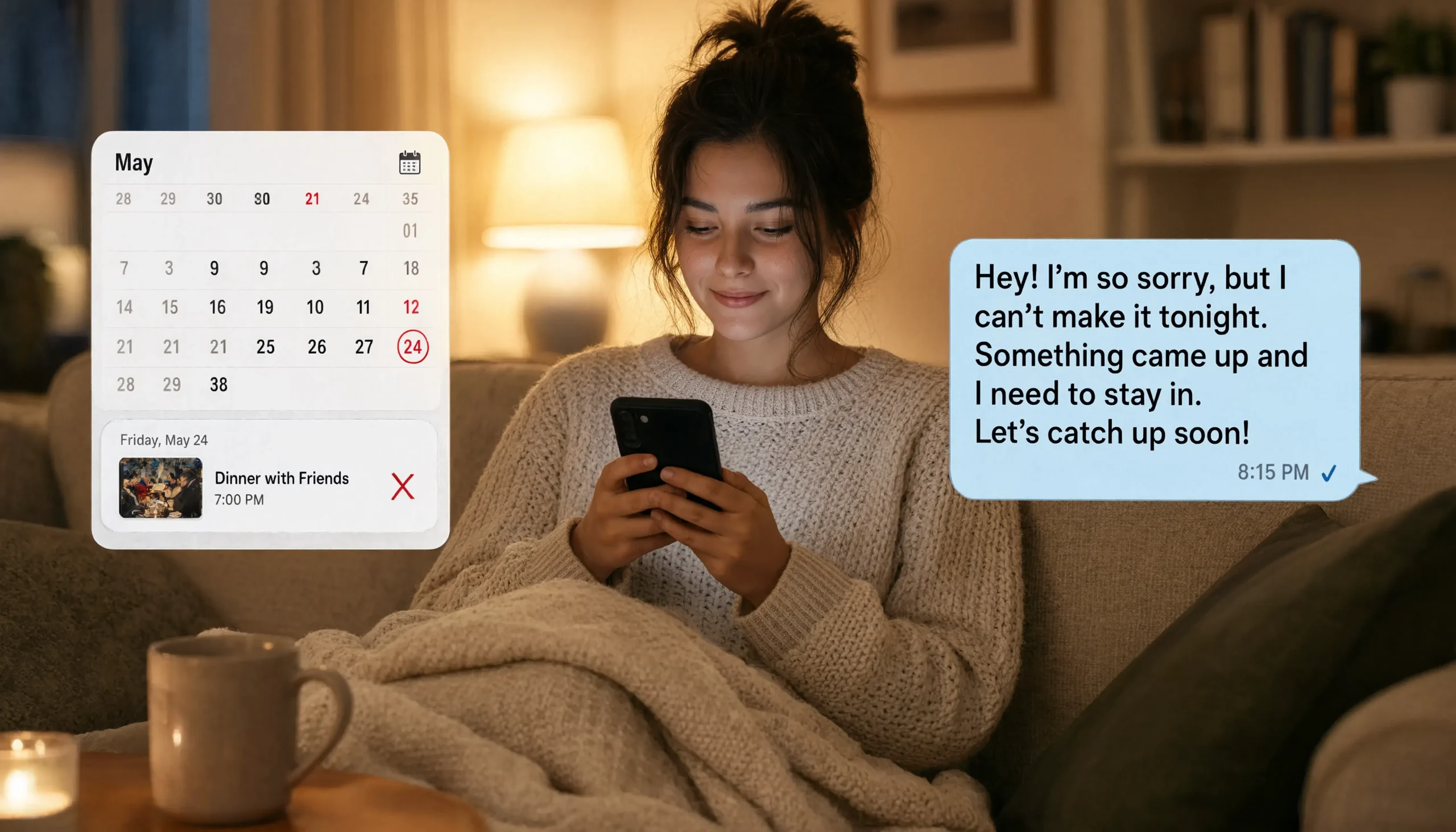
Stop Canceling Plans Last Minute: A Real Guide to Actually Showing Up
You said yes three weeks ago. It felt easy then, safely tucked into the future. But now it’s tonight, and you’re standing in your kitchen typing “so sorry, something came up” into your phone, even though nothing really came up except your own exhaustion and a growing sense of dread about leaving the house. If this feels familiar, you are not broken, and you are not a bad friend. You have just built a habit that is quietly costing you more than it seems to be saving you.
Canceling plans at the last minute usually is not about the plans themselves. It is about how you agree to things, how you manage your energy, and sometimes about a fear that has nothing to do with the person waiting for you. This guide walks through why the habit forms, what it actually costs, and how to build a different pattern, one that lets you keep the relationships you care about without running yourself into the ground trying to keep every promise you make.
None of this is about forcing yourself to say yes to everything from now on. It is about learning to say yes on purpose, so that when you do commit, you can actually follow through.
Why You Keep Canceling Plans at the Last Minute
Most last-minute cancellations come from one of a few common roots, and figuring out which one fits you changes everything about how you fix it.
- You say yes too fast. Agreeing in the moment feels easier than explaining why you might not want to go, so you commit now and dread it later.
- You run out of social energy before the day arrives. A busy week can quietly drain the reserves you were counting on to show up.
- You feel anxious about the event itself. New people, big groups, or unstructured plans can trigger a wave of nerves that grows the closer the date gets.
- You overbook your calendar. Saying yes to everything eventually means something has to give, and it is usually whatever feels most optional in the moment.
- You are avoiding something uncomfortable. Sometimes the plan itself is fine, but it is easier to cancel than sit with an awkward conversation or a group dynamic you are dreading.
If anxiety is doing most of the driving here, it can help to have some tools for calming that anxious spiral before it convinces you to bail on something you actually wanted to do in the first place. And if part of the fear is really about not performing well socially or not being “on,” that often comes from the same fear that keeps you from starting things you’re excited about in other parts of life too.
What Canceling Last Minute Really Costs You
A single canceled plan rarely breaks a friendship. A pattern of them slowly does. Understanding the real cost can make the habit easier to interrupt, because it stops being about willpower and starts being about protecting something you care about.
People stop inviting you to things, not out of anger, but because it starts to feel safer not to count on you. Plans stop feeling exciting to the people around you, because they have learned to brace for a cancellation before it happens. And on your end, the guilt tends to pile up quietly, making the next invitation feel heavier instead of lighter. If you have ever been on the receiving end of this pattern yourself, you already know the sting it leaves behind when someone flakes on you again, and that same sting is often what your own last-minute cancellations leave behind for the people who care about you.
None of this means you deserve to lose your friends over a hard season. It just means the pattern is worth interrupting before it becomes the whole story of how people see you.
How to Stop Canceling Plans Last Minute
Breaking this habit is less about forcing yourself through discomfort and more about changing how you commit to things in the first place.
Pause Before You Say Yes
The habit usually starts here, not on the day of the event. Before agreeing to anything, ask yourself a simple question: if this were tomorrow, would I still want to go? If the honest answer is no, that is useful information now, while you still have the chance to be upfront about it, instead of later, when backing out costs more.
Protect Your Energy Ahead of Time
Look at your week before you commit to something new. If you already have three things pulling at your energy, a fourth plan might be the one that gets sacrificed at the last minute. Building in a buffer day before or after a bigger commitment can make the difference between showing up tired but present, and not showing up at all.
Offer a Smaller Version Instead of Backing Out Completely
If full commitment feels overwhelming, a shorter version of the plan is often better than no plan at all. Suggesting coffee instead of dinner, or an hour instead of the whole evening, keeps the connection alive without asking more of you than you can realistically give.
Get Comfortable Saying No Upfront
A clear no today is kinder than a canceled yes tomorrow. This takes practice, especially if you are used to agreeing to keep the peace. Part of this is trusting your own judgment enough to say no in the first place, instead of assuming a maybe now will somehow turn into an easier yes later.
Talk About It Before It Becomes a Habit
If you notice the pattern happening again and again, a short, honest conversation with the people closest to you can go a long way. It does not need to be a big confession, just a simple heads-up that you are working on this. That kind of openness is really just getting better at saying the hard thing out loud, early, instead of avoiding it until it turns into a last-minute text.
What to Do When You Genuinely Have to Cancel
Sometimes canceling is unavoidable. Life happens, and no amount of planning removes every conflict. The difference between a cancellation that damages trust and one that does not usually comes down to timing and honesty.
Here is a simple approach that tends to work:
- Cancel as early as you possibly can, even if it means admitting the plan feels overwhelming rather than waiting for a better excuse.
- Be honest without over-explaining. A short, true reason lands better than a long, defensive one.
- Offer a specific alternative, like a new date, instead of leaving the reschedule open-ended and easy to forget.
- Follow through on the new plan. This is where trust is actually rebuilt, not in the apology itself.
If you are searching for finding the right words when you do have to bow out, a short, sincere message usually works better than an elaborate one. People remember how reliable you are after the apology far more than how eloquent the apology sounded in the moment.
Rebuilding Trust After a Pattern of Canceling
If canceling last minute has already become a pattern with certain people in your life, rebuilding that trust takes more than one good week. It takes a string of ordinary, unremarkable moments where you simply do what you said you would do.
Small, low-stakes plans are a good place to start. Following through on a quick coffee or a short phone call rebuilds credibility faster than promising a big weekend trip you are not sure you can commit to yet. Over time, the quiet work of earning that trust back adds up, even if no one mentions it directly. People notice consistency more than they notice big gestures, and showing up in the small, consistent ways that actually build a friendship tends to repair far more than a single grand apology ever could.
When Canceling Plans Might Be About Something Deeper
For some people, this pattern is not really about scheduling at all. It is tied to social anxiety, burnout, or a deeper discomfort with being seen. If canceling plans regularly comes with a racing heart, a sense of dread, or a physical need to escape rather than simple tiredness, that reaction is worth paying attention to.
This does not mean something is wrong with you. It means the pattern might be worth exploring with a professional if it’s tied to something bigger than scheduling, someone who can help you understand what is actually driving the avoidance. A habit that is really a symptom rarely responds well to willpower alone, and there is no shame in getting support for it.
You Don’t Have to Fix This Overnight
Breaking a pattern of last-minute cancellations is not about becoming a different person by next weekend. It is slow, unglamorous work: pausing before you agree to things, protecting your energy honestly, and following through on the smaller promises so the bigger ones start to feel possible again.
Give yourself room to get this wrong sometimes while you are figuring it out. What matters most is the direction you are moving in, leaning into the kind of person you actually want to be for the people who keep showing up for you. That shift, more than any single perfect plan you follow through on, is what actually rebuilds trust over time.
You May Also Like
 Family and Relationships
How We Strengthen Our Relationship in 24 Hours: A Real Couple’s Guide to a Healthy Relationship
 Friendship Quotes
200+ Thinking of You Quotes to Make Someone Feel Remembered
 Toxic Relationships
150+ Disappointment Relationship Priority Quotes: When You’re Not Their First Choice
 Things to Do
250+ Things to Talk About: Never Run Out of Conversation Ideas Again
 Family and Relationships
150+ Celebration of Life Quotes: Words to Celebrate Loved Ones
 Family and Relationships
150+ Questions to Ask in a Relationship: Get To Know Someone Better
 Family and Relationships
180+ Trust and Loyalty Quotes in Friendship & Relationships: Building Bonds That Last Forever
 Family and Relationships
100+ Inspirational Quotes for First Time Parents That Speak to Your Sleepless, Joyful Heart
 Family and Relationships