
25 Signs of Emotional Cheating in a Relationship (With Real Examples)
Emotional cheating happens when someone builds a deep, romantic-feeling emotional bond with a person outside their committed relationship, and that bond crosses the lines their partner would consider acceptable. Unlike physical infidelity, it may leave no obvious trail, which is why so many people quietly wonder whether what they are feeling, or what their partner is doing, counts as crossing a line. This guide walks you through what emotional cheating actually looks like, how it differs from a strong friendship, why it often begins without anyone planning it, and what constructive next steps look like if you sense something is off.
The goal here is not to hand you a checklist for suspicion. It is to help you understand the emotional territory, ask better questions, and protect the connection you already have.
What Is Emotional Cheating?
Emotional cheating, sometimes called an emotional affair or emotional infidelity, is a pattern where one partner develops a strong, intimate connection with someone outside the relationship in a way that feels romantic, exclusive, or hidden. There may be no physical contact at all. The betrayal lives in the emotional intimacy, the secrecy, and the redirection of feelings that once belonged to the partnership.
It helps to remember that definitions vary between couples. Some couples consider long, private late-night chats with a coworker a violation of trust. Others may see it as no big deal. What matters is whether the behavior crosses the agreed emotional and relationship boundaries the two of you share, spoken or unspoken.
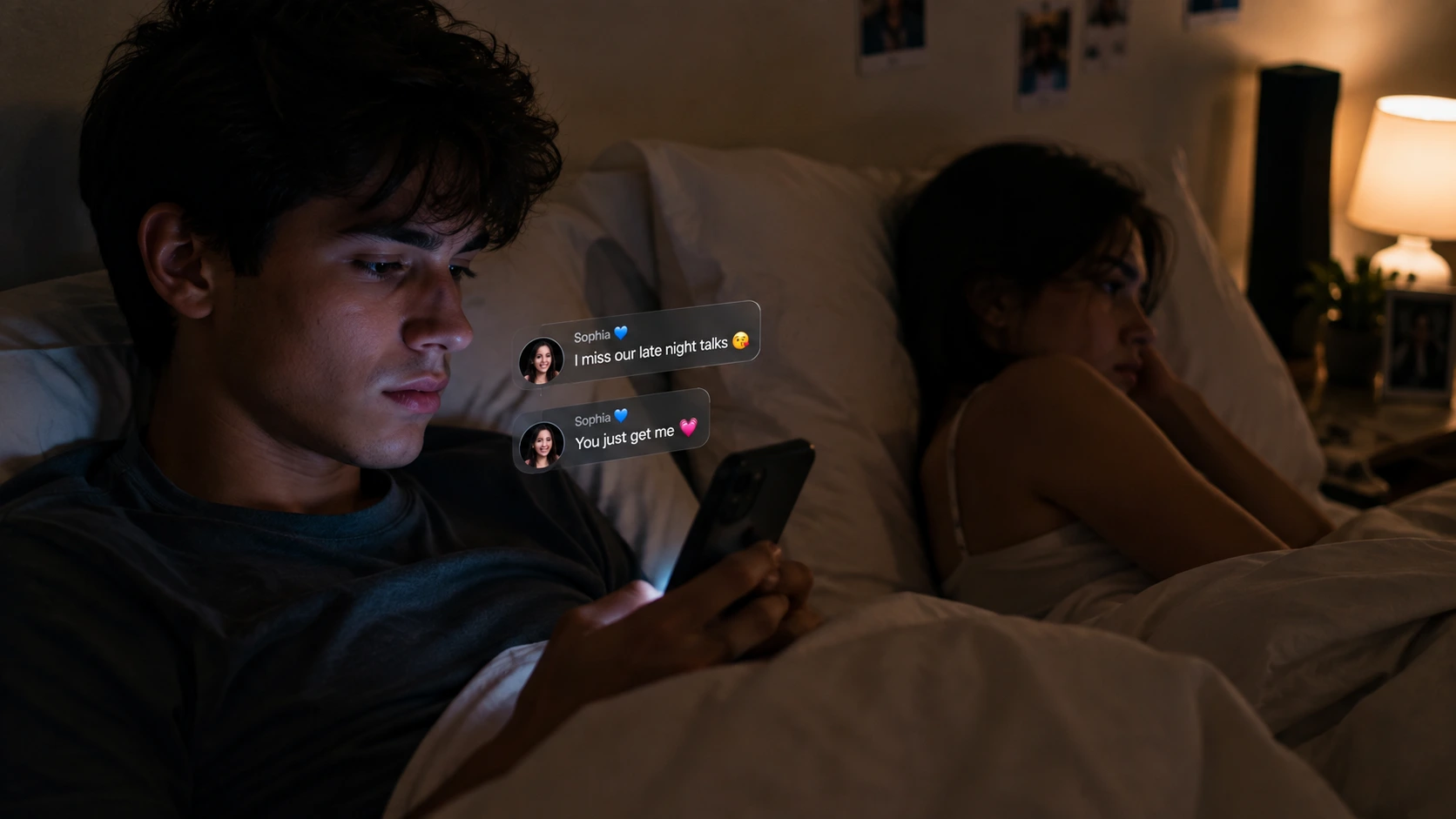
Three ingredients usually appear in an emotional affair:
- Emotional intimacy that competes with or replaces the primary partner.
- Secrecy or omission about the depth of the connection.
- Romantic energy, even if it is never spoken out loud.
Building healthy trust in relationships starts with understanding these three ingredients and being honest about which ones may be present.
Emotional Cheating vs Friendship
Not every close friendship is emotional cheating. In fact, healthy outside friendships are good for relationships. The question is how the connection is handled.
| Element | Healthy Friendship | Close Friendship | Emotional Affair |
|---|---|---|---|
| Transparency with partner | Fully open | Mostly open | Hidden or minimized |
| Emotional dependence | Low | Moderate | High, often exclusive |
| Romantic feelings | None | None or platonic warmth | Present, even if unspoken |
| Talking about the partner | Included naturally | Sometimes | Rarely mentioned |
| Secrecy of messages | None | Rare | Frequent |
| Comparison to partner | None | None | Common |
| Feels like it competes with the relationship | No | No | Yes |
A close friend can know a lot about your inner world without threatening your relationship. An emotional affair, on the other hand, tends to feed on secrecy and slowly pull energy away from the partnership.
Emotional Cheating vs Physical Cheating
| Aspect | Emotional Cheating | Physical Cheating |
|---|---|---|
| Nature | Emotional and intimate connection | Physical or sexual contact |
| Visibility | Often hidden and hard to detect | Usually leaves clearer signs |
| Duration | Can last months or years quietly | May be a one-time event or ongoing |
| Emotional impact | Deep sense of emotional betrayal | Deep sense of physical betrayal |
| Overlap | Can lead to physical cheating | Can start from emotional closeness |
Neither form is universally “worse.” Many people in couples counseling report that emotional infidelity feels more painful because it involves love, attention, and trust rather than a single act.
25 Signs of Emotional Cheating in a Relationship

Each sign below includes what it means, a realistic example, why it may matter, and when it may not actually be emotional cheating. Read them as patterns, not accusations. One behavior on its own rarely proves anything. Several appearing together over time are worth paying attention to.
1. Keeping Conversations Secret
The sign: Your partner hides who they are talking to or lies about it.
Example: Mia notices her husband quickly flips his phone face-down whenever a certain name lights up the screen. When she asks casually, he says, “Just work stuff,” and changes the topic.
Why it may matter: Secrecy suggests the conversation would upset you if you knew about it. Healthy communication does not usually require hiding.
When it may not be: Some people are simply private about their phones, or they may be planning a surprise, discussing sensitive work matters, or protecting someone else’s confidentiality.
2. Deleting Messages
The sign: Texts, DMs, or call logs disappear regularly with one specific person.
Example: After every conversation with an old college friend, Jordan deletes the entire thread.
Why it may matter: Deleting messages selectively can signal that the content is something the partner would not approve of.
When it may not be: Some people delete messages routinely for privacy, storage, or habit. Context matters more than the deletion itself.
3. Sharing Personal Problems With Someone Else First
The sign: Big feelings, wins, or worries are shared with a third person before the partner.
Example: Ana finds out her husband got a promotion from his coworker’s Instagram story, not from him.
Why it may matter: Emotional intimacy is built through being someone’s “first call.” Losing that role can be a quiet form of drifting.
When it may not be: Some topics feel safer to process with a therapist, sibling, or best friend first. That can be healthy, not a betrayal.
4. Emotional Dependence on Another Person
The sign: Your partner leans heavily on someone else for daily emotional support.
Example: Ethan tells his gaming friend about every argument he has with his girlfriend before he even tries to solve it with her.
Why it may matter: When another person becomes the emotional anchor, the relationship can lose its center.
When it may not be: Everyone needs outside support. Talking things through with one friend or family member is different from replacing your partner.
5. Constant Texting
The sign: Nonstop messaging with one specific person throughout the day.
Example: A married man texts his coworker over 200 times a day, including late at night.
Why it may matter: Constant contact often signals emotional prioritization.
When it may not be: Some jobs, hobbies, or long friendships involve frequent conversation. Volume alone is not proof.
6. Prioritizing Another Person Emotionally
The sign: Their feelings, moods, and needs come before the partner’s.
Example: Nia cancels date night to comfort a friend she just met online after every minor upset.
Why it may matter: Priorities show where the emotional investment is going.
When it may not be: A one-time crisis, a grieving friend, or a family emergency is not the same as a repeated pattern.
7. Flirting Disguised as Jokes
The sign: Playful, teasing, or romantic-sounding jokes with someone specific.
Example: “You’re the only one who really gets me 😉” typed to a coworker at midnight.
Why it may matter: Humor can become a socially acceptable cover for real feelings.
When it may not be: Some friend groups are naturally playful. Tone, frequency, and secrecy matter.
8. Comparing Their Partner to Someone Else
The sign: Bringing up the other person’s positive qualities during conflict.
Example: “Why can’t you listen the way she does?”
Why it may matter: Comparisons often reveal where the emotional pedestal is.
When it may not be: Occasional references to how others handle things are normal. Repeated comparisons are the pattern to watch.
9. Looking Forward to Talking With Another Person More Than Their Partner
The sign: Their face lights up for someone else in a way it no longer does at home.
Example: He seems tired around his wife but energized the moment his phone buzzes.
Why it may matter: Emotional energy is a limited resource. Where it flows, the connection grows.
When it may not be: Long-term couples naturally have quieter moments. It may reflect stress, not affection elsewhere.
10. Hiding Social Media Interactions
The sign: Blocking a partner from certain accounts, using close-friends lists, or private replies.
Example: Sofia has a separate Instagram account her boyfriend does not know about.
Why it may matter: Hidden platforms often exist to hide behavior.
When it may not be: Some people keep separate accounts for hobbies, work, or mental health reasons.
11. Seeking Validation Elsewhere
The sign: Constantly needing compliments, attention, or reassurance from someone specific.
Example: Sending selfies to a coworker to hear how good they look.
Why it may matter: Validation-seeking with one person can create a feedback loop that pulls attention from the relationship.
When it may not be: Everyone enjoys being appreciated. The concern is when it becomes emotional fuel from one particular source.
12. Sharing Intimate Details About the Relationship
The sign: Telling a third person private information about arguments, sex, or vulnerabilities.
Example: Telling a female friend, “We haven’t been intimate in months, honestly.”
Why it may matter: Sharing intimate details creates closeness with the outsider and distance from the partner.
When it may not be: Talking with a licensed therapist is not emotional cheating. Confiding briefly in a trusted friend for support can also be healthy.
13. Feeling Guilty About the Friendship
The sign: A quiet inner voice says, “I would not want my partner to see this.”
Example: He deletes a laugh reaction on his ex’s post before his wife sees it.
Why it may matter: Guilt is often the mind’s early warning that a boundary is being crossed.
When it may not be: Guilt can also come from insecurity or past experiences, not real wrongdoing.
14. Making Excuses to Spend Time Together
The sign: Manufacturing reasons to see or message a specific person.
Example: Volunteering for every project his coworker leads.
Why it may matter: Repeated effort to be near someone signals emotional gravity.
When it may not be: Genuine shared interests, teamwork, and mentorship exist too.
15. Avoiding Discussing the Friendship
The sign: Getting defensive or vague when the person’s name comes up.
Example: “Why do you always ask about him? Do you not trust me?”
Why it may matter: Defensiveness can protect something that feels risky to reveal.
When it may not be: If the partner has been accusatory or jealous in the past, defensiveness may be a reaction to that history rather than a sign of guilt. Learning how to deal with jealous people or your own jealous feelings matters here.
16. Emotional Withdrawal From the Partner
The sign: Less curiosity, less warmth, and less presence at home.
Example: He stops asking about her day and scrolls his phone during dinner.
Why it may matter: Emotional energy given elsewhere often means less remains for the relationship.
When it may not be: Burnout, depression, and grief can look identical from the outside.
17. Idealizing the Other Person
The sign: Treating the other person as perfect, understanding, or effortless.
Example: “She just gets me. It’s like we don’t even have to try.”
Why it may matter: Idealizing a person who does not share your daily life is easy. It sets up an unfair comparison with the partner.
When it may not be: Admiration for a friend’s qualities, without the romantic pedestal, is normal.
18. Physical Signals Even Without Contact
The sign: Blushing, nervous laughter, or a change in tone around a specific person.
Example: A man’s voice softens whenever his childhood friend calls.
Why it may matter: The body often reveals attraction the mind refuses to name.
When it may not be: Nostalgia, shyness, and long history can produce similar signals without romance.
19. Long Private Meetings With One Person
The sign: One-on-one lunches, walks, or drives that keep repeating.
Example: Weekly coffee with the same coworker, alone, that neither spouse knows about.
Why it may matter: Repeated private time with one person builds a shared world.
When it may not be: Genuine mentorship, project work, or long-standing friendship. Transparency is the key difference.
20. Late-Night Conversations
The sign: Long emotional talks after the partner is asleep.
Example: Two-hour phone calls with a coworker at 1 a.m.
Why it may matter: Nighttime hours are usually reserved for the closest person in someone’s life.
When it may not be: Different work schedules, time zones, or a friend in crisis can explain it.
21. Sudden Interest in Appearance for a Specific Setting
The sign: Extra grooming for work, gym, or events where one person will be.
Example: He starts wearing cologne to the office he never wore at home.
Why it may matter: Wanting to be seen by someone specific hints at attraction.
When it may not be: People invest in their appearance for many healthy reasons, including confidence and career.
22. Emotional Cheating on Social Media
The sign: Regular DM chats, cryptic likes, or emotional posts aimed at someone.
Example: She posts a sad song lyric that only one person in her comments seems to understand.
Why it may matter: Public and semi-public platforms create emotional performance loops.
When it may not be: Vague posts can be self-expression, not communication with a hidden audience.
23. Reconnecting With an Ex Secretly
The sign: Rekindled emotional closeness with a former partner without telling the current one.
Example: He replies to his ex’s “just wanted to check in” text and keeps a low-key conversation going for weeks.
Why it may matter: Old feelings, familiarity, and unfinished business make ex reconnections especially risky.
When it may not be: Shared children, mutual family, or long friendship can be legitimate. Transparency is what separates it from emotional cheating.
24. Gaslighting the Partner Who Asks
The sign: Turning honest questions into accusations of paranoia.
Example: “You’re being crazy. Why do you always assume the worst about me?”
Why it may matter: Making the partner feel unstable for noticing something real is a form of emotional harm on its own.
When it may not be: Sometimes the concern is genuinely unfounded, and both people are hurt. That still deserves a calm conversation, not silence or shaming.
25. Considering the Person as a “What If”
The sign: Daydreams about what life might be like with the other person.
Example: He catches himself imagining what a trip would look like with his coworker instead of his wife.
Why it may matter: Fantasies are internal, but they often shape choices over time.
When it may not be: Passing thoughts are human. They only become a problem when they start replacing effort inside the relationship.
How Emotional Cheating Usually Begins
Emotional affairs rarely start with a decision. They start with proximity, shared feeling, and small choices that seem harmless. Common starting points include:
- Workplace friendships. Long hours, shared stress, and inside jokes can build strong bonds. Emotional cheating with a coworker often begins with venting about home life.
- Social media and DMs. A single comment can open a private channel that grows over time.
- Gaming communities and Discord groups. Voice chats and shared victories can create emotional intimacy without either person naming it.
- Old friends reconnecting. A “just checking in” message from someone you once loved talking to can rekindle patterns quickly.
- Former partners. Familiarity, nostalgia, and unresolved history make emotional cheating with an ex especially common.
- Shared hobbies. Book clubs, running groups, and creative circles can turn into emotional refuges.
- Online communities and dating-adjacent apps. Even platforms not built for dating can host emotional affairs.
Understanding how emotional cheating starts is not about avoiding all outside relationships. It is about noticing when a connection begins to compete with the primary one.
Common Causes
No single cause explains emotional infidelity. Several factors often overlap:
- Poor communication. When couples stop sharing daily feelings, someone else may fill the gap.
- Loneliness. Loneliness inside a relationship is one of the strongest predictors of drifting.
- Unmet emotional needs. A need for admiration, curiosity, or comfort that stops being met at home may be met elsewhere.
- Lack of boundaries. Without clarity about what feels okay, small choices can escalate.
- Stress and life transitions. New parenthood, career pressure, illness, or moving can strain emotional bandwidth.
- Personal history. Past experiences like childhood rejection trauma or unresolved wounds can shape adult attachment patterns.
None of these excuses emotional cheating. They help explain how good people in loving relationships still end up crossing lines they never planned to cross.
Is Emotional Cheating Always Intentional?
No. Many people who end up in emotional affairs did not set out to hurt anyone. They simply followed comfort, connection, and small choices without checking whether those choices matched their values.
Intent and impact are not the same. A partner can be truly surprised by how far a friendship went and still cause real pain. Recognizing that gray area matters for two reasons:
- It keeps the conversation compassionate rather than combative.
- It reminds both partners that repair is possible when honesty replaces defensiveness.
How Emotional Cheating Affects Relationships

Even without physical betrayal, emotional cheating can shake a partnership in lasting ways.
Trust. The betrayed partner may begin to question memories, plans, and future promises. Rebuilding takes time.
Communication. Conversations become guarded. Small talk replaces real talk.
Emotional safety. The relationship stops feeling like a safe place to land.
Conflict. Arguments become more frequent and often circle back to the third person.
Intimacy. Physical closeness may fade as emotional closeness fades. For some couples, this is the first visible symptom.
For anyone navigating this, resources like healing from betrayal trauma can help name what is happening and provide a path forward.
What To Do If You Think Emotional Cheating Is Happening
- Pause before making assumptions. Notice your feelings without acting on them yet.
- Reflect on specific behaviors. Write down what you have actually seen, not what you fear.
- Have a calm conversation. Start with your feelings, not their guilt. “I’ve been feeling distant lately” opens more doors than “You’re cheating.”
- Discuss boundaries. Ask what feels okay for both of you regarding time, texting, and closeness with others.
- Listen actively. Let your partner respond without interrupting or preparing a rebuttal.
- Avoid spying, snooping, or revenge behavior. These often make repair harder even if they temporarily feel powerful.
- Seek couples counseling if needed. A therapist trained in relationship work can create a safer space than the kitchen table.
If you are unsure whether your instincts are pattern recognition or anxiety, working on how to stop being insecure in a relationship alongside honest conversation can help you sort out which is which.
How To Prevent Emotional Cheating
Prevention is not about surveillance. It is about closeness, honesty, and shared understanding.
- Healthy communication. Talk about small things daily so big things have somewhere to land.
- Weekly relationship check-ins. Ten minutes a week to ask, “How are we doing?” changes long-term outcomes.
- Clear boundaries. Agree on what kinds of friendships, contact, and closeness feel okay.
- Transparency. Both people know the important people in each other’s lives.
- Shared expectations. Discuss what you both consider crossing a line before something happens.
- Mutual respect. Curiosity about your partner does not fade because you settled in.
Practical tools like healthy relationship tips for couples and how to communicate better in relationships can support this work over time.
Healthy vs Unhealthy Boundaries
| Healthy Boundaries | Unhealthy Boundaries |
|---|---|
| Discussed openly with the partner | Enforced through control or fear |
| Flexible and reviewed over time | Rigid or one-sided |
| Respect both people’s needs | Prioritize one person’s comfort only |
| Built on trust | Built on suspicion |
| Include outside friendships | Ban all outside connections |
Can a Relationship Recover?
Yes, many relationships not only survive emotional cheating but grow stronger after it. Others do not, and that is also a valid outcome. Recovery usually depends on:
- Full accountability from the partner who crossed the line. Half-apologies do not heal.
- Consistency over time. Trust rebuilds through repeated small actions, not a single conversation.
- Ended contact with the third person, in most cases. Continued emotional access usually makes healing impossible.
- Professional support. A licensed couples counselor or family therapist can guide the process. Organizations like the American Association for Marriage and Family Therapy publish therapist directories to help couples find qualified professionals.
- Willingness on both sides. One person cannot rebuild trust alone.
There are no guarantees. Some couples decide together that the relationship no longer serves them. Whichever direction is chosen, honest reflection matters more than a quick fix.
Myth vs Fact
| Myth | Fact |
|---|---|
| Every close friendship is emotional cheating. | Close friendships can be healthy when they are transparent and do not replace the partner. |
| Men and women cannot be friends. | Cross-gender friendships can be healthy with clear boundaries and honesty. |
| Emotional cheating always leads to physical cheating. | It sometimes does, but many emotional affairs never turn physical. |
| Jealousy proves emotional cheating. | Jealousy reflects the person feeling it, not proof of behavior. |
| If nothing physical happened, no harm was done. | Emotional betrayal can feel as painful as physical betrayal for many partners. |
| Only unhappy people have emotional affairs. | Emotional cheating can happen in happy relationships when small choices go unchecked. |
Reflection Questions
Ask these of yourself before pointing them at your partner. They are meant for insight, not evidence gathering.
- Am I sharing my inner world with my partner first?
- Do I feel guilty about any current friendship? If so, why?
- Would I be comfortable if my partner read my last month of messages with this person?
- Am I comparing my partner to someone else during conflict?
- Have I started dressing, speaking, or behaving differently around one specific person?
- Am I keeping this connection a secret because it is embarrassing, or because it is meaningful?
Real-Life Example Scenarios
Below are twenty additional scenarios that show how emotional cheating can appear across different relationships. Each ends with a short reflection.
- Dating couple, gaming friend. Priya spends four hours nightly on Discord with a male gaming friend and hides the friendship from her boyfriend. Likely crosses a line because of the secrecy and time.
- Married couple, coworker lunches. Mark has lunch alone with the same colleague twice a week and never mentions it at home. The secrecy is what makes it concerning.
- Long-distance couple, old flame. During his fiancée’s deployment, David begins messaging his high school ex daily. Timing and intimacy suggest emotional cheating.
- College friendship. Two friends study together often and vent about their partners without any romantic feelings. Likely a healthy friendship.
- Coworker crisis. A colleague going through a divorce leans on your partner heavily for a few weeks. Not automatically cheating unless it continues past the crisis.
- Text messages. A married woman texts her yoga instructor throughout the day about meals, moods, and marriage stress. The nature of the sharing matters more than the volume.
- Social media DMs. He responds to a stranger’s flirty comment and keeps a light DM going. A one-time exchange may not be cheating, but an ongoing thread often is.
- Reconnection with ex. She adds her ex on LinkedIn and it turns into daily voice notes. Emotional cheating with an ex often escalates fast.
- Gaming community. A husband tells his guild leader everything about his marriage before he tells his wife. A shift in emotional priority.
- Book club friendship. Two people bond over shared reading, then include their spouses in the friendship. Healthy expansion, not cheating.
- Work travel. A partner books a work trip with the same colleague repeatedly and does not mention it. Secrecy is the flag, not the trip.
- Emotional venting online. Someone joins an anonymous forum to vent about their marriage. Not cheating, though it may signal unmet needs at home.
- Close female friend. A husband confides in his sister-in-law during a hard season. Support, not betrayal, if it stays transparent.
- Ongoing “just friends” narrative. He keeps defending the friendship using the phrase “we’re just friends” whenever it comes up. Repeated defensiveness is worth exploring.
- Compliment pattern. She saves flirty compliments from a coworker in a hidden folder. Suggests emotional investment.
- Wedding guest. A partner invites an old flame to their wedding without discussing it. Not automatically cheating, but a transparency issue.
- Late-night rides. He offers rides home to the same coworker every week and stays parked to talk. Regular one-on-one time deserves a conversation.
- Group friendship. A couple has a healthy mixed-gender friend group with balanced connections. Likely healthy.
- Support during grief. A friend supports your partner through the loss of a parent. Compassionate closeness, not cheating.
- Emotional cheating in marriage after kids. Post-baby exhaustion pulls a couple apart, and one partner leans on a coworker for emotional life. Common story, and one that recovery can address with intentional effort.
FAQ
What is emotional cheating?
Emotional cheating is forming a deep, romantic-leaning emotional connection with someone outside your relationship in a way that crosses your partner’s trust and boundaries. Physical contact is not required for it to feel like betrayal.
Is emotional cheating worse than physical cheating?
Neither is universally worse. Emotional cheating often feels heavier because it involves love, attention, and daily emotional investment rather than one physical event, while physical cheating carries its own layers of harm. Both can deeply hurt trust.
Can emotional cheating happen online?
Yes. Emotional cheating online is very common today through DMs, gaming voice chats, dating-adjacent apps, and social media. The lack of physical contact does not make it less painful.
Can emotional cheating happen without romantic feelings?
It is rare but possible in cases of extreme emotional dependence, where one person replaces the partner as the main confidant even without attraction. The betrayal there is about redirection of intimacy.
How do I know if my partner is emotionally cheating?
Look for patterns rather than single moments. Secrecy, hidden messages, comparisons, emotional withdrawal, and prioritizing another person over you across weeks or months are stronger signals than one late-night text.
Can emotional cheating be forgiven?
Yes. Many couples rebuild trust after emotional cheating, especially when the partner who crossed the line takes full accountability, ends the outside connection, and commits to consistent honesty over time.
How do couples rebuild trust after emotional cheating?
Through transparency, ended contact with the third person, honest conversations, professional support, and small consistent actions that align words with behavior over months, not days.
Is texting someone else emotional cheating?
Texting itself is not cheating. It becomes concerning when it is secret, romantically charged, replaces the partner as a first confidant, or continues after the partner has expressed discomfort.
Can workplace friendships become emotional affairs?
Yes. Emotional cheating at work is one of the most common paths, especially when shared hours, stress, and personal venting are involved. Healthy work friendships remain transparent and balanced.
Should I confront my partner immediately?
Not usually. A calm conversation about your feelings is more effective than a confrontation built on assumptions. Choose privacy, a good time, and language focused on your experience rather than accusations.
What counts as emotional cheating in marriage?
It varies by couple, but generally includes hidden emotional intimacy, romantic energy directed elsewhere, and secrecy. Married couples benefit from defining this together rather than assuming they already agree.
How can I stop emotional cheating I have been doing?
Be honest with yourself first, end or radically restructure the outside connection, tell your partner in an age-appropriate and honest way, and invest that emotional energy back into the relationship. Working with a licensed therapist helps many people through this process.
Closing Thought
Emotional cheating rarely arrives all at once. It builds quietly through unread signals, tired routines, and small choices no one meant to make into a pattern. The good news is that closeness can be rebuilt the same way, one honest choice at a time.
If something in this guide resonated with you, sit with it before acting on it. Then, if you can, share what you noticed with the person you love. The strongest relationships are not the ones that never face these questions. They are the ones where both people are willing to answer them together.
You May Also Like
 Family and Relationships
How We Strengthen Our Relationship in 24 Hours: A Real Couple’s Guide to a Healthy Relationship
 Friendship Quotes
200+ Thinking of You Quotes to Make Someone Feel Remembered
 Toxic Relationships
150+ Disappointment Relationship Priority Quotes: When You’re Not Their First Choice
 Things to Do
250+ Things to Talk About: Never Run Out of Conversation Ideas Again
 Family and Relationships
150+ Celebration of Life Quotes: Words to Celebrate Loved Ones
 Mental Health
How to Understand and Control Your Emotions
 Family and Relationships
150+ Questions to Ask in a Relationship: Get To Know Someone Better
 Healthy Relationships
How to Get Paid to Talk to Lonely People Online: 15+ Legit Options in 2026
 Family and Relationships