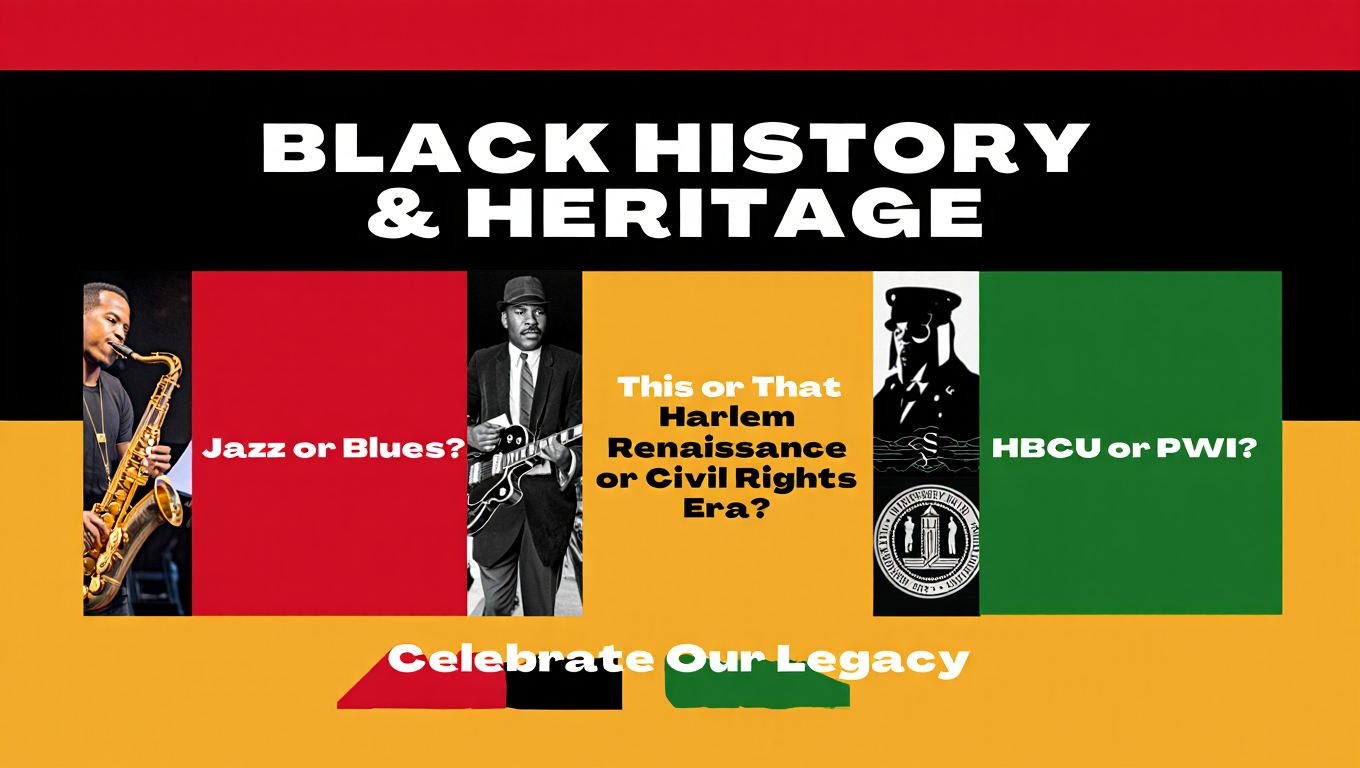
155+ This or That Questions for Black People: A Complete Cultural Connection Guide
This or that questions for Black people create meaningful connections by celebrating shared cultural experiences, traditions, and heritage. These conversation starters go beyond simple icebreakers. They acknowledge the richness of Black culture, from soul food debates to musical preferences that span generations.
Communication within the Black community carries unique cultural significance. These questions honor traditions, celebrate achievements, and create spaces for authentic dialogue. Whether you’re at a family reunion, church gathering, college social event, or professional networking session, culturally relevant questions help us connect on a deeper level.
We’ve compiled over 155 this or that questions for Black people that speak directly to our experiences. They touch on everything from Sunday dinners to musical legends, from hair care routines to historical figures who shaped our community. These aren’t just random questions. They’re conversation tools that let you explore identity, share memories, and build stronger relationships within your circle.
What Makes These Questions Different from Generic This or That Questions?
These this or that questions for Black people are specifically designed to honor our unique cultural experiences. Generic questions miss the nuances that make our community special. They don’t capture the Sunday morning church experience or the debate between East Coast and West Coast hip-hop.
Our questions recognize shared history and traditions. They validate experiences that only we truly understand. When someone asks you, “Cornbread or biscuits?” they’re not just asking about food preferences. They’re opening a door to memories of family gatherings and regional traditions.
Cultural specificity matters in conversations. It shows respect and creates comfort. These questions let people be their authentic selves without explanation. You don’t have to translate your experience. Everyone in the conversation already gets it.
Similar to this or that questions for cousins, these culturally specific questions strengthen family bonds. But they go further by celebrating Black excellence and shared cultural touchstones. They create space for pride in who we are.
How Can You Use This or That Questions for Black People Effectively?
Using this or that questions for Black people effectively requires understanding your audience and setting. Different situations call for different types of questions. A church youth group needs different energy than a college student mixer.
Start with lighter topics to warm up the conversation. Food questions work great as icebreakers. Everyone has opinions about mac and cheese or collard greens. These create instant connection without pressure.
Move to deeper topics once people feel comfortable. Questions about music, history, and identity come next. These reveal more about values and experiences. They spark discussions that can last for hours.
Pay attention to group dynamics. Some people open up quickly. Others need time to feel safe sharing. Let the conversation flow naturally. Don’t rush through questions just to finish your list.
Create space for explanations and stories. The best conversations happen when someone says “That reminds me of when…” These moments build community. They let us learn from each other’s experiences.
For family gatherings, mix generations together. Grandparents and grandchildren often have different answers to the same question. These differences spark fascinating discussions about how our culture evolves while keeping its core values.
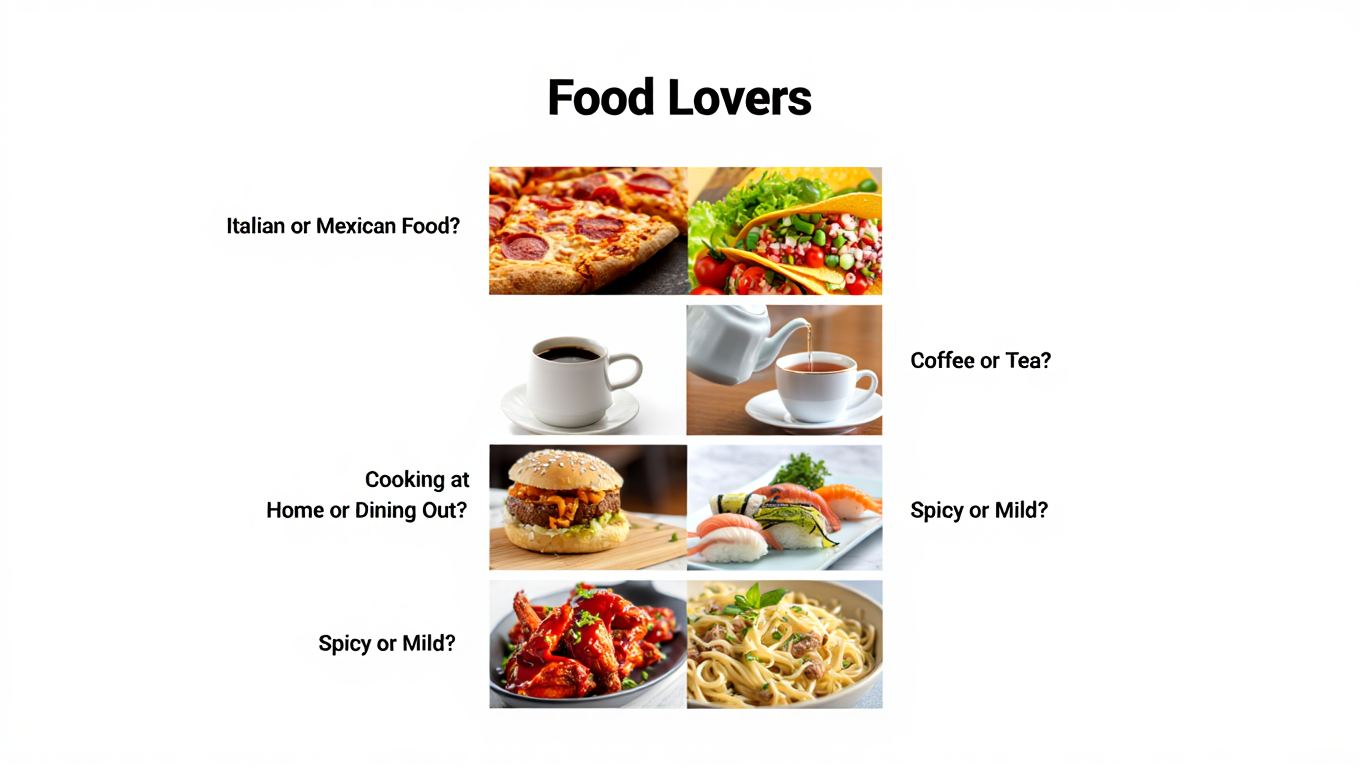
What Are the Best Food-Related This or That Questions for Black People?
Food questions connect us to childhood memories and family traditions. They’re perfect conversation starters because everyone eats. These questions often reveal regional differences and family secrets passed down through generations.
Here are 25 food-related this or that questions for Black people:
- Cornbread or biscuits with your meal?
- Sweet potato pie or peach cobbler for dessert?
- Collard greens or turnip greens on your plate?
- Fried chicken or baked chicken for Sunday dinner?
- Hot sauce on everything or just certain foods?
- Macaroni and cheese baked or stovetop?
- Catfish or tilapia when eating fish?
- Red Kool-Aid or purple Kool-Aid?
- Potato salad with mustard or without mustard?
- Grits or oatmeal for breakfast?
- Chicken wings or chicken legs at the cookout?
- Cabbage or green beans as your vegetable?
- Cornbread sweet or savory?
- Black-eyed peas or butter beans?
- Fried catfish or fried porgies?
- Banana pudding with vanilla wafers or Nilla wafers?
- Neck bones or oxtails when cooking?
- Hot water cornbread or regular cornbread?
- Pecan pie or sweet potato pie at Thanksgiving?
- Smothered pork chops or fried pork chops?
- Red beans and rice or dirty rice?
- Fried okra or boiled okra?
- Salmon croquettes or tuna croquettes?
- Chitterlings or pig feet?
- Lemonade from scratch or store-bought?
These questions tap into our soul food heritage. They remind us of family recipes and cooking techniques. Each answer tells a story about where someone grew up and who taught them to appreciate good food.
Much like this or that food questions that appeal to everyone, these culturally specific food questions create immediate rapport. They celebrate the culinary traditions that make our culture so rich and flavorful.
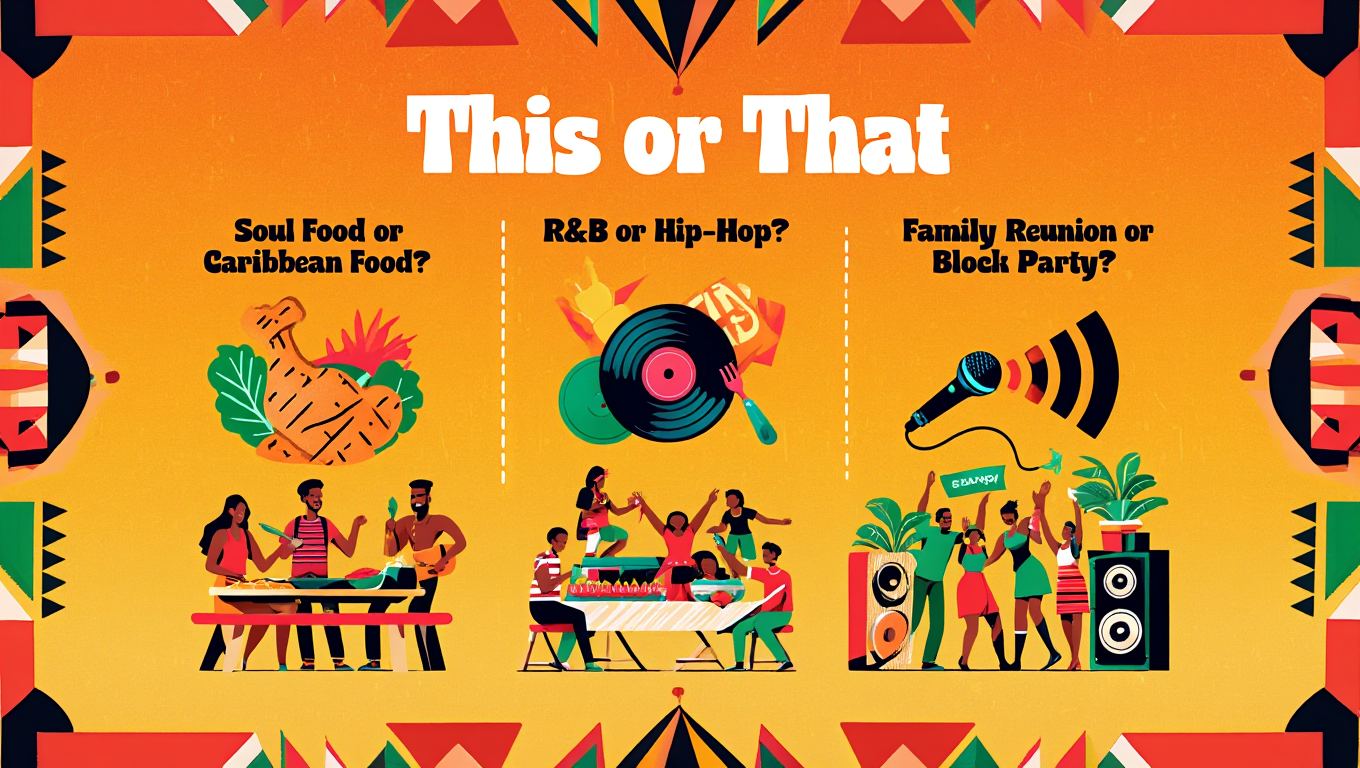
Which Music Questions Spark the Best Conversations?
Music runs deep in Black culture. It’s how we’ve told our stories and shared our pain and joy for generations. These this or that questions for Black people about music reveal musical preferences that often connect to age, region, and personal history.
Here are 30 music-related questions:
- Tupac or Biggie as the greatest rapper?
- Old school R&B or modern R&B?
- Gospel choir or praise and worship team?
- Jazz or blues when relaxing?
- Drake or Kendrick Lamar right now?
- Michael Jackson or Prince as the legend?
- Beyoncé or Rihanna in their prime?
- Atlanta trap or New York boom bap?
- Kirk Franklin or Fred Hammond for gospel?
- Neo-soul or classic soul music?
- Live concert or listening at home?
- Whitney Houston or Mariah Carey vocals?
- OutKast or A Tribe Called Quest?
- Mary J. Blige or Alicia Keys?
- Jay-Z or Nas in their catalog?
- Aretha Franklin or Patti LaBelle?
- Luther Vandross or Teddy Pendergrass?
- SZA or Summer Walker currently?
- West Coast or East Coast hip-hop?
- The Isley Brothers or The Temptations?
- Lauryn Hill solo or The Fugees?
- Stevie Wonder or Marvin Gaye?
- Usher or Chris Brown dancing?
- Anita Baker or Sade for slow jams?
- Lil Wayne or Eminem technically?
- Earth, Wind & Fire or Parliament-Funkadelic?
- Diana Ross or Gladys Knight?
- J. Cole or Big Sean lyrically?
- Jill Scott or Erykah Badu?
- James Brown or Ray Charles?
Music questions often lead to passionate debates. People defend their favorites with personal stories. These conversations reveal generational differences and shared cultural moments. They remind us how music has always been our voice.
What History and Heritage Questions Should You Ask?
History questions help us honor those who came before us. They celebrate achievements and acknowledge struggles. These this or that questions for Black people about heritage create opportunities to share knowledge and learn from each other.
Here are 25 history and heritage questions:
- Malcolm X or Martin Luther King Jr. philosophy?
- Historically Black College or Predominantly White Institution?
- Kwanzaa or traditional Christmas celebration?
- Black History Month focus or year-round education?
- Harriet Tubman or Sojourner Truth as historical figure?
- Maya Angelou or Langston Hughes poetry?
- Muhammad Ali or Jackie Robinson as sports pioneer?
- James Baldwin or Toni Morrison writing?
- Frederick Douglass or W.E.B. Du Bois intellectually?
- Rosa Parks or Claudette Colvin courage?
- Barack Obama first term or second term?
- The Harlem Renaissance or Black Arts Movement?
- Negro spirituals or freedom songs?
- African names or family heritage names?
- Juneteenth celebration or Fourth of July?
- The Black Panther Party or NAACP approach?
- Booker T. Washington or Marcus Garvey vision?
- Angela Davis or Assata Shakur activism?
- Duke Ellington or Count Basie jazz?
- Shirley Chisholm or Barbara Jordan politics?
- Thurgood Marshall or Clarence Thomas legacy?
- Jesse Jackson or Al Sharpton leadership?
- Ida B. Wells or Mary McLeod Bethune impact?
- Nat Turner or Denmark Vesey rebellion?
- Phyllis Wheatley or Paul Laurence Dunbar poetry?
These questions require cultural knowledge. They often lead to educational moments where younger people learn from elders. History discussions keep our heritage alive and relevant to current times.
Just as words of encouragement for him during hard times draw from wisdom passed down through generations, these historical questions connect us to the strength of our ancestors.
Which Entertainment and Pop Culture Questions Work Best?
Entertainment questions bring fun energy to any gathering. They’re less heavy than history questions but still culturally specific. These this or that questions for Black people about pop culture show generational differences and shared cultural moments.
Here are 30 entertainment questions:
- The Fresh Prince or Martin sitcom?
- Black Panther or Coming to America movie?
- Tyler Perry or Spike Lee directing?
- Insecure or Atlanta TV show?
- Eddie Murphy or Richard Pryor comedy?
- Verzuz battle or regular concert?
- BET Awards or Soul Train Awards?
- Living Single or Girlfriends show?
- The Color Purple movie or musical?
- Kevin Hart or Tiffany Haddish humor?
- Black-ish or The Cosby Show?
- Boyz n the Hood or Menace II Society?
- Denzel Washington or Samuel L. Jackson acting?
- Good Times or The Jeffersons sitcom?
- Sister Act or Waiting to Exhale?
- Scandal or How to Get Away with Murder?
- Madea or Big Momma character?
- Dave Chappelle or Chris Rock stand-up?
- Love Jones or Love & Basketball romance?
- Will Smith or Jamie Foxx versatility?
- A Different World or Moesha?
- Friday or Next Friday comedy?
- Viola Davis or Taraji P. Henson performance?
- Empire or Power drama?
- Roots miniseries or Eyes on the Prize documentary?
- Steve Harvey or Rickey Smiley morning show?
- Oprah’s talk show or Oprah’s network?
- 106 & Park or Rap City back then?
- Soul Food movie or Soul Food series?
- Halle Berry or Angela Bassett career?
Entertainment questions often bring laughter and nostalgia. They remind us of shared viewing experiences. These moments shaped how we see ourselves represented in media.
What Hair and Beauty Questions Resonate Most?
Hair holds special significance in Black culture. It’s personal, political, and cultural all at once. These this or that questions for Black people about hair and beauty touch on identity and self-expression in ways outsiders might not fully understand.
Here are 20 hair and beauty questions:
- Natural hair or relaxed hair?
- Locs or braids for protective styling?
- Edge control or no edge control?
- Bonnet or silk scarf at night?
- Shea butter or cocoa butter for skin?
- Box braids or Senegalese twists?
- Afro or twist-out hairstyle?
- Hot comb or flat iron?
- Durag or wave cap?
- Fenty Beauty or Black Opal makeup?
- Cantu or Shea Moisture products?
- Hair salon or doing it yourself?
- Beard oil or beard butter grooming?
- Press and curl or silk press?
- Cornrows or individual braids?
- Carol’s Daughter or Mielle Organics?
- Wash day weekly or bi-weekly?
- Barber shop or home haircuts?
- Wigs or weaves when styling?
- Loc retwist or free-form locs?
Hair conversations can get deep quickly. They touch on childhood memories of kitchen beauticians and Saturday salon trips. These discussions often reveal changing attitudes about natural beauty and self-acceptance.
The journey to loving our natural features connects to broader themes of self-worth. Similar to building self-confidence, embracing our hair and beauty choices requires inner strength and cultural pride.
Which Lifestyle and Daily Life Questions Create Connection?
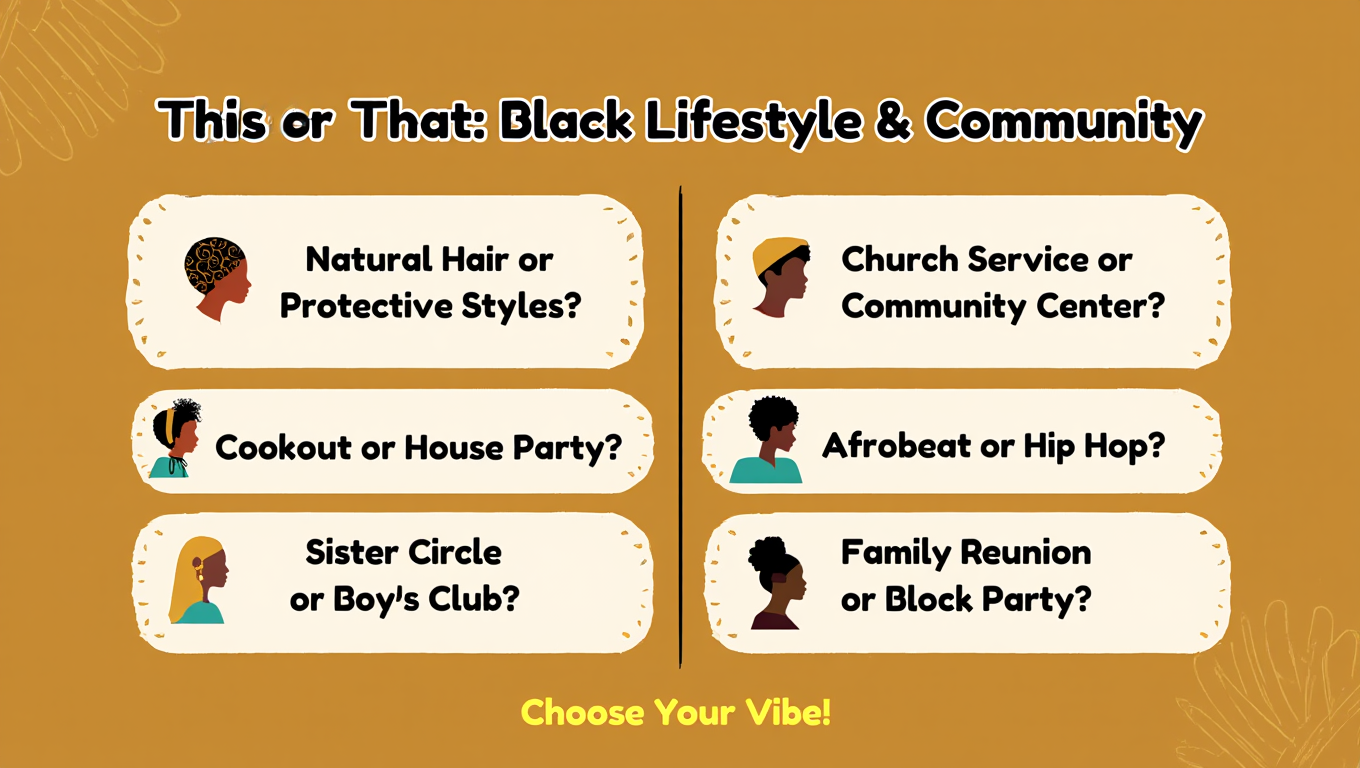
Everyday life questions reveal how culture shows up in small moments. These this or that questions for Black people about lifestyle choices highlight the unique ways we navigate the world. They’re relatable and often surprisingly revealing.
Here are 25 lifestyle questions:
- Church every Sunday or occasional attendance?
- Cookout or formal dinner party?
- Group chat or individual texts?
- Auntie advice or mama’s guidance?
- Stepping or line dancing at events?
- Spades or dominoes game night?
- Dollar store or name brand shopping?
- Big Mama’s house or your own place for holidays?
- Black barber or any barber available?
- Soul food restaurant or Caribbean restaurant?
- Family reunion every year or skip some years?
- Voice your opinion or keep the peace?
- Direct communication or read between lines?
- Early to church or sliding in late?
- Loud family or quiet family gatherings?
- City living or suburban life?
- HBCU homecoming or regular college homecoming?
- Block party or house party?
- Public transportation or own car?
- Matching outfits or coordinated colors for family photos?
- Sunday best or casual church attire?
- Mama’s cooking or restaurant food?
- Group vacation or solo travel?
- Speaking up or letting it go?
- Traditional wedding or modern ceremony?
These lifestyle questions show how culture influences daily decisions. They reveal values about family, community, and tradition. The answers often spark stories about memorable moments and family characters everyone loves.
How Do Regional Differences Affect These Questions?
Regional differences create fascinating variations in Black culture. Southern traditions differ from Northern urban experiences. West Coast culture has distinct flavors from East Coast life. These this or that questions for Black people often reveal where someone grew up or where their family has roots.
Geography shapes food preferences significantly. Southerners might prefer sweet tea while Northerners choose something different. Coastal regions have seafood traditions that inland areas don’t share. These differences enrich our culture rather than divide it.
Language and expressions vary by region too. Slang from Atlanta sounds different from Chicago vernacular. The way people talk reveals migration patterns and family history. These linguistic differences add texture to conversations.
Church culture also has regional flavors. Southern Baptist services differ from Northern AME traditions. Gospel music preferences often connect to geographical roots. Understanding these variations helps us appreciate our culture’s diversity.
Similar to how this or that questions for elementary students adapt to different age groups, regional questions need cultural awareness. They work best when they honor the specific experiences of your conversation partners.
What Sports and Athletics Questions Engage People?
Sports hold special place in Black culture. We’ve excelled in athletics despite facing barriers. These this or that questions for Black people about sports celebrate achievements while revealing personal preferences and loyalties.
Here are 20 sports questions:
- LeBron James or Michael Jordan as GOAT?
- Serena Williams or Venus Williams tennis?
- Muhammad Ali or Mike Tyson boxing?
- Football or basketball to watch?
- Steph Curry or Kobe Bryant shooting?
- Simone Biles or Jackie Joyner-Kersee gymnastics?
- Baseball or soccer growing up?
- Allen Iverson or Dwyane Wade style?
- Track and field or swimming?
- College sports or professional sports?
- Kareem Abdul-Jabbar or Shaquille O’Neal center?
- Usain Bolt or Jesse Owens legacy?
- Tom Brady respect or dismiss?
- Magic Johnson or Larry Bird rivalry?
- Charles Barkley or Shaquille O’Neal commentary?
- Deion Sanders or Randy Moss football?
- Playing sports or watching sports?
- Floyd Mayweather or Manny Pacquiao fight?
- Candace Parker or Lisa Leslie WNBA?
- Fantasy sports or casual watching?
Sports questions often lead to heated but friendly debates. They connect across generations because sports history runs deep. These conversations honor Black excellence in athletics while showing individual preferences.
Which Relationship and Family Questions Matter Most?
Family structure and relationships carry special weight in Black culture. Extended family often functions differently than in other communities. These this or that questions for Black people about relationships explore values and expectations around connection.
Here are 20 relationship and family questions:
- Big family gatherings or small intimate dinners?
- Stay local near family or move for opportunities?
- Strict parents or lenient parents growing up?
- Auntie raising you or grandma raising you?
- Family business or corporate career?
- Keep family drama private or air it out?
- Sunday dinners required or optional?
- Marry within culture or date anyone?
- Kids call adults by first name or use titles?
- Multi-generational home or nuclear family home?
- Church family or blood family priority?
- Save money or spend on experiences?
- Traditional gender roles or modern flexibility?
- Family loan or bank loan?
- Help family members or focus on yourself?
- Speak to elders directly or through parents?
- Family secrets stay buried or truth comes out?
- Strong opinions or diplomatic approach?
- Blood family or chosen family loyalty?
- Immediate help when asked or boundaries first?
Family questions reveal deep values. They show how community and kinship shape identity. These discussions often highlight generational shifts in thinking while maintaining core values.
Understanding healthy family dynamics matters deeply. Resources like healthy relationship tips for couples and how to communicate better in relationships help us build stronger connections within our families and partnerships.
How Can These Questions Build Stronger Community Bonds?
Community building requires intentional connection. These this or that questions for Black people serve as tools for creating safe spaces. They validate experiences and celebrate shared identity in ways that strengthen bonds.
Start by creating comfortable environments. People open up when they feel safe. Use these questions in spaces where Black excellence is centered and celebrated. This might be cultural organizations, affinity groups, or family gatherings.
Encourage storytelling beyond simple answers. When someone chooses “cornbread,” ask them about their grandmother’s recipe. These stories pass down traditions and knowledge. They keep our culture alive and vibrant.
Use questions to bridge generational gaps. Young people and elders often have different perspectives. These differences create learning opportunities. Grandparents share history while youth bring fresh viewpoints.
Respect diverse experiences within Blackness. Not everyone connects to every question. Some grew up outside traditional Black communities. Others have mixed heritage. Create space for all experiences under the Black umbrella.
Document these conversations when appropriate. Write down recipes shared. Record stories told. These become family archives and community treasures. They preserve our culture for future generations.
What Are Common Mistakes to Avoid When Using These Questions?
Using this or that questions for Black people effectively means avoiding certain pitfalls. Even well-intentioned people sometimes make mistakes that shut down conversation rather than opening it up.
Don’t treat these questions as entertainment for non-Black audiences. They’re not performance pieces. They’re community-building tools designed for us. Using them inappropriately diminishes their value and disrespects the culture.
Avoid forcing people to choose when both options feel limiting. Sometimes someone loves both options equally. Other times neither resonates. Let people explain their nuanced positions. Real conversations rarely fit into neat boxes.
Don’t use these questions to police Blackness. Not knowing certain references doesn’t make someone less Black. Experience varies widely based on geography, family, and personal history. Make space for different types of Black experience.
Stop making assumptions based on answers. Someone who prefers baked chicken isn’t trying to be “white.” Someone who chooses Tupac over Biggie isn’t wrong. Preferences don’t indicate authenticity or lack thereof.
Avoid turning conversations into competitions. These questions aren’t tests of cultural knowledge. They’re connection tools. When someone doesn’t know a reference, teach them. Share knowledge generously rather than gatekeeping.
Don’t rush through questions just to finish your list. Quality matters more than quantity. One deep conversation beats twenty superficial exchanges. Let discussions unfold naturally without forcing pace.
How Do You Adapt Questions for Different Age Groups?
Different ages need different approaches to this or that questions for Black people. What works for college students might not resonate with senior citizens. Adapting questions ensures everyone can participate meaningfully.
For children and teens, focus on current culture and kid-friendly topics. Ask about popular music artists they know. Include questions about school experiences and favorite foods. Keep it light and age-appropriate.
Young children might enjoy simpler questions:
- Chicken nuggets or chicken tenders?
- Cartoon Network or Disney Channel?
- Recess or lunch time at school?
- Video games or playing outside?
Just like this or that questions for kindergarten keep things simple, questions for young Black children should be accessible while still honoring culture.
Teenagers connect with questions about social media, current music, and modern issues:
- Instagram or TikTok for social media?
- Old school hip-hop or new school rap?
- Viral dances or original choreography?
- Group chats or DMs?
College students and young adults appreciate questions with more depth. They can handle historical references and complex cultural discussions. Mix entertainment with substance in your questions.
Older adults enjoy questions that honor their experiences and knowledge. Include more historical figures and classic cultural references. Ask about traditions they grew up with and how things have changed.
Senior citizens might prefer:
- Sit-down dinner or buffet style?
- Choir singing or soloist performance?
- Radio or television growing up?
- Handwritten letters or phone calls?
Adapt your approach but maintain respect across all ages. Young people have valid perspectives. Elders carry wisdom. Both deserve equal respect in conversations.
Can These Questions Work in Professional Settings?
Professional environments need careful navigation. These this or that questions for Black people can build workplace community, but context matters. Understanding when and how to use them prevents awkwardness or inappropriateness.
Employee resource groups for Black professionals create ideal spaces. These affinity groups exist specifically to support Black employees. Using culturally specific questions here strengthens bonds and creates belonging.
Team building activities at diverse companies require more consideration. Not every workplace question needs cultural specificity. Save deeply cultural questions for spaces where everyone shares the background to appreciate them.
Networking events for Black professionals benefit from these questions. They break ice quickly and establish common ground. When everyone in the room shares cultural background, these questions create instant rapport.
Conference meet-ups and industry gatherings work well too. Black professionals from different companies connect over shared experiences. These questions facilitate meaningful networking beyond business cards.
Mentorship relationships between Black professionals can incorporate these questions. They build trust and understanding. A mentor asking these questions shows cultural awareness and personal interest.
Avoid using these questions in predominantly non-Black spaces unless specifically appropriate. They’re not educational tools for teaching non-Black coworkers about Blackness. They’re connection tools for our community.
Professional settings still allow for cultural celebration. Similar to inspirational career quotes that motivate us in workplace contexts, culturally relevant questions can build community while maintaining professionalism.
What Role Does Humor Play in These Conversations?
Humor runs deep in Black culture. It’s how we’ve survived hardship and celebrated joy. These this or that questions for Black people often bring laughter because they touch on shared experiences that only we find funny.
Inside jokes create cultural intimacy. When you ask “Hot sauce or more hot sauce?” everyone laughs because they understand. Non-Black people might not get why it’s funny. That’s okay. Some humor belongs to us.
Playful debates about food, music, and culture bring people together. Arguing passionately about whether cornbread should be sweet creates bonding moments. Everyone knows it’s not serious, but the energy connects people.
Self-deprecating cultural humor works in these conversations. We laugh at our own tendencies and quirks. This humor comes from love and understanding, not mockery. It’s permission to be imperfect together.
Generational humor shows up frequently. Younger people don’t understand why elders love certain things. Older folks shake their heads at youth culture. These differences create funny moments when discussed with respect.
Story-telling mixed with humor makes conversations memorable. Someone answers a question then launches into a hilarious story. Everyone ends up crying from laughter. These moments become legendary.
Just like funny quotes about family that capture our relationships with love and laughter, these questions let us enjoy the funny parts of our shared culture.
How Do You Handle Disagreements That Arise?
Passionate discussions sometimes become heated. These this or that questions for Black people can spark strong opinions. Managing disagreements well keeps conversations productive and relationships intact.
Remember that different doesn’t mean wrong. Regional variations create legitimate differences in food, language, and traditions. Someone’s experience isn’t invalid just because it differs from yours.
Keep debates friendly and respectful. Arguing about Tupac versus Biggie should be fun, not hostile. When tensions rise, acknowledge both sides have merit. Music preference doesn’t define character.
Avoid personal attacks over cultural choices. Someone who doesn’t eat certain soul foods isn’t betraying the culture. They might have dietary restrictions, different regional background, or personal preferences.
Use disagreements as learning opportunities. When someone shares an unfamiliar tradition, ask questions. Different branches of Black culture have unique practices. Curiosity builds bridges.
Know when to agree to disagree. Some debates have no resolution. East Coast and West Coast hip-hop fans will never fully agree. That’s fine. Diversity makes culture richer.
Step back if conversations become genuinely contentious. These questions should build community, not damage it. If someone feels attacked or defensive, redirect to lighter topics.
Understanding how to deal with family members that disrespect you helps navigate difficult moments. Some techniques for handling family conflict apply to cultural discussions too.
What’s the Best Way to Introduce These Questions?
Starting conversations with this or that questions for Black people requires some finesse. Good introductions set the right tone and make people comfortable participating.
Begin by explaining your purpose. Let people know you want to create connection and celebrate culture. This frames questions as community-building rather than random interrogation.
Start with easy, fun questions. Food questions work perfectly as icebreakers. Everyone has opinions about mac and cheese. These low-stakes questions warm people up.
Share your own answers first sometimes. This models vulnerability and sets expectations. When you go first, others feel safer opening up.
Read the room continuously. Some groups jump right in enthusiastically. Others need more warming up. Adjust your pace based on group energy.
Mix question types throughout conversation. Don’t stay on one topic too long. Jump from food to music to current events. Variety maintains interest.
Allow natural tangents and stories. The best conversations wander from the original question. Let people share memories and experiences fully. Don’t rigidly stick to your list.
Create space for everyone to participate. Some people dominate conversations. Others stay quiet. Directly invite quiet folks to share while giving talkers gentle redirection.
Similar to small talk questions that ease into deeper conversation, these cultural questions work best with a thoughtful introduction and pacing.
How Can You Use These Questions in Virtual Settings?
Virtual gatherings became common recently. These this or that questions for Black people work excellently in online spaces. They create connection despite physical distance.
Video call icebreakers benefit from quick-fire questions. Go around the virtual room asking each person one question. Keep energy high and pace quick initially.
Social media polls engage broader audiences. Post questions on Instagram stories or Twitter polls. See how your followers respond. These create fun engagement and reveal interesting patterns.
Group chats allow asynchronous participation. Drop questions in family or friend group chats. People answer when they have time. Conversations develop over hours or days.
Virtual game nights incorporate these questions perfectly. Use them between game rounds or as warm-up activities. They set a culturally grounded tone for the evening.
Online book clubs and discussion groups use these questions to build community. Before discussing the book, spend time connecting personally. Cultural questions create intimacy virtually.
Zoom backgrounds and virtual settings can reflect the questions. If asking about food, people might show their kitchens. If discussing music, backgrounds might show album covers.
Virtual family reunions need strong connection activities. These questions help distant relatives bond despite not being physically together. They maintain cultural ties across geography.
Recording virtual conversations preserves them. With permission, record discussions for family archives. Future generations appreciate hearing elders’ voices and stories.
What Questions Work Best for Dating and Relationships?
Dating within the Black community has unique considerations. These this or that questions for Black people help potential partners assess compatibility on cultural values and experiences.
Here are 15 dating-focused questions:
- Active church member or spiritual but not religious?
- Big wedding or small intimate ceremony?
- Live near family or prioritize career location?
- Soul food cooking skills or willing to learn?
- R&B for romance or hip-hop for everything?
- Traditional dating or modern approaches?
- Meet at church or meet anywhere?
- Family approval matters or follow your heart?
- Same cultural background or open to variety?
- Cultural traditions important or create new ones?
- HBCU pride or school doesn’t matter?
- Community involvement or private life?
- Raising kids with cultural focus or general approach?
- Natural hair preference or no preference?
- Black-owned business support or best deal matters?
These questions reveal values beyond surface compatibility. They show whether someone prioritizes community, tradition, and cultural connection. These factors significantly impact long-term relationship success.
Dating questions also assess communication styles. Black families communicate differently than mainstream culture sometimes. Direct communication versus indirect, loud versus quiet, expressive versus reserved—these differences matter in partnerships.
Resources like questions to ask in a relationship provide general relationship guidance. Cultural questions add another layer of understanding specific to our community’s needs.
How Do Generational Perspectives Differ on These Questions?
Generational differences create fascinating dynamics with this or that questions for Black people. Baby Boomers, Gen X, Millennials, and Gen Z have distinct perspectives shaped by their times.
Baby Boomers grew up during Civil Rights Movement. Their answers often reflect that struggle and progress. They remember segregation and fought for rights we sometimes take for granted. Their perspective carries historical weight.
Gen X came of age during hip-hop’s golden era. They bridge traditional and modern Black culture. They remember life before internet but adapted to technology. Their answers often balance old school and new school thinking.
Millennials grew up with representation increasing in media. They saw more Black faces in positions of power. Their cultural references include both traditional soul food and fusion cuisines. They question some traditions while honoring others.
Gen Z navigates digital spaces and social justice differently. They’re unapologetically Black while embracing global influences. Their music preferences span decades through streaming. They challenge gatekeeping while respecting elders.
These generational differences enrich conversations. When grandparents and grandchildren answer the same question differently, beautiful discussions emerge. Young people learn history. Elders see culture evolving.
Understanding different generations prevents judgment. Someone’s answer reflects their experience, not their authenticity. An elder preferring vinyl records over streaming isn’t wrong. A teenager not knowing classic soul artists isn’t culturally lost.
What Are Creative Ways to Document These Conversations?
Preserving conversations creates lasting cultural records. These this or that questions for Black people generate stories worth saving. Several methods capture these precious moments.
Audio recordings capture voices and laughter. Record family gatherings or friend discussions. These recordings become treasured keepsakes. Future generations hear ancestors’ actual voices.
Video recordings add visual elements. Seeing facial expressions and body language enriches stories. Film family reunions using these questions as conversation prompts.
Written journals document answers and stories. Create a family book where everyone writes their responses. Add context and memories to each answer. This becomes a heritage project.
Social media creates digital archives. Post questions and responses on family Facebook groups or private Instagram accounts. These stay accessible for distant relatives.
Scrapbooks combine photos, written responses, and memorabilia. Create visual records of gatherings where these conversations happened. Include recipes, programs, and mementos.
Podcast-style recordings turn conversations into shareable content. Some families create private podcasts documenting elder stories. These preserve wisdom and cultural knowledge.
Digital spreadsheets track answers across family members. See patterns in how different branches answer. Notice regional or generational trends within your own family.
Similar to how happy birthday wishes for family members preserve celebration memories, documenting these cultural conversations creates lasting legacy for future generations.
How Can Schools and Youth Programs Use These Questions?
Educational settings benefit from culturally relevant engagement. These this or that questions for Black people help youth programs celebrate identity while building community among young Black students.
After-school programs use questions during snack time or transitions. They create positive cultural identity development. Young people see their experiences validated and celebrated.
Mentorship programs for Black youth incorporate these questions. Mentors and mentees bond over shared cultural touchstones. These conversations build trust faster than generic icebreakers.
Student affinity groups at schools create belonging. Black Student Unions use these questions at meetings. They help members from different backgrounds find common ground.
Summer camps serving Black youth benefit from cultural programming. These questions work during campfire talks or team-building activities. They center Blackness positively.
Leadership development programs prepare young Black leaders. Cultural grounding strengthens leadership identity. Understanding heritage builds confidence for future challenges.
College prep programs help students articulate identity. These questions prepare youth for diversity essays and interview questions. They help students reflect on what their culture means personally.
Youth religious programs at Black churches already have cultural foundation. These questions deepen conversations beyond Sunday school lessons. They connect faith to daily cultural life.
Similar to motivational quotes for students to work hard, culturally specific questions inspire young Black students by connecting them to heritage and community.
What Questions Address Current Cultural Moments?
Culture constantly evolves. These this or that questions for Black people need regular updating to stay relevant. Current moments and trends deserve acknowledgment in conversations.
Here are 10 contemporary questions:
- Support Black Lives Matter actively or privately?
- HBCU revival excitement or always valued them?
- Natural hair movement participant or always been natural?
- Cancel culture supporter or believe in redemption?
- Reparations advocate or focus elsewhere?
- Code-switching necessary or always authentic?
- Pan-Africanism important or focus on African American experience?
- Voting every election or disillusioned with system?
- Gentrification fighter or opportunity seeker?
- Representation in media enough or need ownership?
Contemporary questions require sensitivity. People hold strong views on current issues. Create space for disagreement without damaging relationships.
Current events shape these questions. Social movements, political changes, and cultural shifts all influence what we discuss. Stay aware of what’s happening in our community.
Younger generations often lead cultural evolution. Listen when they introduce new perspectives. Their questions about identity and justice push culture forward.
Balance contemporary issues with timeless topics. Not every conversation needs heaviness. Mix current events questions with lighter cultural preferences.
How Do These Questions Support Mental Health and Wellness?
Connection protects mental health. These this or that questions for Black people create community that supports psychological wellbeing. Cultural connection reduces isolation and validates experience.
Shared cultural understanding reduces code-switching stress. In spaces where everyone gets the references, you can be fully yourself. This authenticity reduces mental burden.
Laughter and joy promote wellness. These questions generate humor and positive feelings. Celebrating culture together combats depression and anxiety.
Intergenerational connection provides perspective. Talking with elders reminds us we’re part of something bigger. Their resilience inspires our own strength.
Validation of experience matters deeply. When someone understands your truth without explanation, you feel seen. This recognition supports mental health.
Cultural pride counters negative stereotypes. Centering positive aspects of Blackness builds self-esteem. These questions celebrate what makes our culture beautiful.
Community support catches people when struggling. Regular connection through cultural conversations helps identify when someone needs support. We watch out for each other.
Just as inspirational quotes for depression offer comfort during dark times, culturally grounded conversations provide community support that protects mental wellbeing.
What Makes a Good Answer to These Questions?
Good answers go beyond simple choices. These this or that questions for Black people work best when responses include stories, reasoning, and personal context.
Explain your choice with brief background. Don’t just say “cornbread.” Say “Cornbread, because my grandmother made it every Sunday and taught me her recipe.” Context makes answers meaningful.
Share regional or family influences. “My family’s from Louisiana, so we always did red beans and rice.” This information educates others and honors your roots.
Acknowledge when both options appeal. “That’s tough because I love both, but if I had to choose…” Nuanced answers feel more authentic than forced simplicity.
Ask follow-up questions about others’ answers. “You chose catfish? Where do you get good catfish around here?” This shows genuine interest and extends conversation.
Respect different answers without judgment. Someone’s preference doesn’t invalidate yours. “I never thought about it that way, but that makes sense.” This validates their experience.
Use answers as springboards to related topics. One question about music leads to concert memories, which leads to family stories. Let conversations flow naturally.
Be honest about unfamiliarity when appropriate. “I actually don’t know much about that. Can you explain?” This creates teaching moments without shame.
How Can These Questions Bridge Different Black Diaspora Communities?
Black experience extends beyond African American culture. These this or that questions for Black people can adapt to include Caribbean, African, and Afro-Latino perspectives.
Acknowledge cultural diversity within Blackness. Not all Black people share the same foods, music, or traditions. Create space for this variety in conversations.
Learn from differences rather than debating authenticity. When someone shares Jamaican or Nigerian traditions, listen curiously. These expand your understanding of global Blackness.
Find common ground across diaspora. Colonialism, resilience, strong family values, rich musical traditions—these connect Black people worldwide. Build on commonalities.
Adapt questions to include broader experiences:
- Jerk chicken or fried chicken?
- Afrobeats or hip-hop currently?
- Jollof rice or red beans and rice?
- West Indian carnival or African American celebration?
- Fela Kuti or James Brown funk?
Language differences create learning opportunities. Caribbean patois, African languages, and African American vernacular all deserve respect. Ask about words and phrases you don’t know.
Immigration experiences shape identity differently. First-generation Black Americans navigate culture differently than those with deep American roots. Both experiences matter.
Creating inclusive spaces welcomes all Black people. Questions should celebrate rather than gatekeep. Our diversity strengthens rather than divides us.
What Are the Long-Term Benefits of Regular Cultural Conversations?
Consistent use of this or that questions for Black people creates lasting positive impacts. Regular cultural conversations strengthen community bonds and preserve heritage over time.
Family cohesion improves through shared cultural activities. Regular gatherings using these questions become traditions. Children grow up connected to heritage and extended family.
Cultural knowledge transfers between generations. Elders share wisdom through these conversations. Young people absorb history naturally rather than through formal lessons.
Identity development benefits from cultural grounding. Children who regularly discuss culture develop stronger sense of self. They understand where they come from and feel proud.
Communication skills improve through regular meaningful conversation. Families who talk deeply connect better. These skills transfer to other relationships.
Community networks strengthen through consistent engagement. Regular cultural gatherings build trust. People know they belong to something bigger than themselves.
Mental health benefits accumulate over time. Regular connection and validation create resilient communities. People face challenges better when grounded in culture and community.
Legacy building happens through documented conversations. Future generations inherit recorded stories and cultural knowledge. Your family’s unique experience gets preserved.
Similar to personal growth tips that compound over time, regular cultural engagement creates lasting positive impact on individuals and communities.
Conclusion: Building Community Through Cultural Connection
This or that questions for Black people serve a purpose beyond entertainment. They’re tools for building community, celebrating heritage, and strengthening bonds within our culture. These 155+ questions create spaces where we can be fully ourselves without translation or explanation.
Use these questions intentionally to create connection. Whether you’re at a family reunion, church gathering, or friend hangout, culturally specific conversations matter. They validate experiences and honor the richness of Black culture.
Remember that good conversations require respect and openness. Different answers reflect diverse experiences within Blackness. Regional variations, generational differences, and personal backgrounds all shape responses. Make space for this diversity while celebrating what unites us.
Start conversations today. Pull out these questions at your next gathering. Watch how they transform small talk into meaningful connection. Document the stories that emerge. Preserve our culture for future generations.
Our strength lies in community. These simple questions remind us we’re connected through shared experiences, values, and heritage. They celebrate who we are while honoring who came before us. Use them to build the kind of community we all deserve.
Take action now. Save this list. Share it with family and friends. Create your own questions based on your unique cultural experience. Keep the conversation going because our stories matter and our culture deserves celebration.
Frequently Asked Questions
Are these questions only for African Americans?
No, these this or that questions for Black people work for anyone of African descent. They include African American culture but can adapt to Caribbean, African immigrant, and Afro-Latino experiences. The questions celebrate Black culture broadly while acknowledging that experiences vary across the diaspora. Feel free to modify questions to fit your specific cultural background.
Can non-Black people use these questions?
Yes, but with important considerations. Non-Black people can use these questions in appropriate contexts, such as learning about Black culture respectfully or facilitating discussions in educational settings. However, they shouldn’t use them as entertainment or treat them as performance. The questions work best when used by Black people to connect with each other.
How many questions should I ask in one conversation?
No, there’s no magic number for questions. Start with 5-10 questions and see how conversation flows. Some questions spark long discussions with stories and tangents. Others get quick answers. Let the conversation guide you rather than rushing through a predetermined list. Quality matters more than quantity.
Do younger people connect with these cultural questions?
Yes, younger generations connect strongly when questions include current culture alongside traditional references. Mix contemporary music artists with classics. Include social media questions alongside historical ones. Gen Z and Millennials appreciate cultural grounding when it acknowledges their reality and experiences, not just their parents’ or grandparents’ era.
What if someone doesn’t know the cultural references?
No, that doesn’t make them less Black. Not everyone grows up with the same exposure to all aspects of Black culture. Use unfamiliarity as teaching opportunities without judgment. Share knowledge generously. Geographic location, family background, and personal circumstances all affect what people know. Create welcoming spaces for learning.
Can these questions work at professional networking events?
Yes, these this or that questions for Black people work excellently at Black professional networking events. They create quick rapport and establish common ground. However, keep questions appropriate for professional settings. Focus on cultural preferences rather than deeply personal topics. Save more intimate questions for casual social gatherings.
You May Also Like
 Fun Questions
1500+ This or That Questions for 2026: From Silly Choices to Deep Conversations
 Fun Questions
What Does WSG Mean in Text? How to Respond to WSG in Messages and Social Media
 Fun Questions
350+ Truth or Dare Questions: Play Classic Party Games With Your Friends
 Fun Questions
250+ This or That Questions for Back to School: The Ultimate Icebreaker Guide for Teachers and Students
 Fun Questions
157+ This or That Questions for Cousins: Fun Conversations
 Fun Questions
What Does GNG Mean in Text? Meaning Slang, Examples, and Real Usage
 Fun Questions
What Does SYBAU Mean? SYBAU Slang Meaning, Origin & Examples
 Fun Questions
What Does OTW Mean in Text? Meaning, Origin, and Real Examples
 Fun Questions