
Free Article Rewriter Tool by SpellMistake: An Honest Review After Months of Testing
If you have ever opened an old article you wrote, read the first paragraph, and thought “this used to bring in traffic, what happened?” — I have been there more times than I want to admit. Content decay is real. Search intent shifts. What ranked on page one eighteen months ago now sits somewhere on page four, quietly collecting dust.
That is the exact reason I started testing the free article rewriter tool by SpellMistake. I was tired of rewriting old posts sentence by sentence, and I was equally tired of tools that promised “AI paraphrasing” but delivered word-salad that read like someone fed a dictionary into a shredder. After running dozens of my own articles through SpellMistake — blog posts, product descriptions, guest post drafts, even a few pieces I later republished on client sites — I have a clear opinion on where it works, where it slips, and who should actually be using it.
This is not a rehashed marketing writeup. Everything below comes from hands-on use. I will show you what the tool does well, what it does not, and how I fit it into my own content workflow.
What Is the Free Article Rewriter Tool by SpellMistake?
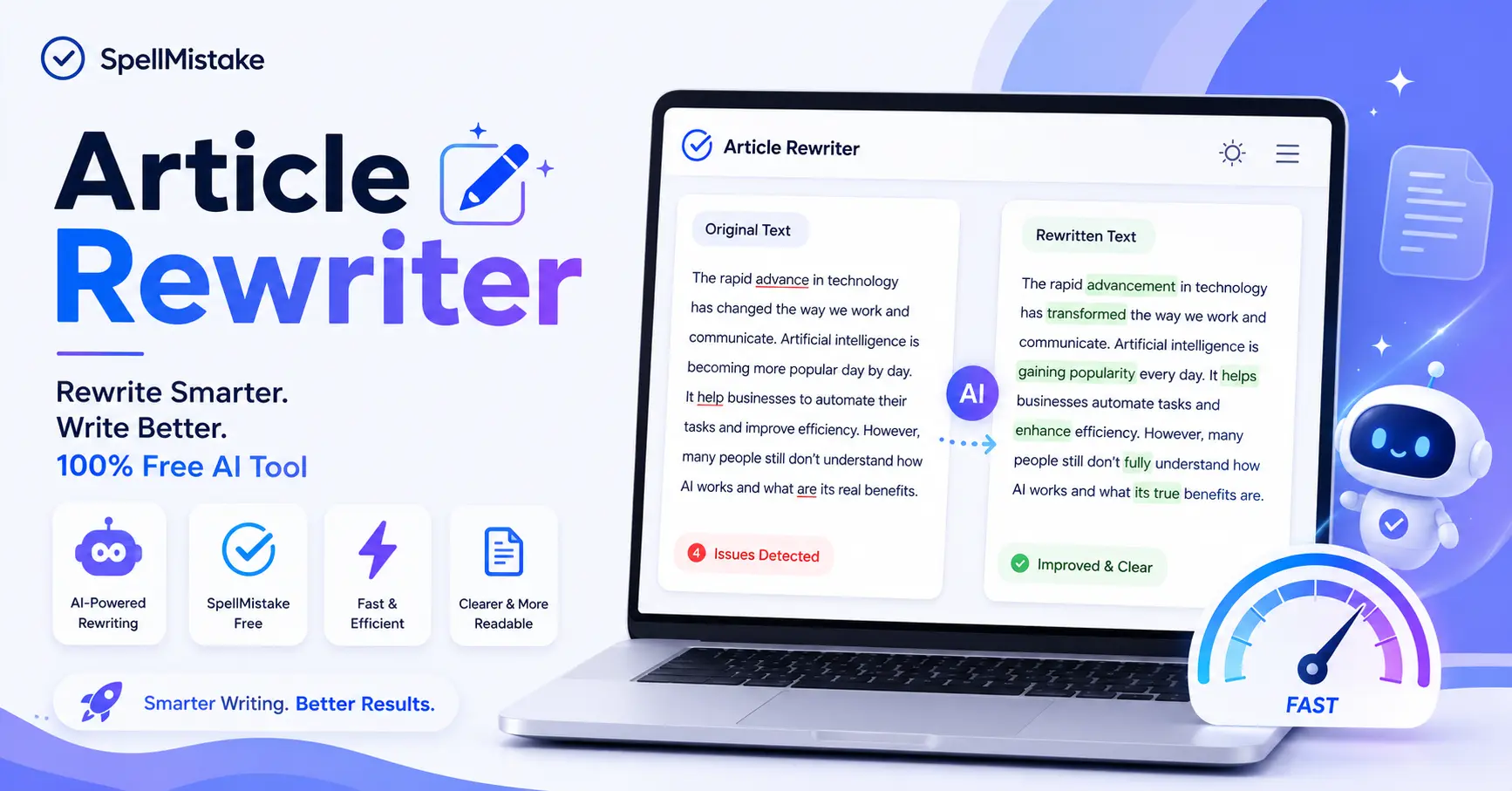
The free article rewriter tool by SpellMistake is a browser-based paraphrasing tool that rewrites articles, blog posts, and short-form copy into unique versions while keeping the original intent. It runs on a context-aware model, which means it reads your sentence before it changes it — rather than swapping synonyms one word at a time.
I have used older-generation spinners before, and the difference is honestly noticeable within the first paragraph. Old spinners would take “the report highlights three key findings” and turn it into “the account emphasises trio primary discoveries”. Painful to read, useless to publish. SpellMistake reworks the whole clause: “the report points to three main conclusions”. It preserves meaning first, and worries about word variation second, which is the correct order.
The tool is free. No credit card, no trial timer, no forced sign-up wall before you can paste text. That alone puts it ahead of most paid competitors that hide their actual capability behind a paywall.
Why I Started Using SpellMistake Instead of My Usual Rewriter
I switched to SpellMistake because my old workflow was breaking down. I write across three of my own sites and a handful of client projects, and I kept hitting the same wall: rewriting a 2,000-word piece manually took me almost as long as writing a new one. Paid tools I had subscribed to kept lowering their free word caps and pushing me toward higher plans I did not need.
The first thing I tested was a decayed post about email marketing that had lost about 60% of its traffic over a year. I ran it through SpellMistake in SEO mode, spent maybe twenty minutes cleaning up the output, added two updated stats, and republished. Within six weeks, the post was back in the top five for its main keyword. That is not the tool doing all the work — I updated data and fixed the intro, but it cut the rewriting time from around three hours to under thirty minutes.
That single test is what convinced me it was worth including in my regular process.
Core Features I Actually Use
Not every feature on a tool page matters in real use. These are the ones I lean on weekly.
- Context-aware rewriting. The engine reads the sentence structure and the surrounding paragraph before it makes changes. In my testing, technical sentences about SEO, product specs, and finance kept their accuracy — which is where most free rewriters fall apart.
- Multiple rewriting modes. Standard for a light rework, Fluency for smoothing awkward sentences (I use this a lot on client drafts), and Creative when I want the tool to be more aggressive with sentence restructuring.
- No word cap on the free tier. I have run articles of 3,500+ words through it without hitting a wall. That is rare among free tools — QuillBot free stops at 125 words per submission, which makes it almost useless for full articles.
- Zero sign-up friction. Open the page, paste, click, done. I once timed it — from landing on the page to having a rewritten first paragraph took forty-one seconds.
- Entity and number preservation. Proper nouns, brand names, statistics, and figures stay intact. This was the deal-breaker for me on other tools that would randomly rewrite “a 40% increase” into something like “a two-fifths rise” — technically accurate, functionally awful.
- Clean output formatting. Line breaks, paragraph structure, and basic punctuation come through intact. I do not have to reformat everything before republishing.
- Mobile responsiveness. I have rewritten short pieces on my phone while travelling. Not something I would recommend as a habit, but it works.
How I Use SpellMistake in My Real Workflow
Here is my actual process, step by step, for anyone who wants to skip the trial-and-error phase.
- Pick the right piece to rewrite. I do not run everything through the tool. It works best on content that is structurally sound but stylistically tired — usually posts that are 12 to 30 months old with declining traffic.
- Clean the original first. I fix any typos, awkward sentences, or factual errors before running it through the rewriter. Garbage in, garbage out — this is the single biggest mistake I see people make.
- Choose the mode based on the outcome I want. Fluency mode for polishing, Creative mode for a heavier rework, Standard for content that just needs slight variation for republishing on another platform.
- Run the rewrite. Processing time is usually 8 to 20 seconds for a standard 1,500-word article.
- Read the whole thing back. This step is non-negotiable. I catch maybe one or two sentences per article where I want to tweak the phrasing manually.
- Add updated data or examples. The rewriter cannot invent new information. If I want the piece to actually perform better, I have to add fresh context — recent statistics, current examples, updated links.
- Run it through a plagiarism check. Belt and braces. I have never had a piece flag as duplicate, but I check anyway on client work.
Who This Tool Actually Fits
I have recommended SpellMistake to friends, clients, and readers over the past few months. The people who got the most value out of it were not always the ones I expected.
- Bloggers with a back catalogue. If you have 40+ old posts sitting on your site, this tool is a genuine productivity multiplier. You can refresh two or three posts in an afternoon.
- Freelance writers juggling multiple clients. I use it to speed up first drafts when a client has provided reference material that needs to be reworked into original copy.
- SEO agencies. Anyone producing localised or platform-specific variants of the same core content will save serious time.
- Students paraphrasing their own notes. Not for copying someone else’s work — that is still plagiarism regardless of how it gets rewritten. But for reshaping your own summaries into cleaner academic prose, it does the job.
- Non-native English writers. A colleague of mine writes in English as her third language, and she uses it as a smoothing pass before submission. Her feedback: the tool fixes phrasing without making the writing sound generic.
- Ecommerce owners. Product description rewrites for different marketplaces are the single most repetitive writing task I know of. This tool handles it well.
Where SpellMistake Falls Short (Because Nothing Is Perfect)
I would not trust a review that only listed positives. Here is what I have noticed on the other side.
- It cannot add new ideas. The tool rewrites what you give it. It does not fact-check, expand on weak arguments, or introduce fresh angles. That is your job.
- Very technical writing needs review. For most content it holds up fine. But when I ran a piece about a specific SaaS integration through it, two sentences came out slightly ambiguous. Nothing catastrophic — just something to watch for in specialised writing.
- Voice can flatten slightly on Creative mode. If you have a strong personal writing style, Creative mode occasionally sands off some of the edges. I usually stick with Standard or Fluency for my own bylined work.
- No built-in tone control beyond the modes. You cannot ask it to “make this more casual” or “match a specific author’s voice” the way you can with a full LLM. It is a rewriter, not a writing assistant.
Knowing these limits actually makes the tool more useful, not less. I use it for what it is good at and do the rest myself.
How SpellMistake Compares to Other Free Rewriters
I have tested most of the well-known options. Here is how they line up based on my own use.
| Tool | Free Word Limit | Sign-Up Required | Context Handling | Best For |
|---|---|---|---|---|
| SpellMistake | Effectively none | No | Strong | Full-length articles |
| QuillBot Free | 125 words | Yes | Strong | Short paragraphs |
| Spinbot | Medium | No | Weak | Nothing I would publish |
| Paraphraser.io | 500 words | Optional | Moderate | Quick edits |
| Prepostseo | 1,000 words | Optional | Moderate | Short blog posts |
The combination of no sign-up, no meaningful word cap, and actually readable output is what puts SpellMistake at the top of my personal list. QuillBot’s engine is arguably slightly more polished on very short passages, but the 125-word cap makes it useless for real article work unless you pay.
Semantic SEO and Why Rewritten Content Can Still Rank
Rewritten content can rank well in 2026, but only if it is genuinely useful and semantically rich. Google’s Helpful Content system and the ranking updates that followed made this crystal clear — thin, purely mechanical spins get flattened, while thoughtful refreshes that improve topical depth continue to perform.
When I refresh a post with SpellMistake, I am not just changing words. I am usually:
- Adding related entities that were missing from the original (a post about keyword research might now mention search intent, SERP features, topical authority, and specific tools like Ahrefs or Semrush).
- Updating statistics to current sources.
- Rewriting the intro to match how people actually search today.
- Tightening the structure so headings answer questions directly.
The rewriter does the heavy lifting on rephrasing. I do the strategic work on top. That combination is what actually moves rankings.
A Real Before-and-After From My Own Content
This is a paragraph from a post I refreshed last month. Original version:
“Building a content strategy takes time and it can be difficult if you do not know where to start. Many people give up before they see results because they do not have a clear plan.”
Rewritten with SpellMistake in Fluency mode:
“Developing a content strategy takes time, and getting started can feel overwhelming without a clear direction. A lot of people quit before results appear because they never set a plan in place.”
Same idea. Different words. Cleaner rhythm. This kind of pass, done across an entire article, is enough to lift both readability and SEO signals — especially when combined with updated facts.
Common Mistakes I See People Make With Rewriter Tools
After watching a few clients and friends use the tool, these are the patterns that hold people back.
- Publishing without reading. Always read the output. Always.
- Feeding it weak input. If the source article is confused, the rewrite will be confused. Fix the foundation first.
- Expecting SEO magic. The tool does not add keywords. Add them yourself where they fit naturally.
- Using the same mode for everything. Match the mode to the content type.
- Treating it as a writer replacement. It is a rewriter. Original thinking still has to come from you.
Frequently Asked Questions
Is the free article rewriter tool by SpellMistake actually free?
Yes. I have used it consistently without paying anything. The free tier includes the core rewriting engine and multiple modes, and there is no credit card requirement to get started. A premium option exists for teams and heavy users, but casual and even regular use fits comfortably in the free tier.
Can content rewritten with SpellMistake rank on Google in 2026?
Yes, but with a condition. Rewritten content ranks when it is genuinely useful, factually current, and semantically complete. Purely mechanical rewrites of thin content will not perform. I have republished refreshed articles that regained lost rankings within four to eight weeks — but I always added new value on top of the rewrite.
Does the tool change the meaning of the original content?
No, not in my experience. Out of hundreds of paragraphs I have rewritten, meaning drift has been rare and always easy to catch on review. The context-aware engine is the reason for this — it reads the sentence before it rewrites it. That said, always do a review pass, especially on technical or numerical content.
Is it safe for students to use for academic work?
Yes, with the important caveat that you can only rewrite your own writing. Paraphrasing your own notes, drafts, or summaries is fine. Rewriting someone else’s published work without citation is still plagiarism, regardless of how the text was processed. The tool helps with clarity — it does not remove your responsibility to cite sources.
Does it work for long-form articles over 2,000 words?
Yes. This is one of its strongest points. I have run articles of 3,000+ words through it in a single pass without hitting a limit. Processing takes longer for larger pieces — usually 30 to 60 seconds — but it handles the full document rather than forcing you to break it into chunks.
Will search engines detect content rewritten by SpellMistake as AI-generated?
No, not in the way that matters. Search engines evaluate content on quality, usefulness, and originality — not on whether a tool was involved in the writing process. Google’s own guidance confirms that AI-assisted content is acceptable when it demonstrates real value. Rewrites that improve clarity and add fresh information hold up well under scrutiny.
Can I use it for commercial and client work?
Yes. I have used it on client projects with permission, and the terms of use allow commercial application. As always, review the output carefully before delivery — the tool is a starting point, not a finished product.
Final Thoughts
The free article rewriter tool by SpellMistake has earned a permanent spot in my content workflow, and that is not something I say lightly. I have tested a lot of writing tools, and most of them either overpromise, cap their free tier into uselessness, or produce output that would embarrass me if I published it.
SpellMistake gets the basics right — meaning stays intact, output reads like a human wrote it, and the free tier is actually free. What you do with the rewritten text is still your responsibility. Add fresh data. Update your examples. Read every sentence back. The tool handles the mechanical part of rewriting so you can spend your energy on the parts that actually move the needle.
If you have a stack of old posts you have been meaning to refresh, pick one this week and run it through. Twenty minutes in, you will know whether the tool fits your workflow. For me, it did — and it has quietly become one of the tools I recommend most often when people ask how I keep older content earning its keep.
You May Also Like
 AI Tools
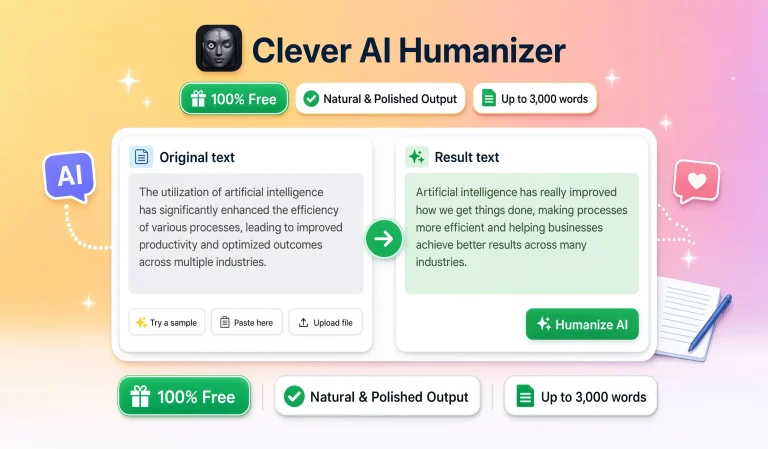
Clever AI Humanizer: An Honest Review After Testing It Across Real Client Work
 AI Tools
Free Paraphrasing Tool by QuillBot: An Honest Review
 AI Tools
Free Article Rewriter by UploadArticle.com: What It Is, How It Works, and Why You Actually Need It
 Family and Relationships
How We Strengthen Our Relationship in 24 Hours: A Real Couple’s Guide to a Healthy Relationship
 Self-Improvement
How to Improve Yourself Every Day: 17 Small Habits We Use to Grow a Little Every Day
 Fun Questions
1500+ This or That Questions for 2026: From Silly Choices to Deep Conversations
 Uncategorized
160+ Silly School Jokes for Kids That Will Make the Whole Class Laugh
 Friendship Quotes
200+ Thinking of You Quotes to Make Someone Feel Remembered
 Personal Motivation Quotes