What Does POV Mean? On TikTok: The Full Story Behind the Acronym
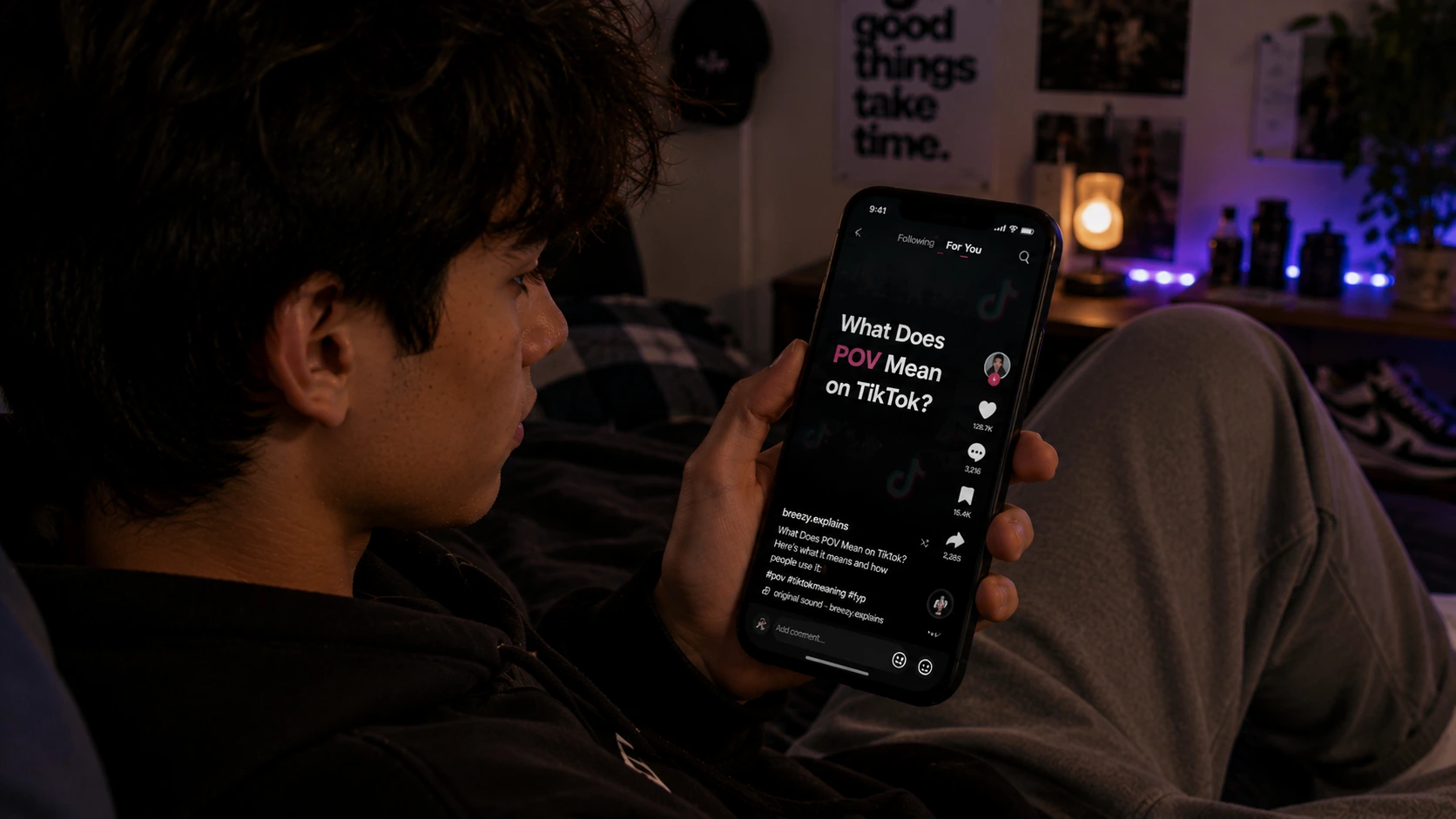
You’ve been there. You’re scrolling through TikTok late at night, and suddenly a video pops up that starts with “POV: you’re the barista and this customer just ordered a caramel macchiato with 47 modifications.” You laugh, you keep watching, and somewhere in the back of your mind you think, “wait, is that really what POV means now?” If you’ve ever paused to wonder what those three letters actually stand for, or why every other video on your For You Page seems to use them, you’re not alone.
POV is one of those acronyms that started in one world and got completely reinvented in another. It began in film schools and literature classes, tucked away in serious conversations about storytelling and camera angles. Then TikTok got a hold of it, and suddenly it became the caption for everything from playful skits to weirdly specific relatable moments to entire genres of content. Some people say it’s being used wrong. Others say language evolves, deal with it. The truth is somewhere in the middle, and honestly, it’s kind of fascinating.
So let’s actually break this down. What POV really means, where it came from, how creators use it today, and whether the debate about “correct usage” even matters anymore. Think of this as your friendly guide, the kind you’d get from someone who spends way too much time on TikTok but still remembers what their English teacher said about first-person narrative.
Featured Snippet
POV meaning is “Point of View.” On TikTok, YouTube, and other social media platforms, POV is used as a caption or hashtag to signal that a video is being presented from a specific perspective, usually asking the viewer to imagine themselves in a particular scenario. It originally came from film and literature, where it refers to the narrative perspective through which a story is told.
What Does POV Mean?
POV stands for “Point of View.” That’s the short answer, and it hasn’t really changed since the phrase was first written down in English books centuries ago.
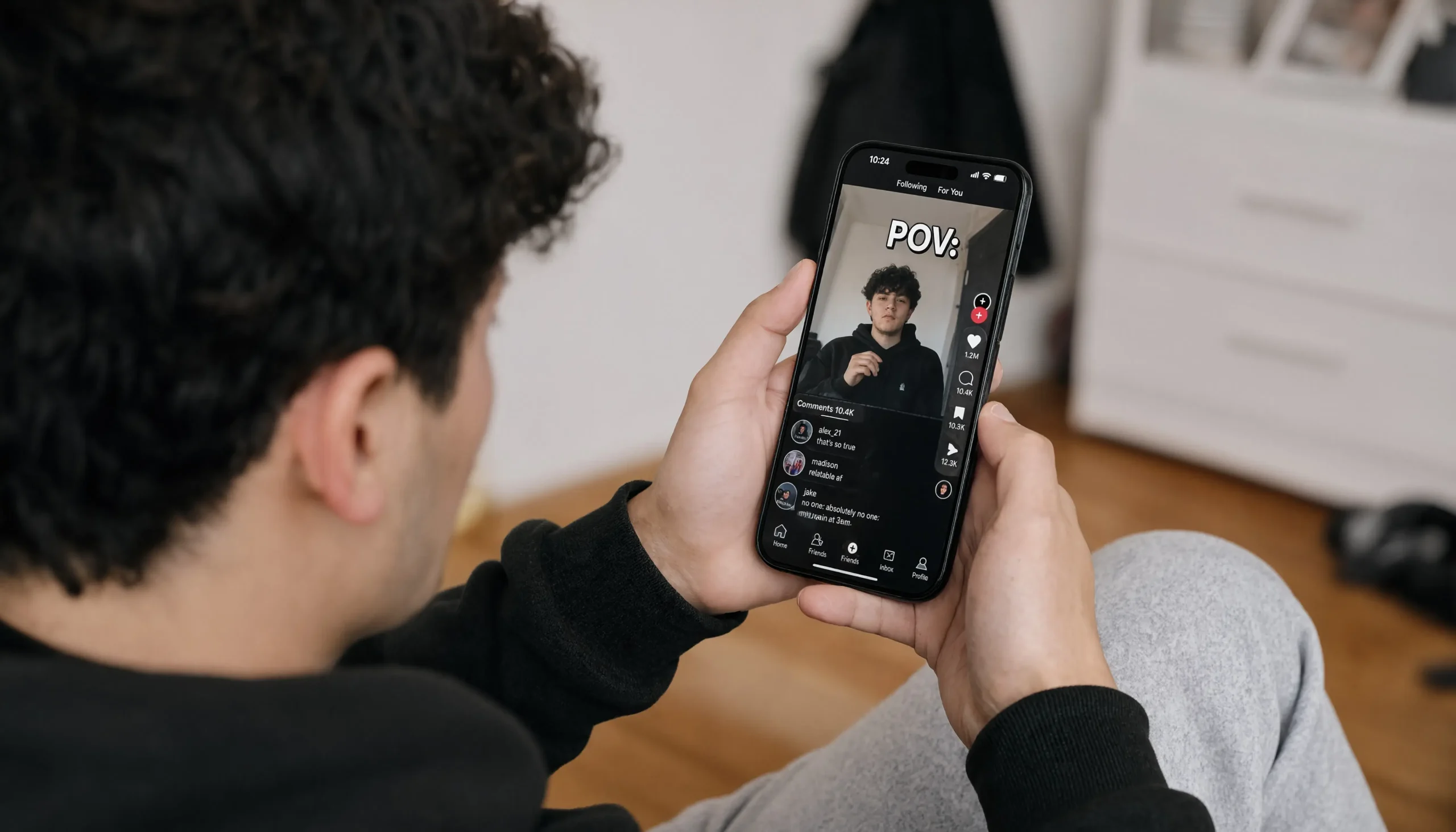
The longer answer is where it gets interesting. On TikTok, POV has become a whole content format. When you see “POV:” at the beginning of a video, the creator is basically saying, “imagine yourself in this exact situation.” The camera often acts as your eyes. The people in the video interact with the camera as if they’re interacting with you. It’s immersive storytelling in about 15 seconds.
You’ll see it used for silly scenarios, like “POV: your dog just realized you’re leaving for work.” You’ll see it used for emotional ones, like “POV: your best friend surprises you at the airport.” You’ll see it used for cringe ones, like “POV: you’re on a bad first date and he won’t stop talking about crypto.” The point is, POV pulls you into the scene. It’s not something you watch. It’s something you’re inside of.
POV Full Form and Definition
Here’s the breakdown of what POV actually stands for:
- P – Point
- O – Of
- V – View
Dictionary.com and Merriam-Webster both define POV as the perspective from which something is narrated or observed. It’s been part of English writing for a long time, well before it ever made it to a For You Page. When your high school English teacher asked whose POV a story was told from, they were talking about the same acronym that TikTok creators are typing into their captions today.
If you enjoy learning what these little acronyms actually mean, you might also like reading about what does YOLO mean in text, what does NFS mean in text, and what does TS mean in text. Slang travels fast, and each acronym has its own strange little journey.
Where POV Actually Came From
POV didn’t start on TikTok. It didn’t even start on the internet. The phrase “point of view” has been around for centuries, showing up in novels, essays, and academic papers whenever someone wanted to talk about who was telling a story.
In film, POV took on a more specific meaning. A “POV shot” is a camera angle that shows what a character is seeing, as if the audience is looking through their eyes. Think of the moment in a horror movie when the camera moves through the woods and you feel like you’re the one being chased. That’s a POV shot. Filmmakers have been using this technique since the earliest days of cinema, and it’s still one of the most powerful tools they have for making an audience feel something.
Then came the internet. YouTube creators started using POV for immersive vlogs, GoPro adventures, and role-play videos. When TikTok launched, creators took the idea and ran with it. They dropped the technical stuff and turned POV into a shorthand for any video that put the viewer inside a scenario. That’s when it stopped being a film term and started being a full-blown social media genre.
The New York Times has even written about this shift, pointing out how POV on TikTok has evolved so far from its original meaning that linguists are debating whether it’s still the same acronym at all. Language does that. It grows, it stretches, and sometimes it becomes something completely different.
How POV Is Used on TikTok
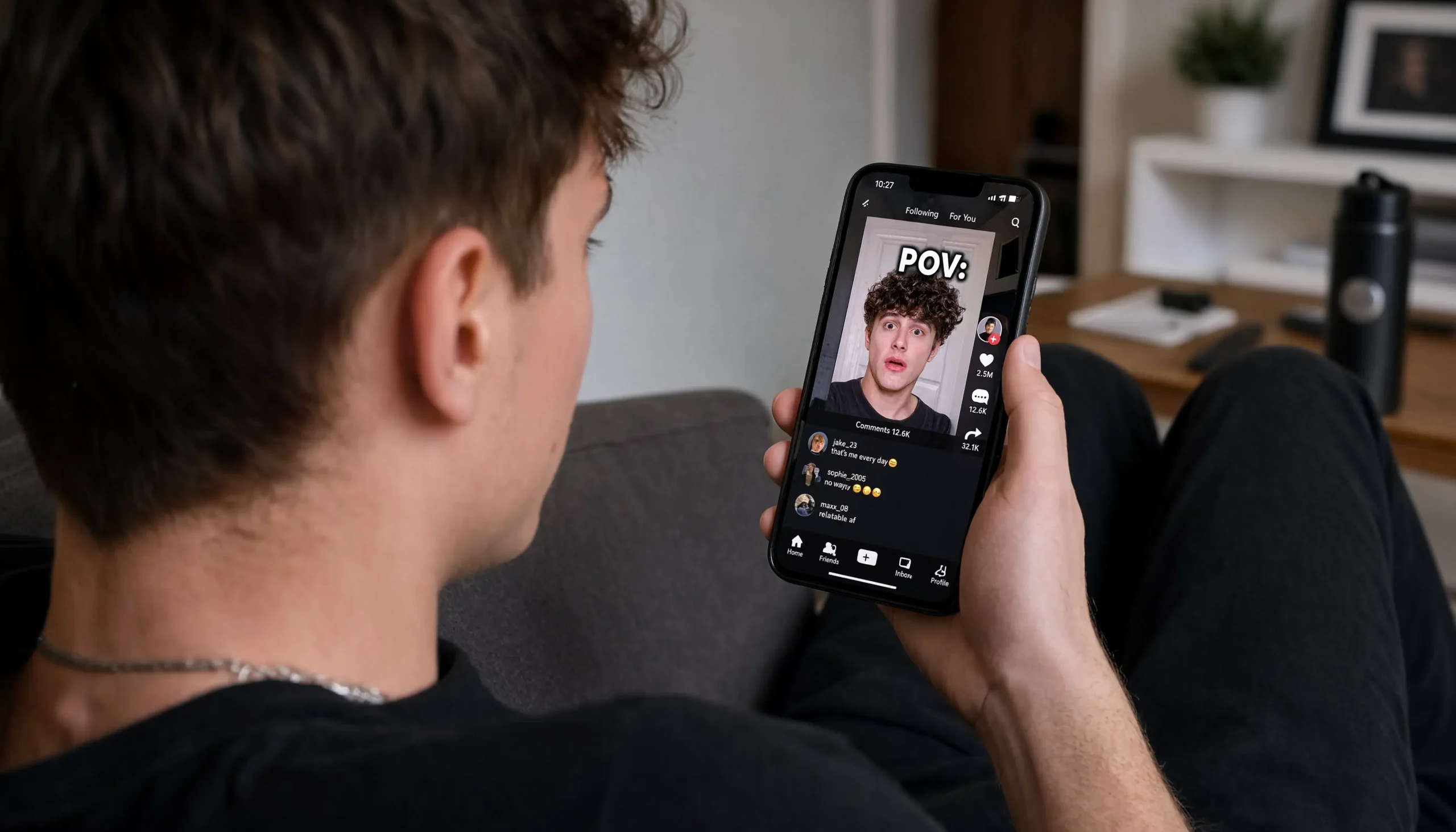
On TikTok, POV usually shows up at the very beginning of a video, either as text on the screen or as a caption. It sets the scene in one line and then the video plays out that scene.
Here are the main ways creators use it:
As an immersive scenario. The camera is your eyes, and someone talks or reacts to you directly. “POV: you just walked into your surprise birthday party.”
As a relatable moment. The video shows something that happens to a lot of people, and the POV framing makes it feel personal. “POV: you say one word in the group project meeting and now you’re the leader.”
As a role-play skit. The creator plays a character in a fictional scenario, and you’re another character in that world. “POV: you’re a knight in medieval times and the queen just walked in.”
As emotional storytelling. Some POV videos are quiet and moving, using the format to pull you into a feeling. “POV: it’s your grandma’s birthday and she still lights up when you walk through the door.”
The format works because it’s participatory. You’re not just watching. You’re placed inside the moment. That’s why POV videos often perform so well on the For You Page. They create a small emotional experience in seconds.
Real POV Examples You’ve Probably Seen
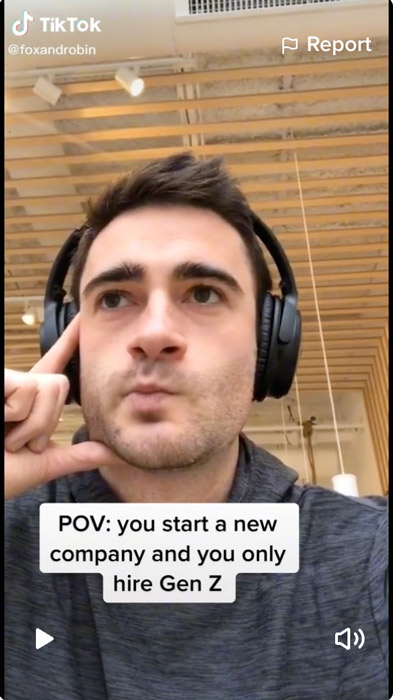
To get a sense of how wide the range is, here are some examples of POV videos that have gone viral or become recognizable formats:
Example 1 – The Comfort POV “POV: you’re sick and your mom brings you soup without saying anything.”
Example 2 – The Cringe POV “POV: you accidentally sent a text meant for your best friend to your boss.”
Example 3 – The Fantasy POV “POV: you’re a customer in a coffee shop in a Studio Ghibli movie.”
Example 4 – The Relationship POV “POV: your partner falls asleep first and you get to just look at them for a second.”
Example 5 – The Sassy POV “POV: you finally block that toxic ex and immediately feel lighter.”
That last one is a great example of how POV videos often tap into emotional experiences people are already carrying. If you’ve ever felt that relief, you might connect with some of the ideas in signs of toxic behavior in relationships. Sometimes a 15-second POV video says what pages of advice can’t.
POV on Instagram Reels and YouTube Shorts
TikTok gets most of the credit for the POV explosion, but the format has spread everywhere.
On Instagram Reels, POV videos often lean more polished and aesthetic. You’ll see cinematic POVs of vacations, “day in my life” scenarios, and relationship-based skits. The captions tend to be slightly softer, more curated, more Instagram-y.
On YouTube Shorts, POV content skews toward comedy sketches and role-play scenarios that run a bit longer. Creators have more room to develop the scene, which changes the feel of the format.
On Snapchat, POV shows up less as a caption and more as a natural way people share moments. When someone films a concert or a road trip and captions it with a first-person feel, they’re doing a casual version of POV even without labeling it.
Each platform bends the format to fit its vibe, but the core idea stays the same. Bring the viewer into the moment.
The Great POV Debate: Are People Using It Wrong?
Here’s where things get spicy. Ask a filmmaker or a writer whether TikTok uses POV correctly, and you’ll probably get a heavy sigh followed by a “well, not really.”
Traditionally, POV means the viewer is literally seeing through someone’s eyes or experiencing the story from their internal perspective. So a “true” POV video would be one where the camera is your eyes and the world reacts to you.
But on TikTok, POV often gets used more loosely. Sometimes creators use it to introduce a scene where they play the main character and you’re watching them. That’s not really a POV in the classic sense. It’s more like a scene setup. Purists find this frustrating. Linguists find it fascinating.
The honest answer is that language evolves whether we approve or not. POV on TikTok has taken on its own meaning, and even if it’s technically different from the film term, it’s the definition most young people now grow up with. That’s how words work. They change hands, they change meanings, and eventually they belong to whoever uses them most.
If you’re someone who cares about precision in writing and communication, you might appreciate resources like how to communicate better in relationships, which is really about the same thing at heart. Perspective matters, and how you frame something changes how it lands.
Types of POV in Storytelling
Even outside social media, POV has always been a big deal in how stories are told. There are three main types:
- First-Person POV. The narrator is a character in the story. You get their thoughts directly. Sentences use “I” and “me.” Most memoirs and personal essays use this style.
- Second-Person POV. The narrator addresses the reader directly, using “you.” It’s rare in fiction but common in choose-your-own-adventure books and modern experimental writing. Interestingly, this is closest to how TikTok POV videos work. The whole video is framed around “you.”
- Third-Person POV. The narrator is outside the story, describing what’s happening from a distance. Sentences use “he,” “she,” or “they.” Most novels are written in this style.
When TikTok creators say “POV: you just…,” they’re essentially doing second-person storytelling, which is one of the most immersive and least common forms in traditional writing. That’s part of why the format feels so fresh, even when the actual scenarios are simple.
POV in Text Messages and DMs
Outside of video content, you’ll sometimes see POV pop up in regular text conversations too. It’s less common than on TikTok, but the meaning is basically the same.
Someone might text, “POV: me trying to decide what to eat at 11 p.m. again,” followed by a picture of their fridge. Or, “POV: when your friend cancels plans for the third time this month.” It’s a way of sharing a moment with a caption that invites the other person to feel it too.
If you love decoding all the different acronyms that show up in your DMs, you’ll probably enjoy exploring what does WTV mean in text, what does OTW mean in text, and what does WTW mean. Each one shows up in a slightly different context, and knowing them helps you keep up with how conversations actually flow today.
POV vs Other Social Media Acronyms
There are a few acronyms that get confused with POV or used alongside it. Here’s how they differ:
| Acronym | Full Form | What It Actually Means |
|---|---|---|
| POV | Point of View | A scenario framed from a specific perspective |
| FYP | For You Page | TikTok’s personalized recommendation feed |
| IRL | In Real Life | Something happening outside the internet |
| FR | For Real | Emphasizing that something is true or genuine |
| NGL | Not Gonna Lie | A softer way to say “honestly” |
POV is the only one on this list that acts like a content format instead of a standalone abbreviation. That’s what makes it unique. It’s not just a way to say something. It’s a way to build something.
How to Make a Good POV Video
If you want to try creating your own POV content, here are a few things that tend to make these videos work:
Start with a strong hook. The first line of text on the screen has to make someone pause their scroll. Specificity helps. “POV: you accidentally like your ex’s photo from 2019” beats “POV: awkward moment.”
Keep it short. POV videos live and die by pacing. 15 to 30 seconds is often the sweet spot. Anything longer risks losing attention.
Use sound intentionally. TikTok is deeply audio-driven. The right sound can turn a simple POV into something viral. Think of how much emotion a specific song brings to a scene.
Match the camera to the mood. Steady shots feel calm. Handheld feels chaotic. Close-ups feel intimate. Play with these to reinforce whatever your POV is trying to communicate.
Be honest. The POV videos that really connect aren’t the ones trying to be clever. They’re the ones that name a feeling most people can’t quite say out loud.
If you’re a creator trying to grow your content, the emotional side of relatability matters more than the technical side. Understanding what makes people feel seen, like the ideas explored in how to be a better person or personal growth tips, often helps more than any camera trick.
POV Explained for Parents
If your kid keeps saying POV and you’re wondering what’s going on, here’s the friendly version.
POV means “Point of View.” On TikTok, it’s basically a way of setting up a scene so the viewer feels like they’re inside it. Most of the time, POV videos are harmless. They’re skits, jokes, relatable moments, or short storytelling clips. Your teenager isn’t doing anything alarming when they say “POV.” They’re just using the language of their generation.
That said, some POV videos can lean into darker themes, like relationship drama, unhealthy dynamics, or emotionally charged scenarios. If you notice content that feels concerning, treat it like any other conversation about media. Ask what your kid thinks about it, not just what they watch. Curiosity works better than judgment every time.
For more ways to stay in touch with modern texting culture, check out what does OMS mean in text and what does IMSG mean in text. These little acronyms show up constantly, and knowing them helps you feel less lost in the group chat.
Living Life in POV
Here’s something nobody really talks about with POV, and it might be why the format has stayed so popular for so long. There’s something almost therapeutic about watching a POV video that names a feeling you didn’t know how to describe.
Someone captions a video with “POV: you’re finally happy after a really hard year,” and thousands of people cry in the comments. Someone else captions one with “POV: your dad hugs you before you drive back to college,” and suddenly everyone remembers what it feels like to be small and loved and homesick all at once. That’s the power of good POV content. It reminds you that other people are living the same tiny, ordinary moments you are.
Maybe that’s why the format won’t die. It’s not really about camera angles or grammar debates. It’s about being seen. And in a world where everyone’s scrolling past each other constantly, feeling seen is a rare and beautiful thing.
FAQ
What does POV mean on TikTok? POV means “Point of View.” On TikTok, it’s used to set up a video from a specific perspective, usually inviting the viewer to imagine themselves in the scene.
What does POV stand for in text? POV stands for “Point of View” in text messages too. It’s usually used to caption a photo or moment from a specific perspective.
When did POV become popular on social media? POV started gaining serious popularity on TikTok around 2019 and 2020, when the platform was becoming mainstream and creators began experimenting with immersive content formats.
Is POV used incorrectly on TikTok? Some linguists and filmmakers argue that TikTok uses POV loosely compared to its traditional meaning in film and literature. However, language evolves, and POV on TikTok has become its own accepted format.
What is a POV shot in film? A POV shot is a camera angle that shows what a character is seeing, making the audience feel like they’re looking through that character’s eyes.
What are the types of POV in writing? The three main types are first-person, second-person, and third-person point of view.
Can POV be used in a text message? Yes. You’ll often see POV used to caption a photo or describe a moment, especially when someone wants to share how a situation feels from their perspective.
Who started the POV trend on TikTok? There’s no single creator credited with starting it. POV videos emerged organically as creators borrowed the film term and adapted it to fit short-form video storytelling.
What does POV mean on Instagram Reels? Same as TikTok. It’s used to set up a video from a particular perspective, though Reels tends to have a more polished aesthetic overall.
How do I make a POV video? Start with a specific scenario, use text on screen to set the perspective, keep it short, choose the right sound, and film it in a way that matches the emotion of the scene.
Is POV a Gen Z slang term? POV has been around for centuries, but its use as a video format is largely driven by Gen Z creators on TikTok.
What’s the difference between POV and FYP? POV means “Point of View” and refers to a content format. FYP means “For You Page” and refers to TikTok’s algorithm-driven feed. They’re often mentioned together but mean different things.
Final Thoughts
POV has had one of the most interesting journeys of any acronym in modern language. It started in classrooms and film schools, spent decades quietly living inside serious storytelling, and then exploded onto TikTok as one of the most recognizable content formats of the last decade. Along the way, it changed shape, sparked debates, and became a shorthand for something bigger than three letters could ever really capture.
At its heart, POV is just a way of saying, “look through my eyes for a second.” Whether that’s a filmmaker using a camera angle to build suspense, a novelist choosing whose story to tell, or a TikTok creator making you feel seen with a 15-second video, the underlying idea has never really changed. Perspective matters. How you frame something shapes how it lands.
So next time you scroll past a POV video, take a second to notice what it’s doing. It’s asking you to step inside someone else’s moment. And in a world that moves as fast as ours does, that’s kind of a beautiful ask.
You May Also Like
 Fun Questions
1500+ This or That Questions for 2026: From Silly Choices to Deep Conversations
 Fun Questions
What Does WSG Mean in Text? How to Respond to WSG in Messages and Social Media
 Fun Questions
350+ Truth or Dare Questions: Play Classic Party Games With Your Friends
 Fun Questions
250+ This or That Questions for Back to School: The Ultimate Icebreaker Guide for Teachers and Students
 Fun Questions
157+ This or That Questions for Cousins: Fun Conversations
 Fun Questions
155+ This or That Questions for Black People: A Complete Cultural Connection Guide
 Fun Questions
What Does GNG Mean in Text? Meaning Slang, Examples, and Real Usage
 Fun Questions
What Does SYBAU Mean? SYBAU Slang Meaning, Origin & Examples
 Fun Questions